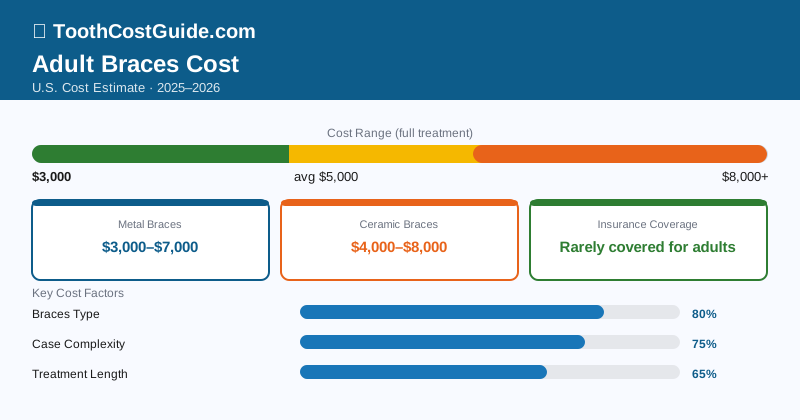
Adult braces cost $3,000–$8,000 depending on the type of appliance, case complexity, and treatment duration. Adults typically pay 10–20% more than children for equivalent cases because adult bone doesn’t remodel as quickly as growing bone, treatment often takes longer, and adults more frequently seek cosmetic options like ceramic or lingual braces. Approximately 1 in 4 orthodontic patients in the US is now an adult, and providers are increasingly experienced with adult-specific concerns.
| Adult Orthodontic Treatment | Cost Without Insurance |
|---|---|
| Metal braces (adult) | $3,500–$7,500 |
| Ceramic (tooth-colored) braces | $4,500–$8,000 |
| Lingual braces (behind teeth) | $8,000–$13,000 |
| Invisalign Full | $3,500–$8,000 |
| Invisalign Lite/Express (mild cases) | $1,800–$3,500 |
| Self-ligating braces (Damon, etc.) | $4,000–$8,000 |
| Dental school adult treatment | $1,500–$4,000 |
What Affects the Cost of Adult Braces
Treatment duration. Adult bone remodels more slowly than that of a growing child. The same crowding that takes 14 months to correct in a 13-year-old may take 18–22 months in a 35-year-old. Longer treatment means more appointments, more archwire changes, and a higher total fee.
Pre-existing dental conditions. Adults are more likely to have crowns, bridges, implants, missing teeth, or previous gum disease — all of which complicate orthodontic treatment. Cases requiring coordination with a periodontist (gum specialist) or prosthodontist (restorative specialist) involve additional professional fees.
Appliance choice. Adults skew toward less visible options: ceramic braces, lingual braces, or Invisalign. Each carries a premium over traditional metal braces. The desire for aesthetics is legitimate but adds $500–$5,000 depending on which option is chosen.
Case complexity. Minor cosmetic crowding treated with 10–15 aligners costs $1,800–$3,500. Comprehensive treatment involving bite correction, arch development, and significant tooth movement costs $5,000–$8,000+.
Retention requirements. Adults typically require more rigorous retention protocols because there is no growth to help stabilize results. Permanent bonded retainers are commonly recommended and often cost extra ($150–$350 per arch) beyond what’s included in the treatment fee.
Adult orthodontic treatment is more common, more accepted socially, and better supported by orthodontists than ever before. The main financial distinction for adults is insurance: many dental plans exclude adults from orthodontic benefits or apply lower lifetime maximums. Plan for larger out-of-pocket costs and explore FSA/HSA options proactively.
Popular Options for Adults
Clear aligners (Invisalign, ClearCorrect) — $3,000–$8,000: The most popular adult orthodontic option. Removable for eating, brushing, and important social events. Comparable effectiveness to braces for mild-to-moderate cases. Requires 20–22 hours of wear per day for effectiveness. Aligners are replaced every 1–2 weeks. Best for adults with mild crowding, spacing, or overbite — not for severe skeletal discrepancies.
Ceramic braces — $4,000–$8,000: Fixed appliances that can’t be removed, ensuring compliance. Tooth-colored brackets are less visible than metal. Popular among adults who want fixed-appliance effectiveness with reduced visibility. Slight fragility and staining risk with elastic ligatures.
Traditional metal braces — $3,500–$7,500: Still the most effective for complex adult cases. Less popular among adults due to appearance, but appropriate for severe crowding, bite correction, or cases where aligner compliance is a concern.
Lingual braces — $8,000–$13,000: Completely invisible but the most expensive option. Best for adults in client-facing roles or high-visibility professional environments who want completely hidden treatment with fixed-appliance precision.
Invisalign Lite/Express — $1,800–$3,500: A limited-treatment program for mild adult crowding. Typically 7–14 aligners, 3–6 months of treatment. Excellent value for adults who experienced post-orthodontic relapse or have minor cosmetic concerns.
Adult Braces vs. Teen Braces: Cost Differences
Adults typically pay $300–$1,000 more than teenagers for comparable cases due to:
- Longer treatment timelines
- More frequent need for pre-treatment dental work
- Higher preference for premium aesthetic options
- Greater likelihood of needing additional retainers or bonded retainer work
- Less generous insurance coverage for adults
Insurance Coverage for Adults
This is where adult orthodontic costs diverge most from childhood treatment.
Lifetime orthodontic maximum: $1,000–$3,000, applied cumulatively (not annually). If a plan has a $2,000 lifetime max and the patient used $500 in childhood, only $1,500 remains.
Age limits: Many dental insurance plans cover orthodontic treatment only through age 18 (some extend to 21–26 for dependents on parent plans). After that, benefits may not apply at all.
Adult orthodontic coverage: Some employer-sponsored plans include adult orthodontic benefits. HSA-eligible high-deductible plans don’t limit orthodontic coverage by age, but the orthodontic treatment itself must still be a covered benefit in the plan design.
What to do: Review your Summary of Benefits and Coverage (SBC) document carefully. Look for “orthodontia” or “orthodontic treatment” coverage, note the age limits and lifetime maximum, and confirm whether adults are covered. Your orthodontist’s billing department can verify benefits at no charge before you start treatment.
If your employer offers orthodontic benefits for adults and you’re planning to start treatment, do not wait. If you or your employer changes insurance plans, the new plan may have its own waiting period or may not cover adult orthodontics at all. Starting treatment under a favorable plan locks in the benefit.
Financing Options for Adults
In-house orthodontic payment plans: Most orthodontists spread the total treatment cost over the treatment period with 0% interest. A $6,000 case over 24 months = $250/month. This is the most common and accessible financing approach.
CareCredit and Lending Club Patient Solutions: Offer promotional 0% interest periods of 12–24 months. Useful for adults who want to separate the monthly payment from the orthodontist’s schedule. Rates after the promotional period reach 17–27% APR — pay in full before the period ends.
FSA and HSA: Adult braces are fully FSA/HSA eligible. For adults in the 24–37% federal tax bracket, using $5,000 in FSA funds saves $1,200–$1,850 in federal taxes. Maximize FSA elections before the treatment start year.
Employer wellness benefits: Some employers offer dental wellness accounts or supplemental orthodontic benefits outside the standard dental plan. Check with your benefits administrator.
How Adults Can Save on Braces
Get consultations at 2–3 orthodontic offices. Free consultations are standard. Fees for equivalent cases can vary $500–$2,000 within the same city. Ask for a written treatment plan and total fee at each.
Consider dental school orthodontic clinics. Cases are treated by supervised orthodontic residents (licensed dentists in specialty training). Treatment may take slightly longer due to scheduling, but costs 30–50% less. Find programs through aaoinfo.org.
Ask about Invisalign Lite if your case is mild. For adults who experienced post-treatment relapse (teeth shifted after childhood braces), the limited Invisalign programs are designed exactly for this — and cost 50–60% less than comprehensive treatment.
Prioritize permanent retainers. Bonded permanent retainers add $150–$350 per arch but significantly reduce the risk of post-treatment relapse, which would require a new round of orthodontic treatment. This is a small upfront cost that protects your total investment.
Bottom Line
Adult braces cost $3,000–$8,000 and represent a genuine investment in dental health and aesthetics. Insurance is often limited or absent for adults, making out-of-pocket costs higher than for children. The wide range of adult-appropriate options — from discreet clear aligners to completely hidden lingual braces — means there’s an option for virtually every aesthetic preference and budget. Using FSA/HSA funds, seeking free consultations, and comparing multiple providers are the most effective strategies for reducing total cost.
More Americans are getting braces as adults than ever before. The key financial differences from childhood treatment are longer timelines, more frequent insurance exclusions, and a preference for more expensive aesthetic appliances. Maximize FSA/HSA contributions, compare multiple orthodontists, and consider dental school programs to bring adult orthodontic costs into reach.