Traditional rubber-cup polishing has been a dental hygiene staple for decades. But air polishing — blasting a fine stream of water, air, and powder to clean teeth — has quietly become the preferred option at many progressive practices. It’s faster, gentler on enamel, and remarkably effective at removing stubborn stains. The catch: it often costs extra, and not every patient needs it.
Here’s what air polishing actually costs, what it does, and whether you should ask for it at your next cleaning.
What Is Air Polishing?
Air polishing (also called prophy jet polishing) uses a handpiece that sprays a controlled jet of water mixed with fine powder particles — typically sodium bicarbonate (baking soda), glycine, or erythritol — at the tooth surface. The abrasive particles dislodge biofilm, stain, and plaque from areas that rubber cups and hand instruments have trouble reaching.
Modern subgingival air polishing devices can even direct that spray below the gumline, making them effective for periodontal maintenance patients who need biofilm removal from periodontal pockets.
The technique was first developed in the 1980s, but newer glycine- and erythritol-based powders have made it gentler and suitable for a wider range of patients.
Air Polishing Cost
| Service | Low | Typical | High |
|---|---|---|---|
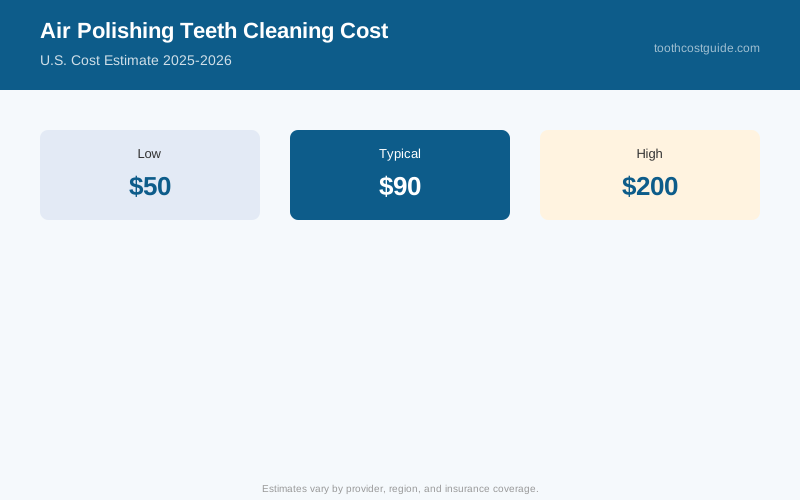
| Air polishing as add-on to cleaning | $50 | $90 | $150 |
| Air polishing included in routine cleaning | $0 extra | $0 extra | $0 extra |
| Subgingival air polishing (perio maintenance) | $75 | $125 | $200 |
| Full mouth stain removal session | $80 | $120 | $180 |
Many dental offices include air polishing as part of their standard prophylaxis (routine cleaning) at no extra charge — it’s simply replaced traditional rubber-cup polishing in their protocol. Others offer it as a premium add-on. If you’re unsure, ask your hygienist what polishing method is included in your appointment.
Air Polishing vs. Traditional Rubber-Cup Polishing
Standard prophylaxis has long included rubber-cup polishing using a prophy paste (gritty paste containing abrasive particles). It works reasonably well on smooth surfaces but struggles with:
- Interproximal (between teeth) staining
- Subgingival biofilm
- Grooved or pitted surfaces of molars
- Areas around orthodontic brackets
Air polishing reaches all of those spots. Research supports its superiority for biofilm removal. A 2020 systematic review in the Journal of Clinical Periodontology found that glycine powder air polishing removed significantly more subgingival biofilm than hand instrumentation alone in periodontal maintenance patients, with no additional soft tissue trauma.
Older air polishing systems used coarser sodium bicarbonate powder — effective, but too abrasive for subgingival use and potentially irritating to soft tissues. Newer glycine and erythritol powders are much finer and gentler, making subgingival air polishing safe for periodontal patients. Ask your hygienist which powder they use.
Who Benefits Most from Air Polishing?
Air polishing isn’t equally beneficial for everyone. The patients who get the most out of it are:
Heavy stain patients. Coffee, tea, red wine, and tobacco stains respond dramatically to air polishing. If your teeth stain quickly between cleanings, air polishing clears them faster and with less enamel abrasion than aggressive rubber-cup polishing.
Orthodontic patients. Cleaning around brackets, bands, and wires is notoriously difficult. Air polishing can reach the nooks and crannies that rubber cups can’t.
Periodontal maintenance patients. If you’re on a 3- or 4-month recall schedule due to periodontal disease, subgingival glycine air polishing can supplement scaling by disrupting the biofilm that re-forms between visits.
Implant patients. Air polishing with glycine powder is safe on implant surfaces (unlike metal scalers, which can scratch titanium). Many periodontists prefer it for implant maintenance.
Children. Prophy paste can be uncomfortable and messy for kids. Air polishing is quicker and often better tolerated.
Who Should Avoid Air Polishing?
Not everyone is a candidate:
- Patients on low-sodium diets (the sodium bicarbonate powder adds dietary sodium — usually small amounts, but worth noting for patients with severe restrictions)
- Patients with respiratory conditions (aerosol generation is a consideration; glycine powder produces less aerosol than bicarbonate)
- Patients with exposed root surfaces or dentinal sensitivity (air polishing can increase sensitivity on exposed dentin)
- Patients with thin enamel or active erosion — discuss with your dentist first
Does Dental Insurance Cover Air Polishing?
It depends on how it’s billed. If air polishing is included in the standard prophylaxis (D1110 or D1120) code, it’s covered as part of your routine cleaning at no extra charge. Most plans cover two cleanings per year.
If your office bills air polishing as a separate add-on procedure, insurance coverage becomes less predictable. Some plans will cover it under specific codes; others won’t. At $50–$150 per visit, it’s not a budget-breaking expense even if you pay out of pocket.
The aerosol generated during air polishing is a consideration in some clinical settings. If you have any respiratory conditions or are immunocompromised, mention this to your hygienist before the procedure. Modern high-volume evacuation systems significantly reduce aerosol, but it’s worth the conversation.
Air Polishing for Stain Removal: Before Teeth Whitening
One underused application: air polishing as a prep step before teeth whitening. The CDC and dental researchers have noted that extrinsic stains reduce whitening gel penetration. Removing those stains first with air polishing means your bleaching agent works on actual enamel — not a stain layer on top of it. The result is a more even, effective whitening outcome.
If you’re planning in-office teeth whitening or starting take-home whitening trays, ask about getting air polishing done first.
Comparing the Overall Cleaning Experience
Most patients who’ve had both describe air polishing as:
- Faster — a full-mouth polish often takes half the time of rubber-cup polishing
- Cleaner feeling — the spray rinses and cleans simultaneously
- Less pressure — no rubber cup pushing against gum margins
- Cold — the water spray is cool, which some patients find refreshing and others mildly uncomfortable
A few notes on the mess: air polishing does generate a fine spray. Your face and bib will get wet. The hygienist uses suction and protective barriers, but it’s messier than rubber-cup polishing. That’s a minor tradeoff for most people.
Questions to Ask at Your Next Cleaning
- Does my standard cleaning include air polishing or rubber-cup polishing?
- Which powder does your air polishing system use — bicarbonate or glycine?
- Is there an extra charge for air polishing?
- Given my specific staining or periodontal situation, which approach do you recommend?
Bottom Line
Air polishing typically adds $50–$150 to a dental cleaning when billed separately, though many offices include it in their standard prophylaxis. For patients with significant staining, periodontal disease, implants, or orthodontic appliances, it offers measurable advantages over traditional rubber-cup polishing. If your dental office still only offers rubber-cup polishing and you’re unhappy with stain control between visits, it’s a reasonable question to raise.