Cavities are the most common chronic disease in American children — more common than asthma. The CDC reports that 20% of kids ages 5–11 have at least one untreated decayed tooth. Most of those kids saw a dentist for the first time at age 3 or 4. Many saw one only after something started hurting.
The ADA’s recommendation is simple: first dental visit by your child’s first birthday, or within 6 months of the first tooth coming in — whichever happens first. Most parents think that’s overkill. The research says otherwise.
The First Visit: Age 1 (or First Tooth)
The first dental appointment for a baby isn’t really about cleaning. It’s about three things: baseline assessment, parent education, and getting your child familiar with the dental environment before any fear gets established.
What actually happens at an infant dental visit:
- The dentist checks erupted teeth and gums for early decay, eruption patterns, and bite development
- They look for nursing caries (cavities from prolonged bottle or breastfeeding exposure, especially overnight)
- Parents get guidance on oral hygiene for infants, fluoride exposure, diet, and pacifier/thumb-sucking habits
- The child sits on the parent’s lap — no separate chair, no intimidating overhead light, no stress
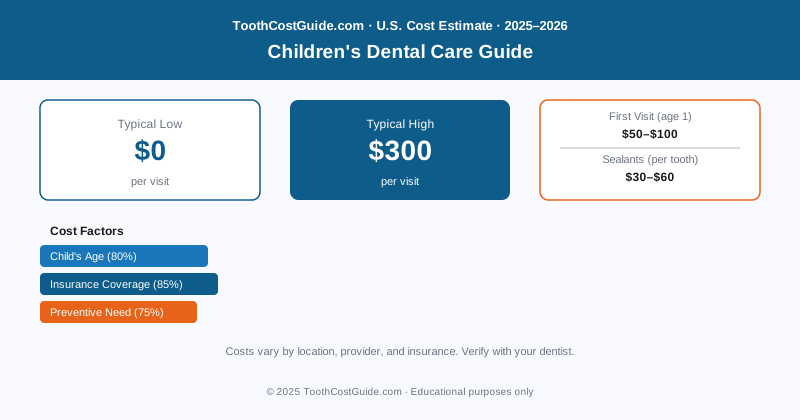
Cost: $50–$100 for the exam. Most dental insurance plans cover this at 100% for enrolled dependents. Medicaid and CHIP cover dental in all states for eligible children.
“They’re just going to fall out anyway” is one of the most common reasons parents give for skipping treatment on baby teeth. Here’s what actually happens when you lose a baby molar to decay at age 4: there’s no permanent replacement until age 10–12. In those 6–8 years, adjacent teeth drift into that gap. The permanent tooth erupts misaligned or impacted. Now you need orthodontic treatment that could have been avoided.
Cavities in baby teeth also cause pain, affect eating and speech development, and can spread infection to the permanent tooth bud forming underneath.
The Standard Schedule by Age
Ages 1–3: Twice-yearly visits for exam and cleaning. At these ages, cleaning is simple — a soft brush or gauze on erupted teeth. The focus is monitoring eruption patterns and catching early decay.
Ages 3–6: Regular cleanings plus fluoride varnish at each visit. By age 3, most primary teeth are in. X-rays may start once teeth are touching (interproximal surfaces can’t be seen any other way). First permanent molars typically arrive around age 6.
Ages 6–12: Permanent teeth start coming in. First permanent molars erupt around age 6 — these are the most important teeth in the mouth and the primary targets for sealants. Bitewing X-rays every 12–24 months become standard. This is the window for sealant application on new permanent molars.
Age 7: The American Association of Orthodontists recommends an orthodontic screening. Many alignment issues can be identified — and sometimes intercepted — at this age, potentially reducing or eliminating later treatment needs.
Sealants: The Most Cost-Effective Preventive Procedure
Dental sealants are thin plastic coatings painted onto the chewing surfaces of back teeth — specifically the deep grooves and pits in molars where 80% of childhood cavities form. The sealant physically blocks food and bacteria from getting into those grooves.
The CDC’s numbers: Sealants prevent 80% of cavities in the back teeth of school-age children. Kids without sealants have nearly three times more cavities than kids with them. Yet only 43% of children ages 6–11 currently have sealants — a gap that costs families millions of dollars in preventable fillings each year.
When to apply them: As soon as each molar erupts enough to access cleanly. First permanent molars come in around age 6; second permanent molars around age 12. Sealants work best when applied right after eruption, before any early decay starts.
How long they last: 5–10 years with proper maintenance. They can be reapplied if they wear down.
Cost: $30–$60 per tooth. Most dental insurance covers sealants at 100% for children, typically on permanent molars for kids under 14 or 16. Without insurance, sealing all 4 first molars runs $120–$240 — far better than the $150–$300 per filling if those teeth decay.
Fluoride: How Much, What Kind, When
Fluoride is the most evidence-supported preventive tool in dentistry. The CDC named community water fluoridation one of the ten great public health achievements of the 20th century, and the ADA’s position on fluoride for children has been consistent for decades.
Systemic fluoride (swallowed): From fluoridated water (0.7 ppm is the current ADA/EPA recommendation) and fluoride in food. It strengthens developing enamel before teeth even erupt.
Topical fluoride (applied to teeth): Toothpaste, professional fluoride varnish at dental visits, and prescription fluoride gel for high-risk children. Fluoride varnish applied at dental visits deposits concentrated fluoride (22,600 ppm NaF) directly on tooth surfaces. It’s the standard of care for children.
Fluoride toothpaste guidelines (ADA):
- Under age 3: A rice grain-sized smear of fluoride toothpaste
- Ages 3–6: A pea-sized amount
- Ages 6+: Regular amount, under adult supervision until ages 8–9
Cost of in-office fluoride varnish: $20–$50 per application, typically twice yearly. Most insurance covers this at 100% for children.
| Service | Age Range | Frequency | Cost Without Insurance | Insurance Coverage |
|---|---|---|---|---|
| Infant exam | 6–12 months | Once | $50–$100 | 100% covered |
| Cleaning + exam (child) | 1–17 years | 2x/year | $75–$150 per visit | 100% covered |
| Fluoride varnish | 6 months–adolescence | 2x/year | $20–$50 | 100% covered |
| Dental sealants (per tooth) | Age 6–14 | Once (per molar) | $30–$60 | 100% for kids |
| Bitewing X-rays | Age 3–17 | Every 12–24 months | $25–$50 | 100% covered |
| Space maintainer | As needed | Once | $300–$500 | Varies (often 80%) |
| Orthodontic screening | Age 7 | Once (assessment) | $0–$100 | Often free consult |
Space Maintainers: When Baby Teeth Are Lost Early
If a baby tooth is lost to decay or injury before the permanent tooth is ready — often 2–6 years early — the adjacent teeth will drift into the gap. A space maintainer, a small metal appliance fitted in the gap, holds that space open for the permanent tooth.
Types:
- Band and loop: Most common. A metal band around the adjacent tooth with a wire loop holding space.
- Lingual arch: Holds multiple spaces in the lower arch.
- Nance appliance: Holds space in the upper arch.
Cost: $300–$500 per appliance. Most insurance covers space maintainers at 80% or better. Even without insurance, this investment still beats the orthodontic treatment costs ($4,000–$7,000) that can result from allowing premature space loss.
What Insurance Covers for Children
Two coverage frameworks every parent should know:
ACA (Affordable Care Act): The ACA mandates that dental benefits for children under age 19 be included in health insurance marketplace plans as an essential health benefit. That means coverage for exams, cleanings, X-rays, sealants, and basic restorative work.
Medicaid and CHIP: The EPSDT benefit requires Medicaid to cover comprehensive dental services for enrolled children. CHIP benefits vary by state but generally include preventive and basic restorative care.
For families without dental insurance, many dental school clinics see pediatric patients at significantly reduced rates. Community health centers (FQHC locations) also provide pediatric dental care on sliding-scale fees.
The Habit Formation Window
The ADA’s research is clear: children who receive early dental education and regular care are significantly more likely to maintain regular dental habits as adults.
The first few dental visits — handled gently and positively, without unnecessary procedures — establish the dental office as a normal, unthreatening place. The alternative: waiting until something hurts, then having a frightened child undergo drilling or extraction. That’s how 36% of American adults end up too anxious to go to the dentist.
Early visits cost $50–$150. The anxiety you prevent is worth far more.