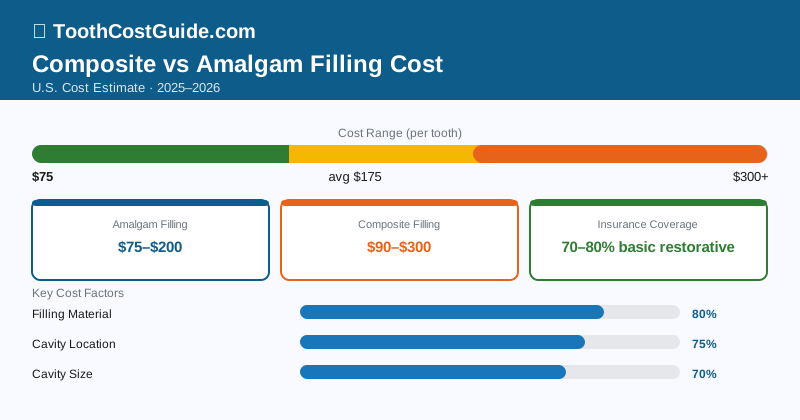
Most patients assume composite (tooth-colored) fillings are always better. They look better, sure. But amalgam — the old silver filling material — has a 150-year track record, costs about half as much, and lasts longer on average in high-stress positions like back molars. The choice isn’t as obvious as the dental marketing would have you believe.
Here’s what each material actually costs, where each performs better, and how to decide without overpaying.
Cost Comparison by Filling Type
| Filling Type | Average Cost Per Surface (No Insurance) |
|---|---|
| Amalgam (1 surface) | $75–$120 |
| Amalgam (2–3 surfaces) | $120–$200 |
| Composite resin (1 surface, posterior) | $90–$175 |
| Composite resin (2–3 surfaces, posterior) | $150–$300 |
| Composite resin (anterior/front tooth) | $90–$250 |
| Gold inlay/onlay (large cavities) | $500–$1,200 |
Why the price difference? Composite takes more chair time and technique. The dentist has to isolate the tooth from moisture precisely, apply bonding agents in layers, cure each layer with UV light, and shape the final restoration meticulously. Amalgam is faster to place, less technique-sensitive, and the material itself costs less. That efficiency gap translates directly into the price difference.
What the Research Actually Shows
The ADA has stated that both composite and amalgam are safe, effective, and appropriate for restoring teeth — and that the choice depends on tooth location, cavity size, and patient preference. A 2023 analysis published in the Journal of Dental Research found that amalgam restorations in posterior teeth showed statistically lower failure rates than composite restorations after 10+ years, particularly in patients with high bite forces.
CDC data shows that approximately 26% of U.S. adults have untreated tooth decay — meaning a lot of people are choosing between these materials every day without necessarily understanding the clinical differences.
Where Each Material Performs Best
Amalgam is still the stronger choice for:
- Large cavities on back molars where bite force is highest
- Cavities in areas that are hard to keep dry during placement (composite bonding fails if moisture contaminates the area)
- Budget-constrained patients who need multiple fillings; the savings add up fast
Composite is the better choice for:
- Front teeth and any tooth visible when you smile — there’s no aesthetic argument for silver on a lateral incisor
- Small-to-medium cavities on premolars where appearance matters
- Patients with documented mercury sensitivities (though the ADA and WHO consider amalgam safe for most adults and children over 6)
The gray zone is the medium-to-large cavity on a back molar. Dentists who prefer composites will lean that way for the whole-mouth aesthetic approach. Dentists with a more clinical orientation often still recommend amalgam there, and from a durability standpoint, they have data on their side.
Instead of asking “can you do tooth-colored?” ask “what material do you recommend for this specific cavity, and why?” A dentist who walks you through the location, size, and longevity tradeoffs is giving you a more useful answer than one who defaults to composite because it’s what patients expect.
Insurance Coverage: Is There a Difference?
Most dental insurance plans cover fillings as basic restorative — typically at 70–80% after the deductible. But here’s where it gets complicated.
Many plans have a “least expensive alternative treatment” provision. If your plan covers amalgam as the standard for posterior teeth, but you want composite on a back molar, your insurer may only pay the amalgam rate. You pay the difference out of pocket. This can add $50–$150 per tooth depending on your plan.
Before the procedure, ask your dentist’s billing team to check whether composite is covered at the same rate as amalgam for posterior teeth on your specific plan.
Replacing Old Amalgam Fillings
This comes up a lot — patients want to swap silver fillings for tooth-colored ones. You can. But there are two things to understand:
Cost: Each replacement filling costs $90–$300 per tooth at composite rates. Four old amalgam fillings = $360–$1,200 in replacement costs, often not covered by insurance unless the fillings have failed.
The mercury question: There’s more mercury exposure from removing an intact amalgam filling than from leaving it in place. The ADA and FDA recommend against elective removal of non-failing amalgam restorations in most patients. If the filling is broken, failing, or under a leaking margin, that’s a clinical reason to replace it. Cosmetics alone? Think carefully about the tradeoff.
Don’t replace amalgam fillings that are intact and functional purely for cosmetic reasons. The drilling process required to remove them destroys more tooth structure and causes a brief spike in mercury vapor exposure. If a filling genuinely needs replacement, composite is a fine choice — but have a clinical reason.
Bottom Line
Composite fillings cost $90–$300; amalgam runs $75–$200 for larger cavities. The price gap is real. On front teeth, composite wins hands-down. On back molars with large cavities, amalgam still has a durability advantage that’s worth considering — especially if cost is a factor and you’re getting multiple fillings. Ask your dentist for a material-specific recommendation rather than assuming one is universally better.