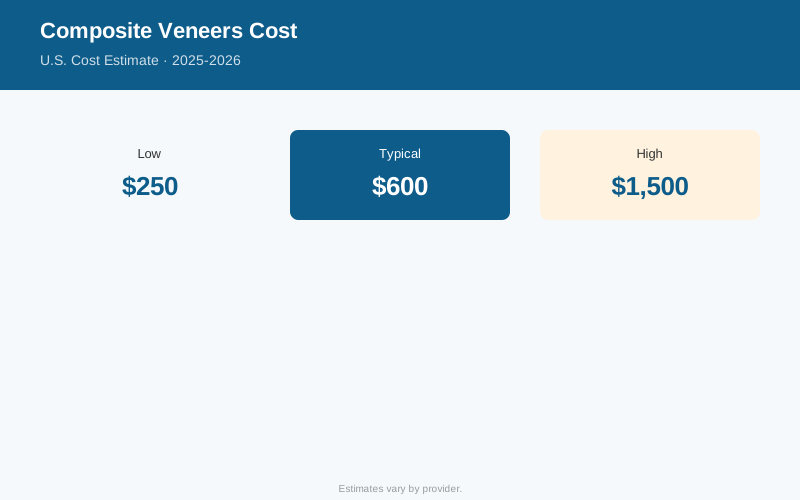
Porcelain veneers get all the press — and all the price tags. A full set of 8 porcelain veneers can run $10,000–$20,000. Composite veneers for those same 8 teeth: $2,000–$8,000. Same smile transformation. Very different bill. So why doesn’t everyone choose composite?
| Veneer Type | Cost Per Tooth | Full Set (8 teeth) |
|---|---|---|
| Direct composite veneer (applied in-office) | $250–$1,500 | $2,000–$12,000 |
| Indirect composite veneer (lab-fabricated) | $400–$900 | $3,200–$7,200 |
| Porcelain veneer (traditional) | $1,000–$2,500 | $8,000–$20,000 |
| Lumineers or no-prep porcelain | $800–$2,000 | $6,400–$16,000 |
| Dental bonding (single tooth) | $300–$600 | N/A (single tooth repair) |
What’s the Difference?
Composite veneers are made from the same resin material used for tooth-colored fillings. The dentist applies it directly to the tooth surface, shapes it, and cures it with a UV light. No lab needed. The whole process takes 1–2 hours per tooth, often done in a single visit.
Porcelain veneers are thin ceramic shells fabricated in a dental lab. They’re bonded permanently to the front of the tooth. The process takes 2–3 appointments over several weeks and typically requires irreversible removal of a thin layer of enamel.
Direct vs. indirect composite: Direct means the dentist sculpts the resin freehand in your mouth (faster, cheaper). Indirect means a lab fabricates the composite veneer off-site for better fit and finish, then the dentist bonds it.
Why Composite Costs Less
No lab fee. No temporary veneers while you wait two weeks. No multiple appointments. The dentist applies the material directly in one visit. The material itself (dental composite resin) costs a fraction of dental porcelain.
That said, the skill ceiling for composite veneers is high. A master cosmetic dentist doing direct composite can achieve results nearly indistinguishable from porcelain. An average dentist doing composite may produce visible layering, color mismatch, or contours that look “off.” The gap between excellent and mediocre composite work is wider than with porcelain, where the lab does more of the precision work.
One underrated benefit of composite veneers: they’re reversible. Because the dentist usually doesn’t need to remove enamel to place composite veneers (unlike traditional porcelain), the process is non-destructive. If you don’t like them, or if they wear out, they can be removed without permanent changes to your teeth. That’s a genuinely important difference for younger patients who aren’t sure about a permanent commitment.
Durability: The Real Tradeoff
This is where composite veneers lose points. Here’s what to expect honestly:
- Porcelain veneers: Last 10–20+ years. Highly stain-resistant. Very durable.
- Composite veneers: Last 4–8 years on average. More prone to chipping. Stain more easily from coffee, wine, and tobacco. May need polishing or minor touch-ups annually.
According to the American Academy of Cosmetic Dentistry (AACD), composite restorations show higher fracture and debonding rates than ceramic alternatives, though advances in composite materials have narrowed this gap significantly since 2020.
The maintenance math matters: if you replace composite veneers every 5 years, you’re spending roughly $500–$3,000 per tooth per decade. Porcelain veneers at $1,500 per tooth lasting 15 years work out to $1,000 per tooth per decade — cheaper in the long run for patients who are committed to the treatment.
For younger patients, composite is often the right first step: improve your smile now, see if you like the shape and length, and upgrade to porcelain later if you want longer-lasting results.
Who Is a Good Candidate for Composite Veneers?
- Budget-conscious patients who want cosmetic improvement without porcelain’s price tag
- Younger patients (under 30) who may want flexibility to change their smile later
- Single-tooth repairs (a chipped front tooth, a small gap) where only 1–2 teeth need treatment
- Patients who want a preview of a smile makeover before committing to porcelain
- Anyone who doesn’t want enamel removal (composite veneers are usually prep-free)
Composite veneers are less ideal for:
- Patients with heavy bite forces or bruxism (grinding) — the material chips faster
- Patients with severely discolored teeth (composite has limits masking very dark staining)
- Patients expecting 15-year longevity without replacement
Composite veneers are still considered cosmetic by all dental insurers. No PPO or HMO plan covers them. FSA and HSA funds don’t apply either. The entire cost is out of pocket. Some cosmetic dentists offer payment plans through CareCredit or Proceed Finance for larger cases.
Finding the Right Provider
Ask specifically about a dentist’s experience with direct composite veneers — it’s a niche skill set different from routine fillings. Ask to see a before-and-after photo portfolio. Ask whether they use a “mock-up” or wax-up to preview the final shape before committing.
Dental schools with cosmetic dentistry programs offer composite veneers at 40–60% below private practice rates, under faculty supervision. For a budget-focused patient willing to invest more time, that’s worth exploring.