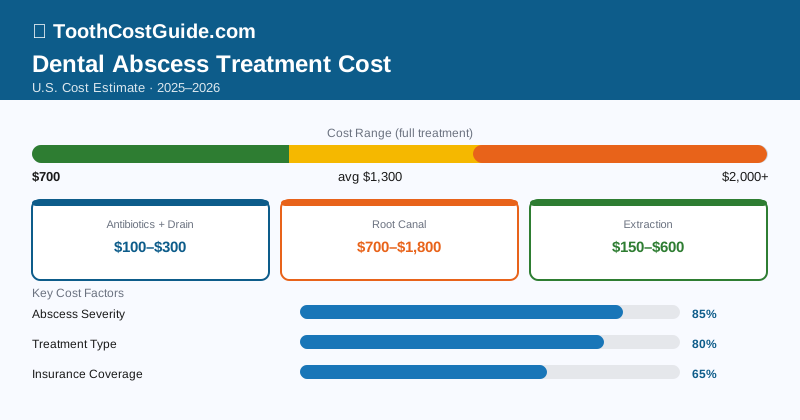
Dental abscess treatment costs $700–$2,000 for most cases, including antibiotics and the definitive treatment (root canal or extraction). If the abscess is treated with a root canal plus crown, total costs reach $1,700–$3,600. Without treatment, dental abscesses can spread to the jaw, neck, or airway — a life-threatening emergency that can cost $10,000–$50,000 in hospital care.
A dental abscess is a localized collection of pus caused by bacterial infection. It will not resolve on its own. Antibiotics treat the infection temporarily but do not eliminate the source — the tooth must be treated or removed.
| Abscess Treatment Component | Cost Without Insurance |
|---|---|
| Emergency dental exam + X-rays | $125–$350 |
| Antibiotics prescription (amoxicillin, 10 days) | $10–$30 |
| Abscess drainage (incision) | $150–$400 |
| Root canal – front tooth | $700–$1,000 |
| Root canal – molar | $1,000–$1,800 |
| Tooth extraction (simple) | $75–$250 |
| Surgical extraction (molar) | $250–$550 |
| Crown after root canal | $800–$1,800 |
| Hospital ER visit (antibiotics only, no dental work) | $500–$1,500+ |
| Hospital admission for spreading infection | $5,000–$30,000+ |
What Affects the Cost of Treating a Dental Abscess
Type and extent of abscess. A periapical abscess (at the root tip, from pulp infection) and a periodontal abscess (in the gum around a tooth, from gum disease) are treated differently. Periapical abscesses almost always require root canal or extraction. Periodontal abscesses may be treated with deep cleaning and irrigation, though tooth removal is sometimes needed.
Extraction vs. root canal. Extracting the affected tooth is always cheaper upfront ($75–$550) than root canal treatment ($700–$1,800). But extraction without replacement leaves a gap that leads to bone loss and shifting teeth — and implants ($3,000–$6,000) cost far more than the root canal that could have saved the tooth. Your dentist’s assessment of whether the tooth is restorable determines the appropriate path.
Whether hospitalization is needed. Most dental abscesses are treated in the dental office. But if the infection spreads into the floor of the mouth, the neck (Ludwig’s angina), or causes visible facial swelling with fever and difficulty swallowing — this is a medical emergency requiring IV antibiotics and sometimes surgical drainage in a hospital setting. This scenario, while uncommon, is life-threatening and enormously expensive.
Geographic location and provider type. Emergency dental visits and root canal fees follow the same geographic pricing patterns as all dental procedures — 25–40% higher in major metro areas.
Go to the emergency room immediately — not a dental office — if you have: a dental abscess with swelling that has spread to your jaw, neck, or floor of the mouth; difficulty swallowing or breathing; or fever above 103°F with facial swelling. These are signs of a spreading infection that is life-threatening.
Abscess Severity and Treatment Paths
Mild periapical abscess (localized pain, no swelling): Visible on X-ray as a dark spot at the root tip. Treated with root canal and antibiotics, or extraction if the tooth is not restorable. Emergency exam to diagnose: $125–$350. Root canal: $700–$1,800. Extraction alternative: $75–$550.
Abscess with localized swelling (fluctuant, can be drained): The dentist may make an incision into the swollen gum to drain the pus before or alongside root canal treatment. This relieves pressure and speeds recovery. Drainage fee: $150–$400. Still requires definitive treatment (root canal or extraction) to resolve the source.
Abscess with spreading cellulitis: Infection has spread into surrounding soft tissue, causing diffuse swelling (not fluctuant/drainable). Usually requires IV antibiotics in addition to dental treatment. Some patients need monitoring in the ER for 24 hours to confirm the infection is responding. Costs jump significantly: ER visit $500–$1,500+, then dental treatment.
Ludwig’s angina / deep space infection: A life-threatening spread of infection into the floor of the mouth and airway. Requires immediate hospitalization, IV antibiotics, possible surgical drainage, and potential intubation to protect the airway. Hospital admission: $5,000–$30,000+. This outcome is entirely preventable with timely dental treatment.
With vs. Without Dental Insurance
Treatment for dental abscesses follows standard coverage categories.
Emergency exam and X-rays: Covered at 80–100% under diagnostic benefits.
Root canal: Covered at 50–80% under basic or major benefits depending on the plan and tooth location.
Extraction: Covered at 50–80% depending on complexity.
Crown after root canal: Covered at 50% under major restorative benefits.
Antibiotics: Covered under your medical prescription benefit if you have prescription drug coverage.
Combined out-of-pocket estimate (molar root canal + crown with insurance):
- Root canal: $1,400, insurance pays 50% = $700 patient share
- Crown: $1,200, insurance pays 50% = $600 patient share
- Total patient cost: $1,300–$1,500 plus any unmet deductible
How to Get Affordable Abscess Treatment
Do not wait. Dental abscesses are not conditions to “manage” with over-the-counter pain relief and home remedies. Ibuprofen and clove oil reduce symptoms temporarily; they do not treat the infection. Every day of delay allows the infection to spread and makes treatment more expensive and more dangerous.
Call dental offices directly, including emergency lines. Most dental practices have an after-hours emergency line. A dentist reached at 8 p.m. may be able to call in antibiotics immediately and see you first thing the next morning — preventing an expensive ER visit. Call your regular dentist first.
Dental school emergency clinics. Dental schools with emergency clinics see unscheduled patients at significantly reduced fees. A $250 emergency exam and extraction versus a $1,200 private-practice equivalent. The tradeoff is availability and wait time.
Community health centers (FQHCs). Federally Qualified Health Centers treat dental emergencies on a sliding-scale fee for uninsured patients. Many have same-day availability for dental pain. Find centers at findahealthcenter.hrsa.gov.
If you cannot get a same-day dental appointment for an abscess and you’re in significant pain, urgent care clinics (not hospital ERs) can often prescribe antibiotics and pain medication on the same day for $75–$150 — much cheaper than the ER. This buys time until you can see a dentist the next morning. You still must follow up with a dentist for definitive treatment.
Financing Options
Dental abscess treatment combines an emergency visit with often expensive definitive care — root canal or extraction, possibly followed by a crown or implant.
CareCredit: Available at most dental offices, including emergency clinics. Apply in minutes for same-day approval. Useful for the $1,000–$3,000 root canal + crown package.
FSA/HSA: All components of dental abscess treatment — exam, root canal, extraction, crown — are eligible. If you have FSA funds available, use them.
Medicaid: Covers emergency dental services (exam, X-rays, extractions, and sometimes root canals) for eligible adults in many states. Coverage varies significantly by state. Contact your state Medicaid office.
Community dental programs: Many cities have low-cost dental clinics supported by foundations or nonprofits that serve uninsured adults with emergencies. Call 211 for local referrals.
Bottom Line
Dental abscess treatment costs $700–$2,000 for most cases, with complex root canal plus crown situations reaching $3,600. With insurance at 50% coverage, patients typically pay $500–$1,800. The real financial risk is delay — a $700 root canal that’s postponed for six months may become a $25,000 hospital admission.
Treat dental abscesses promptly. If cost is a barrier, community health centers, dental school emergency clinics, and Medicaid programs offer real options. The most expensive dental abscess outcome is the one that ends up in a hospital.
Always get a written treatment plan before agreeing to any dental work. For an abscess, ask your dentist to explain whether the tooth is restorable (root canal viable) or requires extraction, what the total treatment cost will be including the crown if root canal is chosen, and whether the infection has spread beyond the tooth that requires additional treatment.