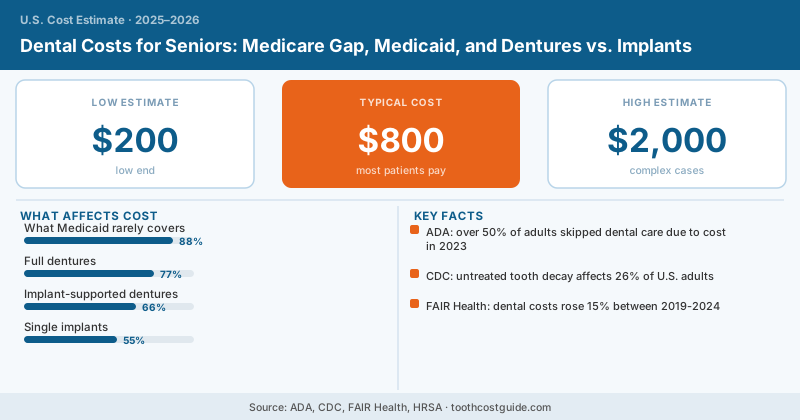
Traditional Medicare — Parts A and B — doesn’t cover routine dental care. At all. No cleanings. No fillings. No dentures. That’s the gap that catches millions of seniors off guard every year. According to the ADA Health Policy Institute, 70% of adults aged 65 and older visited a dentist in the past year, yet nearly half reported going without needed dental care due to cost. If you’re approaching 65 or already there, here’s what you actually need to know about your options and what things cost.
What Medicare Covers (and Doesn’t)
| Dental Service | Medicare Part A/B Coverage |
|---|---|
| Routine cleaning | Not covered |
| X-rays | Not covered |
| Fillings | Not covered |
| Dentures | Not covered |
| Dental implants | Not covered |
| Extractions for non-medical reasons | Not covered |
| Tooth extraction required for jaw surgery | May be covered |
| Emergency dental before hospitalization | Limited, case-by-case |
The only dental coverage most Medicare beneficiaries get is through Medicare Advantage (Part C) plans, which are sold by private insurers. As of 2024, roughly 60% of Medicare Advantage plans include some dental benefits — but coverage varies enormously. Many cap benefits at $1,000–$2,000 per year and exclude implants or major restorative work.
Medicaid Dental for Seniors: The State-by-State Reality
Medicaid dental coverage for adults (including seniors who qualify) is entirely determined by state. The CDC reports that 22 states offer comprehensive adult dental Medicaid benefits; 13 states offer limited benefits (emergency only or extractions only); and 15 states offer no routine adult dental benefits at all.
What “comprehensive” Medicaid dental typically covers:
- Cleanings and exams (often limited to one per year)
- X-rays
- Fillings and extractions
- Dentures (partial or full, with restrictions)
What Medicaid rarely covers:
- Dental implants
- Cosmetic or elective restorations
- Crowns (in many states)
If you’re dual-eligible (Medicare + Medicaid), Medicaid typically fills in as secondary coverage. Contact your state’s Medicaid office to get the current dental benefit schedule — it changes regularly.
What Seniors Actually Pay Out of Pocket
| Common Senior Dental Procedure | Average Out-of-Pocket Cost |
|---|---|
| Dental cleaning + exam | $150–$350 |
| Full-mouth X-rays | $100–$250 |
| Tooth extraction (simple) | $150–$400 |
| Partial denture | $1,200–$2,500 |
| Complete (full) denture — one arch | $1,500–$3,500 |
| Implant-supported denture (per arch) | $3,500–$8,000 |
| Single dental implant | $3,000–$5,500 |
| Crown | $1,000–$2,000 |
| Root canal (molar) | $900–$1,800 |
Dentures vs. Dental Implants for Seniors: Which Makes Financial Sense?
This is one of the most common questions seniors face. The short answer: it depends on your bone health, overall health, and how long you expect to use the replacement.
Full dentures cost $1,500–$3,500 per arch but require relining every 5–7 years ($300–$500 each time) and full replacement every 10–15 years. If you’re 75 and in good health, a $2,000 denture may serve you well for 10+ years.
Implant-supported dentures cost $3,500–$8,000 per arch upfront but are more stable, preserve jawbone better, and have lower long-term maintenance costs. They’re the gold standard for quality of life — but they require sufficient bone density and overall health that allows for surgery.
Single implants at $3,000–$5,500 each make the most sense when replacing isolated missing teeth where adjacent teeth are healthy. For seniors missing many teeth, the math often favors implant-supported overdentures.
Long-term denture wearers often experience progressive jawbone resorption — the bone shrinks because it’s no longer stimulated by tooth roots. After 10+ years in dentures, many patients have lost significant bone and may no longer qualify for standard implants without expensive bone grafting. Implants, placed earlier, prevent this cycle. If you’re considering both options and you’re in your early 60s with good bone density, the lifetime economics often favor implants.
Lower-Cost Options for Seniors
Dental schools: Supervised dental students and residents offer services at 40–60% below private practice rates. Most major cities have at least one accredited program. Procedures take longer, but the quality is solid.
Senior dental clinics: Many nonprofit organizations, hospital systems, and community health centers offer reduced-rate dental programs specifically for seniors on fixed incomes. Search for “senior dental care” + your city or county, or contact your local Area Agency on Aging.
PACE programs: Programs of All-Inclusive Care for the Elderly often include dental benefits for qualifying participants. Eligibility requires being 55+ and nursing-home eligible while living in the community.
Dental discount plans: For seniors without Medicare Advantage dental benefits, plans like Aetna Vital Savings ($80–$180/year) can reduce cleaning, extraction, and denture costs by 20–40%.
Supplemental (“Medigap”) insurance does not cover dental care — despite what some agents imply. Only Medicare Advantage plans with explicit dental riders provide any dental coverage under the Medicare umbrella. Read plan summaries carefully before enrolling.
The Bottom Line
The Medicare dental gap is real and significant. Seniors who need major dental work — dentures, implants, or multiple crowns — often face $5,000–$15,000 in out-of-pocket costs with no insurance backstop. The strategies that help most: choosing a Medicare Advantage plan with strong dental benefits during open enrollment, using dental schools or community health centers for routine and restorative care, and acting before problems become emergencies. The cost difference between a $150 cleaning that catches a cavity early and a $1,400 root canal later is stark — and on a fixed income, that difference matters.