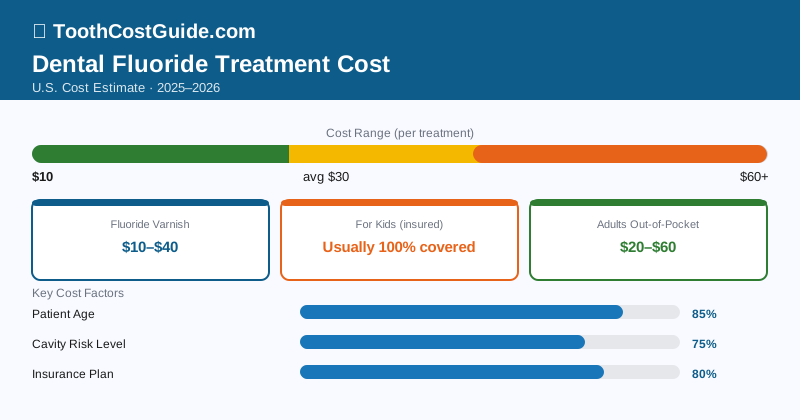
42% of American children ages 2–11 have had cavities in their primary teeth, according to the CDC — and fluoride treatments remain one of the most cost-effective ways to prevent them. At $10–$60 per application, professional fluoride is also one of the cheapest things your dentist offers. The catch is that insurance often draws a hard line at age 18, leaving adults to pay out of pocket for a treatment that can still benefit them.
Here’s what fluoride treatments actually cost, when they’re worth it, and when you can skip them.
Fluoride Treatment Cost Breakdown
| Fluoride Type | Average Cost (No Insurance) |
|---|---|
| Fluoride varnish (standard application) | $10–$40 |
| Fluoride gel (tray application) | $15–$50 |
| Fluoride foam | $10–$35 |
| Silver diamine fluoride (SDF) per tooth | $25–$150 |
| Prescription fluoride toothpaste (home use) | $5–$15/month |
Fluoride varnish is the most common form used today — a sticky coating painted onto the teeth that releases fluoride for hours after application. It takes about two minutes and is generally included in a pediatric cleaning visit. Gel and foam are older delivery methods you’ll see less often. Silver diamine fluoride (SDF) is a newer treatment used to arrest active decay — a different application from standard preventive fluoride.
What Insurance Covers (and What It Doesn’t)
For children under 18, fluoride treatments are almost universally covered as a preventive benefit. Most plans cover two applications per year at 100% with no deductible. It’s one of the easiest insurance benefits to use.
For adults, it gets complicated. Most commercial dental insurance plans don’t cover fluoride after age 18 as a standard benefit. Some plans extend coverage to age 19 or 21. A smaller number — particularly more comprehensive plans or those marketed to older adults — cover fluoride treatments for adults who have documented high cavity risk factors (dry mouth from medications, active decay history, braces, or radiation therapy to the head/neck).
If you’re an adult paying out of pocket, $10–$50 per application twice a year is $20–$100 annually. It’s not a budget-breaker, but it’s worth asking your dentist whether it’s clinically indicated for you.
When Adults Actually Need Professional Fluoride
Your dentist may recommend fluoride for you as an adult if you have:
Xerostomia (dry mouth): Hundreds of common medications — antidepressants, antihistamines, blood pressure drugs — reduce saliva flow. Saliva is your mouth’s natural defense against decay. Less saliva = higher decay risk. The ADA and American Academy of General Dentistry both recommend professional fluoride for adults on xerostomia-causing medications.
Orthodontic appliances: Braces create dozens of plaque traps. Brackets make brushing harder. Fluoride varnish applied every 3–6 months significantly reduces white spot lesions (early decay under and around brackets).
Radiation therapy to the head/neck: This can permanently damage salivary glands. Radiation patients are often placed on intensive fluoride protocols — prescription fluoride trays used daily — because their cavity risk becomes extremely high.
History of frequent cavities: If you’ve had 3+ cavities in the past 3–4 years as an adult, that’s a signal your cavity risk is elevated. Professional fluoride is one tool in the risk-reduction plan alongside diet changes and improved home care.
The ADA reported in 2024 that community water fluoridation prevents an estimated $6.5 billion in dental treatment costs annually — a figure that illustrates how meaningful this one mineral is in decay prevention even at low concentrations.
You don’t have to rely solely on in-office treatments. Prescription-strength fluoride toothpaste (5,000 ppm vs. 1,000–1,500 ppm in OTC products) costs $5–$15 per month and is often more effective for adults at high risk. Ask your dentist if a prescription makes more sense for your situation than twice-yearly varnish alone.
Is It Worth It Without Insurance Coverage?
For kids under 18: yes, unambiguously. It’s low cost, covered by most plans, and the decay prevention data is extensive.
For low-to-average-risk adults: it’s a judgment call. If your teeth are in good shape, you use fluoride toothpaste twice daily, and you live in a fluoridated water area, the incremental benefit of professional fluoride treatment is modest. You’re probably fine skipping it and putting that $20–$40 toward something your mouth actually needs.
For higher-risk adults — dry mouth, active decay, braces, radiation therapy — professional fluoride is worth every dollar. Preventing one cavity ($150–$300 for a composite filling) with $40 in annual fluoride treatments is an easy return on investment.
Don’t let a dentist upsell fluoride treatment as “essential” for a healthy adult with low cavity risk. It’s a beneficial preventive treatment for the right patient, but it’s not clinically necessary for everyone. If you’re low-risk, a good OTC fluoride toothpaste and fluoridated water are doing most of the same work.
For Children: Never Skip It
The CDC recommends fluoride varnish for all children starting at their first tooth eruption, applied every 3–6 months by a dental provider. Research consistently shows that professional fluoride applications reduce cavities in primary (baby) teeth by 33% and in permanent teeth by 18–22%.
Baby teeth matter even though they fall out. They hold space for permanent teeth, enable proper speech development, and support nutrition through normal chewing. Decay in primary teeth that spreads or causes pain can require extractions, space maintainers, and additional treatment that costs far more than a $20 fluoride treatment would have.
Bottom Line
Professional fluoride treatment costs $10–$60 per application — and for children, it’s nearly always covered by insurance. Adults generally pay out of pocket, but the cost is low. Whether it’s worth it depends on your specific risk factors. If your dentist recommends it, ask why: a clear clinical reason (dry mouth, active decay, braces) makes it worthwhile. For a healthy adult with no notable risk factors, OTC fluoride toothpaste used consistently may be all you need.