Tongue tie isn’t just a kids’ problem. Plenty of adults have restrictive lingual or labial frena that affect their speech, their ability to clean their teeth, their orthodontic results — or even their airway. And a growing number are finally getting them addressed.
Here’s what adult frenectomy costs, what to expect, and whether your insurance will help.
Frenectomy Cost Overview
| Procedure | Typical Cost |
|---|---|
| Lingual frenectomy (tongue tie) — scalpel/scissor | $250–$600 |
| Lingual frenectomy — laser | $450–$1,200 |
| Labial frenectomy (lip tie) — scalpel | $200–$500 |
| Labial frenectomy — laser | $350–$900 |
| Frenotomy (simpler release without tissue removal) | $150–$400 |
| Myofunctional therapy (often recommended alongside) | $150–$250 per session |
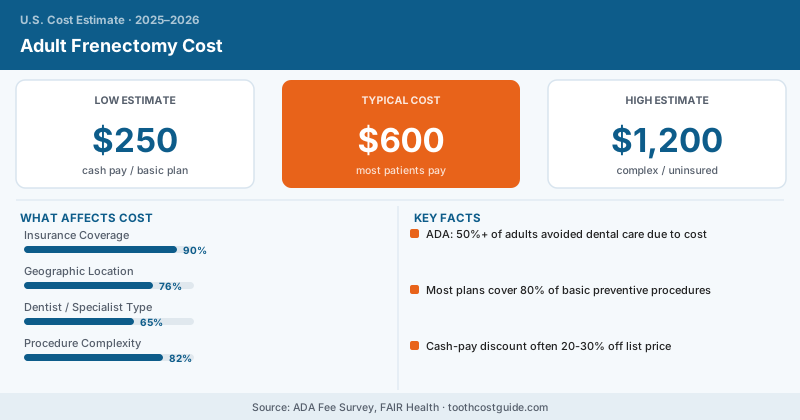
Most adults pay $350–$800 for a single frenectomy procedure. Myofunctional therapy (orofacial exercises to retrain muscle patterns after release) adds $500–$2,000+ but is strongly recommended for optimal outcomes.
What Is a Frenum?
A frenum (or frenulum) is a small fold of connective tissue that attaches one body part to another. In the mouth, there are two that cause problems:
Lingual frenum: Connects the underside of the tongue to the floor of the mouth. When it’s too short, thick, or attaches too close to the tongue tip, it restricts tongue mobility — this is ankyloglossia (tongue tie).
Labial frenum: Connects the upper or lower lip to the gum tissue. An oversized upper labial frenum can cause a gap between the upper front teeth (diastema) and make it difficult to clean along the gumline.
The American Speech-Language-Hearing Association estimates that ankyloglossia affects 4–10% of the population, though many cases are mild and never treated.
Why Adults Seek Frenectomy
Orthodontic reasons. A thick upper labial frenum that inserts between the front teeth can prevent orthodontic closure of a gap — or cause it to relapse after braces. Orthodontists often recommend labial frenectomy after braces but before retainer wear begins.
Gum recession. A tense frenum pulling constantly on the attached gum tissue can cause gingival recession — exposing root surfaces, increasing sensitivity, and risking future bone loss. Periodontal frenectomy addresses this before significant recession occurs.
Speech and tongue function. Adults with restricted tongue mobility may have subtle speech patterns (difficulty with “l,” “r,” “th” sounds), fatigue when speaking or singing, or difficulty licking certain foods. Frenectomy improves tongue range of motion.
Sleep and airway. There’s growing evidence linking severe tongue tie to restricted tongue posture, mouth breathing, and obstructive sleep apnea. While frenectomy isn’t a standalone sleep apnea treatment, some specialists include it in comprehensive airway management.
Denture fit. A labial frenum that inserts high on the ridge can interfere with denture fit. Frenectomy is sometimes performed before or concurrent with denture fabrication.
Laser frenectomy costs $150–$400 more than traditional scalpel technique but offers real advantages: minimal bleeding, no sutures needed in most cases, reduced post-operative discomfort, and faster healing. For adults who are self-pay and have dental anxiety, the laser’s faster recovery often justifies the premium. Either technique produces equivalent functional outcomes when performed by an experienced provider. The biggest variable isn’t the instrument — it’s the provider’s skill and the completeness of release.
The Procedure: What to Expect
Frenectomy is typically a 15–30 minute outpatient procedure. Under local anesthesia:
Scalpel/scissor technique: The frenum is cut and excess tissue removed. Sutures (dissolvable) are placed to close the wound. Recovery involves 3–7 days of soreness and some dietary restriction.
Laser technique: The laser vaporizes the frenum tissue. Most laser frenectomies need no sutures. Recovery is often 1–3 days of mild discomfort. A white tissue healing patch forms and resolves over 7–14 days.
Post-operative exercises (stretching the release site) are critical to prevent scar tissue from tightening and restricting movement again. Your provider should give you specific exercises to do several times daily starting the day after surgery.
Insurance Coverage
Most dental insurance plans cover frenectomy when it’s performed for functional reasons (speech, periodontal health, restorative purposes). Coverage typically falls under oral surgery at 50–80% after deductible.
Frenectomy performed purely for cosmetic purposes (closing a gap between front teeth without braces) is more often classified as cosmetic and denied. Documentation of functional impairment strengthens the case for coverage.
Medical insurance may cover lingual frenectomy when there’s documentation of speech impairment or other functional impact. A speech-language pathologist’s assessment letter helps significantly.
Frenectomy alone doesn’t automatically correct years of restricted tongue movement. The tongue has adapted compensatory muscle patterns over decades. Without myofunctional therapy to retrain those patterns after release, many adults don’t achieve the full functional improvement they’re hoping for. Budget for therapy alongside the procedure, not just the surgery.
Finding the Right Provider
Not all dentists are equally comfortable with adult frenectomy. The procedure is more complex in adults than children due to thicker, more fibrotic tissue and a higher risk of incomplete release.
Best providers:
- Periodontists (especially for labial frenum affecting gum tissue)
- Oral surgeons (for complex or deep releases)
- Dentists certified in laser soft-tissue procedures (for laser frenectomy)
- Myofunctional therapists who can coordinate with your provider
Questions to ask: How many adult frenectomies do you perform per month? Do you use objective tongue mobility assessments (like Tongue Tie Professionals International protocols)? What post-op exercises will you prescribe?
Saving on Frenectomy
Dental schools. Oral surgery and periodontics departments at dental schools perform frenectomies at 40–60% below private fees.
Bundle with ortho. If you’re already in orthodontic treatment and your orthodontist recommends frenectomy, ask whether they have an in-office provider who offers bundled rates.
Timing around insurance. If your plan has an annual maximum close to being met, scheduling frenectomy early in the benefit year maximizes your remaining coverage.
Adult frenectomy is a small procedure with potentially significant quality-of-life improvements. The cost is manageable, the recovery is quick, and for the right patient, it’s one of dentistry’s most worthwhile investments.