Most patients who’ve had a dental implant for 10+ years don’t realize the implant itself — the titanium post in the bone — is designed to last a lifetime. What needs replacing eventually is the crown that screws or cements on top. That distinction matters a lot when you’re staring at a dental bill: you’re not redoing the whole implant. You’re replacing one component.
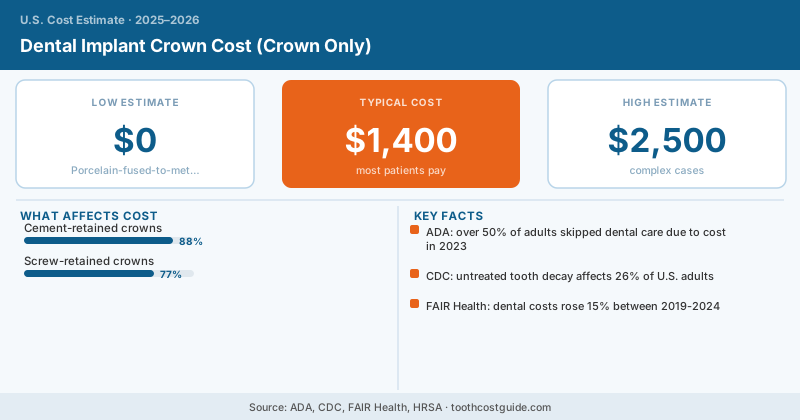
The crown alone runs $1,000–$2,500, depending on material and how it attaches. Here’s what determines where you land in that range.
What “Crown Only” Actually Means
An implant restoration has three parts: the titanium implant (in the bone), the abutment (the connector above the gumline), and the crown (the visible tooth-shaped cap). When people say they need the “crown only” replaced, they mean the implant and abutment are still functioning — they just need a new crown on top.
This happens for a few reasons:
- The crown chipped or cracked (porcelain fracture is the most common failure mode)
- The crown loosened or fell off
- The crown’s appearance has shifted over time while the surrounding teeth have changed
- It’s been 10–15+ years and it’s due for replacement
The ADA reports that dental implant crowns typically last 10–20+ years, with the most common reason for replacement being porcelain chipping — occurring in approximately 5–10% of cases at the 10-year mark. The implant itself, in most cases, is still fully functional.
Crown-Only Cost Breakdown
| Crown Type | Typical Cost |
|---|---|
| Zirconia (full contour) | $1,200–$2,500 |
| Porcelain-fused-to-zirconia | $1,000–$2,200 |
| Porcelain-fused-to-metal (PFM) | $1,000–$1,800 |
| Screw-retained crown (all types) | Add $0–$300 vs. cement-retained |
Zirconia has become the dominant material for implant crowns in the last several years — it’s strong, biocompatible, and requires no metal core. Full-contour zirconia (monolithic, no veneering layer) has the lowest fracture risk of any crown material, which matters on implants where bite forces are high. Porcelain-fused-to-zirconia looks more natural but has a slightly higher chipping risk at the porcelain layer.
Screw-Retained vs. Cement-Retained: Why It Affects Cost
This is the choice your dentist will make (or discuss with you) when placing the new crown.
Cement-retained crowns attach to the abutment with dental cement, much like a natural tooth crown. They’re often less expensive and easier to fabricate. The downside: excess cement below the gumline can be hard to remove and has been linked to peri-implant inflammation. And if the crown needs to come off in the future, it may require cutting it off.
Screw-retained crowns have a small access hole on the biting surface that allows the crown to be unscrewed and removed cleanly. Most implant specialists now prefer screw-retained for this reason — it’s retrievable without destroying the crown, and there’s no cement to cause problems below the gumline. It can add $100–$300 to the crown cost in some practices, but most dentists consider it the better long-term choice.
If your previous crown was cement-retained and you’re getting a replacement, ask your dentist whether screw-retained is an option for your implant system. Not every implant platform supports both options, but if yours does, screw-retained is generally the better choice for long-term retrievability. It’s worth asking before the lab fabricates the new crown.
Does Insurance Cover It?
Yes — and better than most people expect. Dental insurance typically treats an implant crown the same way it treats a crown on a natural tooth: as “major restorative,” covered at 50% of the allowed amount after your deductible.
That means if your plan’s allowed fee for a crown is $1,200 and you have a $50 deductible:
- Deductible: $50
- Insurance pays 50% of remaining $1,150 = $575
- You pay: $625 out of pocket
The catch, as always, is the annual maximum. Most plans cap total annual benefits at $1,000–$2,000. If you’ve already used $800 of that for cleanings and X-rays, the remaining $1,200 may not fully cover the 50% the plan would otherwise pay.
If your plan covers implants explicitly, the crown replacement is almost always covered at the same rate as the original crown — because at this point, the implant is an established restoration, not an elective choice. Check your plan’s summary of benefits under “prosthetics” or “crowns.”
Timing: When Does a Crown Need Replacing?
You don’t need to wait for it to crack. Here’s when replacement becomes necessary or appropriate:
- Visible fracture or chip — especially on zirconia where repair isn’t practical
- Crown has come off — sometimes recementation works; sometimes a new crown is needed depending on condition
- Peri-implant tissue changes — if gum recession or bone changes have altered the fit
- Significant wear or bite changes — after 15+ years, the opposing teeth may have shifted
If the crown loosened rather than broke, have your dentist check the screw torque first. A loose screw (not a failed crown) is a simple fix that costs $50–$150 at most, not a full crown replacement.
Don’t delay replacing a cracked implant crown. A crown with structural cracks — even if it’s not visibly broken off — can allow bacteria to reach the abutment connection and cause peri-implantitis, which is inflammation and bone loss around the implant. Peri-implantitis is expensive to treat and can threaten the implant itself. A new crown at $1,000–$2,500 is far cheaper than treating implant failure.
Bottom Line
Replacing just the crown on an existing implant costs $1,000–$2,500 — a fraction of the $3,000–$5,000+ it would cost to replace the entire implant system. If your implant and abutment are intact and functioning, don’t let a dentist’s estimate make you think you need to start over. Get a clear breakdown of what’s actually being replaced.
Insurance covers implant crowns at the same rate as natural tooth crowns — 50% of the allowed fee, subject to your annual maximum. Use pre-authorization before you schedule to get that coverage commitment in writing. And if you have HSA or FSA funds available, crown costs are a qualified medical expense — use pre-tax dollars.