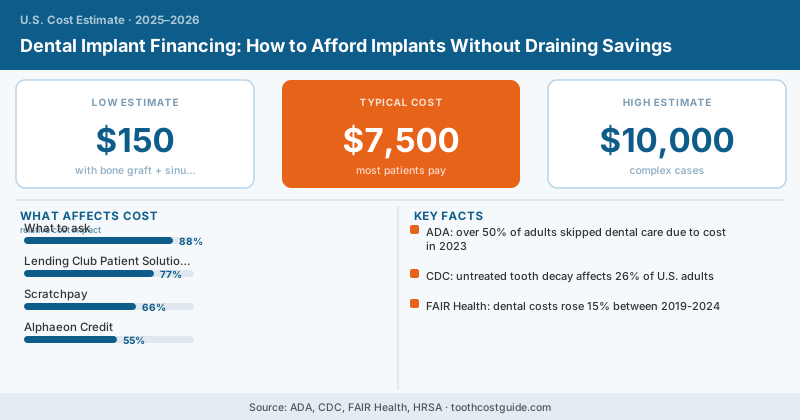
A single dental implant runs $3,000–$6,000 out of pocket. If you need four or more, you’re looking at a car payment’s worth of dental bills. That’s not a bill you can just write a check for on a Tuesday afternoon — and you shouldn’t have to. There are legitimate ways to spread that cost, reduce it significantly, or both.
Here’s a clear breakdown of every financing option worth considering, along with the catches most practices won’t tell you upfront.
What You’re Financing: Total Implant Costs
Before choosing a payment method, understand what the total number actually includes:
| Component | Typical Cost |
|---|---|
| Implant post (titanium screw) | $1,500–$2,500 |
| Abutment (connector) | $200–$500 |
| Crown (porcelain tooth) | $1,000–$2,000 |
| Bone graft (if needed) | $300–$3,000 |
| Sinus lift (upper jaw, if needed) | $1,500–$3,000 |
| CT scan / 3D imaging | $150–$400 |
| Total per tooth (no extras) | $3,000–$5,000 |
| Total with bone graft + sinus lift | $5,000–$10,000 |
Getting a quote that only says “$2,500 per implant” is almost certainly for just the post. Ask your provider for a line-item breakdown before you agree to anything.
Option 1: In-House Payment Plans (Best Starting Point)
Most implant providers — oral surgeons, periodontists, and many general dentists — offer in-house payment plans. These range from “pay over 3 months, no interest” to “12-month installment plans with a modest finance charge.”
The advantage: no hard credit pull, no third-party lender, and often zero interest if paid within 6–12 months.
The catch: if you miss a payment or go past the promotional window, the interest can be retroactively applied at rates of 18–26% APR.
What to ask: “Do you offer a payment plan with no interest if paid in full within 12 months? What happens if I can’t finish by then?”
Option 2: CareCredit
CareCredit is a healthcare credit card accepted at roughly 260,000 dental practices nationwide. It offers promotional periods — typically 6, 12, 18, or 24 months — with no interest if you pay the full balance before the period ends.
For a $4,500 implant, a 24-month plan means payments of about $187/month at zero interest. That’s genuinely affordable if your budget allows it.
CareCredit’s deferred interest model is different from true 0% APR. If you carry even $1 past the promotional end date, the full interest (typically 26.99% APR) is retroactively charged on the original amount — not just the remaining balance. Set calendar reminders and pay off early if at all possible.
Approval requires a credit check. You can apply at carecredit.com in minutes and know immediately if you qualify.
Option 3: Dental-Specific Financing Lenders
Several lenders specialize specifically in dental and medical financing. The main ones:
Lending Club Patient Solutions — offers fixed-rate loans for healthcare expenses, typically 5.99–24.99% APR depending on creditworthiness. Unlike CareCredit’s deferred interest, this is true fixed-rate financing with no retroactive surprise.
Scratchpay — quick approval, simple fixed installments. Often used by practices that want to offer a patient-friendly alternative to CareCredit. No deferred interest.
Alphaeon Credit — similar to CareCredit, used heavily by oral surgeons and implant specialists. Offers both deferred-interest and fixed monthly options.
Which is best? If you have good credit (700+), a fixed-rate personal loan through a bank or credit union often beats all of these. A 48-month loan at 8% APR for $5,000 runs about $122/month with no gotchas.
Option 4: HSA and FSA Funds
Dental implants are a qualified medical expense under IRS guidelines. If you have an HSA (Health Savings Account) or FSA (Flexible Spending Account), every dollar you use is pre-tax.
The real math: if you’re in the 22% federal tax bracket and pay $4,000 for an implant with HSA funds, you’re effectively paying $3,120 — the government covers $880 of it through tax savings.
A 2024 IRS contribution limit for HSAs was $4,150 for individuals and $8,300 for families. If you’re planning an implant 12–18 months out, you can deliberately build your HSA balance to cover a significant portion.
FSA accounts typically require you to use funds by year-end (with some grace periods). If you know you need an implant, schedule the surgery and pay the deposit in the same calendar year as your FSA contributions. You can also use the “use it or lose it” deadline as a reason to accelerate treatment timing.
Option 5: Dental Insurance That Covers Implants
Most traditional dental insurance plans still treat implants as “not covered” or pay only toward the crown component. But coverage is slowly improving.
According to the American Dental Association’s Health Policy Institute, as of 2023, approximately 22% of employer-sponsored dental plans now include some implant coverage, up from roughly 12% in 2016. Dedicated implant coverage plans — often sold as supplemental policies — have expanded as well.
What to look for in a plan:
- Does it cover the implant post specifically, or only the crown?
- Is there a waiting period for major services (typically 12–24 months)?
- What’s the annual maximum? ($1,500–$2,000 maximums make a small dent in implant costs)
If you’re buying dental insurance specifically to offset an upcoming implant, read the waiting period terms carefully. Most plans won’t cover it if you get the implant within the first year of coverage.
Option 6: Dental Schools
University dental schools and accredited residency programs perform implant surgery at 40–60% of private practice fees. Implant work is performed by dental students or residents under direct faculty supervision.
The tradeoff isn’t quality — it’s time. Appointments take longer, treatment can extend over more visits, and scheduling is less flexible. But the savings are real: a $5,000 implant at a dental school might run $2,000–$2,800.
Find accredited programs at ADA.org or search CODA (Commission on Dental Accreditation) listings. Major universities with dental schools in most large metro areas participate.
Option 7: Dental Tourism
Patients are increasingly traveling to Mexico (Tijuana, Los Cabos, Los Algodones), Costa Rica, or Colombia for implants at 50–70% savings. A full implant with crown that costs $4,500 in Dallas might run $1,200–$1,800 in Tijuana.
This is a legitimate option — many practices catering to US patients use the same implant brands (Nobel Biocare, Straumann) and have US-trained dentists. The risks: follow-up is harder if complications arise, travel costs eat into savings, and malpractice recourse is limited.
If you explore dental tourism, specifically look for practices that provide a written warranty on their work and have English-speaking patient coordinators.
Combining Strategies
Most patients who successfully manage implant costs don’t use just one approach — they layer them:
- Use insurance to cover the crown component ($800–$1,500 toward the total)
- Pay the remaining balance through CareCredit over 12 months at 0%
- Use HSA/FSA funds to avoid tax on as much as possible
- Stage treatment if insured: post placement year one, crown year two (resets annual maximum)
Staging treatment is a legitimate strategy your dentist may not suggest but won’t object to. Place the implant post one calendar year, the crown the next — effectively doubling your insurance maximum benefit.
What Not to Do
Don’t skip the implant entirely and just leave the gap. A missing tooth causes bone loss in the jaw over time, which shifts neighboring teeth and creates more expensive problems down the road. The American Academy of Implant Dentistry estimates that untreated tooth loss can lead to 25% reduction in bone width in the first year alone.
And don’t sign financing paperwork under pressure. If a practice asks you to commit to a payment plan at the consultation appointment, there’s no harm in saying “I need 48 hours to review this.” Any practice worth working with will be fine with that.