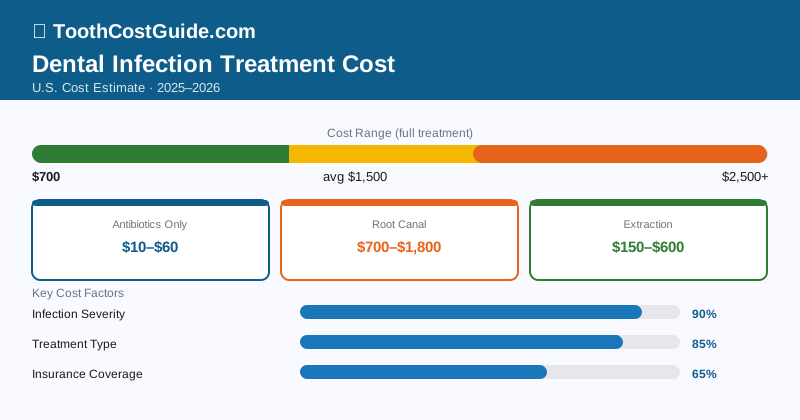
A dental infection — often called a dental abscess — requires treatment that typically costs $700–$2,500 for the complete course of care. The minimum involves antibiotics ($10–$60) plus either a root canal ($700–$1,500) or extraction ($150–$600) to eliminate the source. Left untreated, a dental infection can spread to the jaw, neck, or airway — turning a $800 dental problem into a $20,000+ hospital stay.
| Treatment Component | Cost (No Insurance) |
|---|---|
| Emergency exam + X-rays | $100–$250 |
| Antibiotics (amoxicillin, clindamycin) | $10–$60 |
| Incision and drainage (I&D) of abscess | $150–$400 |
| Root canal — front tooth | $700–$1,000 |
| Root canal — molar | $1,000–$1,500 |
| Crown (following root canal) | $1,000–$1,800 |
| Simple tooth extraction | $150–$300 |
| Surgical extraction | $300–$600 |
| Hospitalization (if infection spreads) | $10,000–$50,000+ |
What Affects the Cost
Type of abscess. A periapical abscess originates at the root tip — typically from a dead or infected pulp — and requires root canal or extraction. A periodontal abscess occurs in the gum and bone around the tooth, often treated with deep cleaning, scaling, and sometimes antibiotics. The treatment and cost differ significantly between these two types.
Whether the tooth can be saved. The key decision: root canal therapy to save the tooth ($700–$1,500 + crown), or extraction ($150–$600) and eventual replacement ($3,500–$6,000 for an implant). The total 5-year cost of saving the tooth via root canal + crown ($1,700–$3,300) is often less than extraction + implant replacement.
Extent of spread. A localized abscess contained to one tooth is the simplest and cheapest scenario. If infection has spread to surrounding bone (osteomyelitis), soft tissue (cellulitis), or the neck and airway, IV antibiotics, surgical debridement, and hospitalization may be required at costs of $10,000–$50,000 or more.
Whether incision and drainage is needed. Large fluctuant abscesses (those with a visible swelling filled with pus) often require incision and drainage ($150–$400) in addition to antibiotics, to physically remove the pus. This provides faster relief than antibiotics alone.
Specialist involvement. Complicated infections may require an oral and maxillofacial surgeon (OMS) rather than a general dentist. Specialist fees are typically 20–40% higher than general dentist fees.
Treatment Options & Costs
Antibiotics alone ($10–$60): Antibiotics do NOT cure a dental abscess. They reduce the bacterial load and manage spreading infection, but the source of the infection — dead or infected pulp, or deep gum pockets — must be eliminated definitively. Think of antibiotics as buying time until definitive treatment, not as the solution.
Root canal therapy ($700–$1,500): Removes the infected pulp, cleans the root canals, and seals them. Eliminates the source of infection while preserving the tooth. A crown ($1,000–$1,800) is almost always recommended afterward. Many patients feel relief within 24 hours of the root canal procedure. This is the preferred treatment for preserving a valuable tooth.
Tooth extraction ($150–$600): If the tooth is non-restorable (too much bone loss, vertical root fracture, extreme decay) or if cost is prohibitive, extraction removes the infected tooth entirely. Pain relief is typically rapid. The resulting gap requires eventual replacement to prevent bone loss and tooth migration.
Incision and drainage ($150–$400): A local procedure to drain pus from a visible abscess. Provides immediate relief and reduces the bacterial load. Done under local anesthesia. Often performed at the same appointment as an emergency exam, before definitive treatment is completed.
Hospitalization (severe cases): If swelling extends into the neck or floor of the mouth, or if the patient can’t swallow or breathe normally, emergency hospitalization is required. IV antibiotics, possible surgery to drain deep space infections, and multi-day stays cost $10,000–$50,000. This is the consequence of untreated dental infections.
With vs. Without Insurance
- Emergency exam + X-rays: Covered 80–100% under diagnostic benefits
- Root canal: Covered 40–60% under major restorative; out-of-pocket ~$350–$750
- Crown: Covered 40–60%; waiting period may apply on newer plans
- Extraction: Covered 75–90% for simple; out-of-pocket $15–$75
- Antibiotics: Usually covered by medical/pharmacy insurance; often $0–$10 with Rx coverage
Without insurance: The complete treatment for a single abscessed molar requiring root canal + crown could run $2,200–$3,300. GoodRx coupons for antibiotics reduce the prescription cost to $4–$15 regardless of insurance. Dental school clinics bring root canal + crown costs down to $700–$1,300.
What To Do
- See a dentist the same day if you have a dental abscess — don’t wait for symptoms to worsen.
- Do not pop or squeeze an abscess — this can drive bacteria deeper into tissues.
- Take prescribed antibiotics as directed — do not skip doses or stop early once you feel better.
- Use warm saltwater rinses (1/2 teaspoon salt in 8 oz warm water) every few hours to help draw out and flush the abscess area. This doesn’t replace dental treatment but provides comfort.
- Manage pain with ibuprofen (400–600 mg every 6 hours) if not contraindicated.
- Go to the ER immediately if you develop swelling in the neck, difficulty swallowing or breathing, fever above 103°F, or eye swelling. These are signs of a spreading infection that is life-threatening.
How to Save Money
Don’t delay treatment. The cheapest dental infection treatment is the one addressed early, when a simple root canal suffices. Delaying until hospitalization is required turns a $1,500 problem into a $30,000 one.
Use GoodRx for antibiotics. Amoxicillin 500 mg (28 capsules, a typical 7-day course) costs $4–$15 with GoodRx at most pharmacies — versus $40–$60 without a discount card.
Dental schools. Root canals at dental school endodontic clinics cost $300–$600. Crowns run $400–$700. The total treatment cost can be reduced by 50–60%.
Community health centers. FQHCs offer dental care on sliding-scale fees based on income. Free or near-free for patients below 200% of the federal poverty level.
A dental infection with neck swelling, difficulty opening your mouth wide (trismus), difficulty swallowing, fever above 103°F, or swelling that is spreading rapidly to the eye or neck is a life-threatening emergency. Call 911 or go to the nearest emergency room immediately — do not wait for a dental appointment.
Bottom Line
Treating a dental infection costs $700–$2,500 for most patients — antibiotics plus root canal or extraction. The much higher cost comes from ignoring the infection until it spreads. With insurance, out-of-pocket for root canal + crown typically runs $700–$1,200. Without insurance, dental schools reduce costs by 50–60%. Antibiotics alone are not a cure — definitive treatment to remove the infection source is always required.