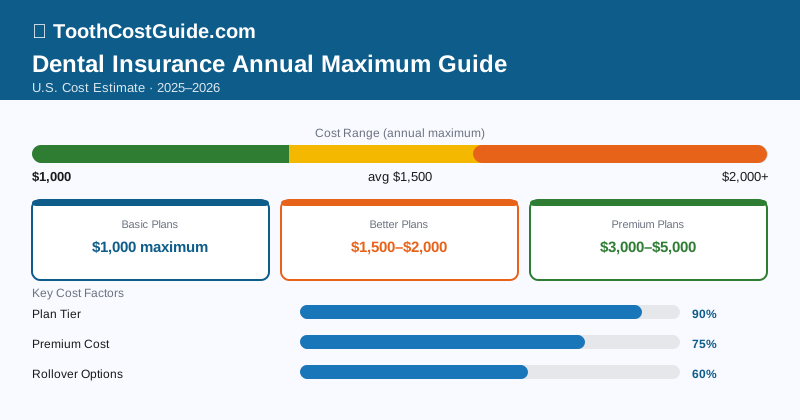
The typical dental insurance annual maximum is $1,000–$2,000 per person — and unlike health insurance, there’s no catastrophic coverage once you exceed it. You simply pay 100% of all dental costs beyond the cap for the rest of the year. Annual maximums have barely increased since the 1970s despite significant dental care inflation, meaning a $1,000 cap today covers far less than it did decades ago. Understanding how annual maximums work — and how to work around them — is essential for anyone with significant dental needs.
| Annual Maximum Amount | Plans Offering It | What It Covers in a Bad Year | Gap (Major Dental Year) |
|---|---|---|---|
| $1,000 | ~35% of plans | 1 crown or 2 fillings + cleanings | $1,000–$3,000+ out of pocket |
| $1,500 | ~30% of plans | 1–2 crowns with some change | $500–$2,000 out of pocket |
| $2,000 | ~25% of plans | 2 crowns or 1 root canal + crown | $0–$1,500 out of pocket |
| $3,000–$5,000 | ~10% of plans (Spirit Dental) | Multiple major procedures | Minimal gap |
| Unlimited | HMO plans (copay model) | Everything at fixed copay | Copays only |
How Annual Maximums Work
The annual maximum benefit is the total dollar amount an insurance company will pay for your covered dental services in a 12-month period. Once the insurer’s payments reach this limit, you become responsible for 100% of all remaining dental costs for that calendar year.
What counts toward the annual maximum:
- Insurance payments for covered services (not your copay/coinsurance — the amount the insurer pays)
- All service tiers: preventive, basic, and major
- Some plans count in-network and out-of-network claims against the same maximum; others have separate OON maximums
What does NOT count toward the maximum:
- Your deductible payments (you pay the deductible before insurance pays anything, but it doesn’t count toward the max)
- Your coinsurance payments
- Amounts above the plan’s allowable for out-of-network care
Practical example:
- Annual maximum: $1,500
- You need: 2 cleanings ($0 copay, insurer pays $200), one filling (insurer pays $120), one crown (insurer pays $750)
- Insurance has paid: $200 + $120 + $750 = $1,070 toward the maximum
- Remaining: $1,500 - $1,070 = $430 in benefits left for the year
- If you now need a root canal (insurer would normally pay $700): Insurance pays only $430; you pay the remaining $270 plus your normal coinsurance on the amount below that
Annual maximum reset: The maximum resets on the policy anniversary date (usually January 1 for calendar-year plans). Scheduling deferred procedures into a new policy year starts the clock fresh and gives you a full year’s worth of benefits again.
Annual dental maximums haven’t kept pace with dental care inflation. A $1,000 maximum that was created in 1970 would need to be about $7,500 today to have equivalent purchasing power. When shopping for dental insurance, prioritize plans with higher maximums ($2,000+) — they cost only marginally more in premiums but provide significantly more protection in bad dental years.
Costs & Coverage Details
How much annual maximums protect you in real scenarios:
Light year (cleanings only):
- Insurance cost: $150–$200 (two cleanings); well within any maximum
- You benefit from 100% coverage; annual maximum is irrelevant
Moderate year (cleanings + 2 fillings):
- Insurance pays ~$400; well within any maximum
- Annual maximum still irrelevant
Heavy year (1 crown + cleanings):
- Insurance pays ~$900; within a $1,000 max (barely)
- With a $1,000 max: the cap just barely covers it
- Without insurance: crown costs $1,500; you save ~$900
Catastrophic year (3 crowns or crown + bridge + root canal):
- Insurance would theoretically pay $2,000–$3,000
- With a $1,000 max: you get $1,000; pay $3,000+ yourself
- With a $2,000 max: you get $2,000; pay $2,000+ yourself
- HMO plan (no maximum): Fixed copays only; significantly better in catastrophic years
Premium cost vs. maximum comparison:
- $1,000 max plan: ~$30/month ($360/year)
- $2,000 max plan: ~$45/month ($540/year) — $180 more per year for $1,000 more in protection
- Spirit Dental $3,000–$5,000 max: ~$45–$57/month — strong value for high-risk patients
- Dental HMO (no max): ~$15–$25/month — best for heavy dental users with no desire to pay out-of-pocket surprises
Orthodontic maximums: Orthodontic benefits have separate lifetime maximums ($1,000–$2,000) that are independent of and do not count against the annual dental maximum. A plan with a $1,500 annual max and a $2,000 ortho lifetime max offers combined coverage of up to $3,500 per person over the treatment lifetime.
Pros and Cons of Different Maximum Levels
Low maximum ($1,000) plans:
- Pros: Lower monthly premium ($5–$15/month less)
- Cons: Leaves you exposed in heavy dental years; a single crown can consume the entire maximum
- Best for: People in excellent dental health who mainly use preventive care
Standard maximum ($1,500–$2,000) plans:
- Pros: Covers most single-procedure years (crown, root canal)
- Cons: Still insufficient for multi-procedure years (bridge, multiple crowns)
- Best for: Average dental patients with occasional major work
High maximum ($3,000–$5,000) plans — Spirit Dental:
- Pros: Meaningful protection in multi-procedure years
- Cons: Higher premium; still has a cap
- Best for: Patients with known upcoming extensive dental needs
HMO plans (no annual maximum):
- Pros: No cap — insurance always shares costs regardless of how much work is done
- Cons: Network restriction; fixed copays apply to every procedure
- Best for: Heavy dental users who prefer predictable copays over percentage coverage
Who Annual Maximums Affect Most
People needing multiple major procedures in a year hit annual maximums fastest. A single root canal + crown can cost $2,000–$3,000; a bridge can cost $3,500–$6,000. These patients exhaust even $2,000 annual maximums quickly.
People with systemic health conditions affecting dental health (diabetes, heart disease, dry-mouth-inducing medications) tend to need more dental work and are more likely to hit annual maximums repeatedly.
People in their 50s–70s with aging restorations — old fillings failing, crowns cracking, bridges needing replacement — often face years with $3,000–$8,000 in dental work. Annual maximums provide limited protection in these years.
Patients planning extensive cosmetic rehabilitation who need multiple crowns or implants will find standard annual maximums completely inadequate. For these patients, the math often favors dental discount plans or dental schools rather than insurance with a $1,000–$2,000 cap.
How to Work Around Annual Maximums
Split major treatment across two calendar years. If you need two crowns, schedule one in November and one in January. Each crown gets a fresh annual maximum. Example: with a $1,500 maximum and two $1,500 crowns, this strategy gets you $3,000 in insurance benefits rather than $1,500.
Ask your dentist about treatment phasing. Most dentists will work with you to phase treatment across policy years when medically appropriate. Discuss your insurance situation openly — good dentists understand benefit maximums and help patients plan accordingly.
Use dental HMOs for expensive phases. If you’re facing a year of extensive dental work (bridge, multiple crowns), switching to a dental HMO temporarily could save money since HMOs have no annual maximum. You’d pay copays ($150–$350 per crown) instead of 50% coinsurance with an annual cap. Compare the math for your specific situation.
Add a dental discount plan after hitting the maximum. Once you exhaust your annual maximum, a dental discount plan ($8–$20/month) provides 20–50% savings on procedures for the rest of the year. Subscribe in October or November when you’re likely to hit your annual max.
Use HSA/FSA for costs above the maximum. Once you’ve exhausted your annual maximum, any additional dental costs are out-of-pocket. Pay them with HSA or FSA pre-tax dollars to reduce your effective cost by 20–37%.
Prioritize procedures by clinical urgency and cost within each benefit year. Work with your dentist to identify which procedures are most urgent and most expensive. Use your annual maximum on the procedures that generate the highest insurance payout — typically major services like crowns — not on procedures you could pay out of pocket more cheaply (like sealants or simple fillings).
Preventive care (cleanings, X-rays) typically counts against your annual maximum — meaning two cleanings per year might consume $150–$200 of your $1,000 maximum before any major work is done. Some plans have “preventive care doesn’t count against maximum” provisions; these are valuable and worth seeking out.
Annual dental insurance maximums of $1,000–$2,000 are woefully inadequate for patients facing significant dental work — a single bridge or implant can exceed the entire annual cap. The most important strategies: buy a plan with the highest maximum your premium budget allows, split major procedures across calendar years, and add a dental discount plan once you’ve exhausted the annual maximum.
Bottom Line
The $1,000–$2,000 annual dental insurance maximum is the single biggest limitation of traditional dental coverage. For light dental years (cleanings + occasional fillings), it’s more than enough. For heavy dental years (crowns, bridges, multiple root canals), it provides limited protection and leaves patients paying thousands out of pocket. Work around annual maximums by splitting treatment across calendar years, choosing HMO plans for high-need years, and pairing insurance with a dental discount plan after the maximum is exhausted. When shopping, prioritize plans with the highest annual maximum for your premium level — the premium difference is usually modest but the protection difference is significant.