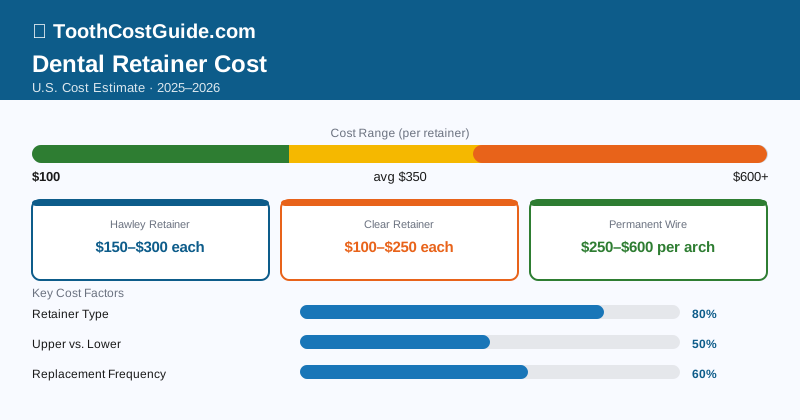
Removable retainers cost $100–$500 per arch; permanent (bonded) wire retainers run $250–$600 per arch. A full set of retainers — upper and lower — typically costs $300–$1,000 when obtained from your orthodontist or dentist. Replacement retainers are among the most commonly needed dental appliances, since many patients lose or break them.
| Retainer Type | Cost Per Arch | Full Set (Upper + Lower) |
|---|---|---|
| Hawley (wire + acrylic, removable) | $150–$300 | $300–$600 |
| Essix / clear (vacuum-formed, removable) | $100–$250 | $200–$500 |
| Vivera (Invisalign brand, set of 4) | — | $400–$900 |
| Permanent / bonded wire retainer | $250–$600 | $500–$1,200 |
| Replacement clear retainer (single) | $100–$250 | — |
| Replacement Hawley (single) | $150–$300 | — |
What Affects the Cost of a Retainer
Type of retainer. The three main retainer types — Hawley, Essix (clear), and bonded — have different materials, fabrication methods, and durability profiles that affect both initial and lifetime cost.
Whether included in orthodontic treatment fee. Most orthodontic practices include one set of retainers (upper and lower) in the total braces or Invisalign treatment fee. If retainers are included, replacement retainers are what most patients pay for out of pocket — typically $100–$300 each.
Where you get replacement retainers. Your original orthodontist typically charges the least for replacement retainers since they already have your records and models on file. A new dentist without your records may need to take new impressions, adding time and cost. Some online services (Sporting Smiles, Retainer Club) offer replacement clear retainers for $50–$150 using impressions you take at home.
Your dentist’s or orthodontist’s market. Urban practices in high-cost-of-living areas charge more for retainers. A Hawley retainer that costs $200 in the Midwest may cost $350–$400 in New York or Los Angeles.
Retainers are the most cost-effective dental appliance in orthodontics — and the most under-valued. Not wearing retainers allows teeth to shift back to their original positions, requiring retreatment that costs $2,000–$8,000. A $150 replacement retainer is the cheapest insurance against relapse.
Retainer Types: Pros, Cons, and Costs
Hawley retainer ($150–$300 per arch): The classic orthodontic retainer. An acrylic plate fits the roof of the mouth with a visible wire that crosses in front of the front teeth. Highly durable — a well-maintained Hawley can last 10+ years. Can be adjusted by an orthodontist if minor tooth movement occurs. More noticeable than clear retainers. Good choice for patients who want durability over invisibility.
Essix/clear retainer ($100–$250 per arch): A transparent vacuum-formed plastic tray — looks like an Invisalign aligner. Nearly invisible when worn. Easier for most patients to comply with. Less durable than Hawley retainers — typically last 1–5 years depending on material thickness and care. Some patients crack or warp them by drinking hot beverages while wearing them. Lower per-unit cost, but replacement is needed more often.
Vivera retainers (Invisalign brand, $400–$900 for a set of 4): Made by Align Technology from thicker material than standard Essix retainers. Sold in sets of 4 (2 upper, 2 lower). More durable than generic clear retainers. The premium price reflects the brand and material quality. Ordered through Invisalign-registered providers only.
Permanent/bonded retainer ($250–$600 per arch): A thin wire bonded directly to the back surfaces of front teeth. Invisible from the outside. Can’t be removed or lost. Ideal for patients who won’t consistently wear removable retainers. Requires flossing with a floss threader or water flosser to clean between bonded teeth. Occasional bond failures (one end detaches) require a dental visit to re-bond — typically $75–$150 to repair. Lifespan: 5–15 years.
With vs. Without Dental Insurance
Retainers are often partially covered when prescribed as part of active orthodontic treatment. Post-treatment retainers and replacements are frequently excluded.
Coverage scenarios:
- Retainers included in orthodontic treatment fee: Covered under orthodontic benefits along with the overall treatment
- Stand-alone retainers for orthodontic maintenance: Sometimes covered at 50% under orthodontic benefits if remaining lifetime maximum allows
- Replacement retainers: Usually not covered; considered patient responsibility
- Bonded retainer placement and repair: May be covered as a dental procedure code at 50% under major restorative
Without insurance:
- Replacement clear retainer: $100–$250 — affordable to replace as needed
- If you lose retainers frequently, a “retainer insurance” approach (replacing promptly when lost or broken, before significant shifting occurs) is cheaper than later orthodontic retreatment
How to Save Money on Retainers
Online retainer services. Companies like Sporting Smiles, EasySmile, and Retainer Club offer replacement clear retainers for $50–$150 by mail — you receive a dental putty impression kit, make your impressions at home, mail them in, and receive custom retainers. These work well if your teeth haven’t shifted significantly since your last professional retainers.
Ask your orthodontist for a replacement at your records visit. Some orthodontic offices include one year of free retainer replacements in their treatment fee. Read your treatment contract carefully.
Get duplicate retainers made at treatment end. When your orthodontist delivers your final retainers, ask about ordering a second set immediately for a backup. The cost when your records and models are fresh is lower than ordering replacements years later.
Repair before replacing. A bonded retainer that has come loose on one end can often be rebonded by a general dentist for $75–$150, rather than replacing the entire wire ($250–$600).
Never throw away a broken or cracked retainer before seeing your dentist or orthodontist. Even a cracked Hawley can sometimes be repaired for $50–$75. And a retainer that feels loose may simply need adjustment rather than full replacement.
Financing Options
Individual retainer costs ($100–$600 per arch) are typically affordable without financing. However, patients who need a full set of bonded retainers plus removable retainers at treatment end may face $500–$1,000+ in retainer costs.
FSA/HSA: Retainers required following orthodontic treatment are FSA and HSA eligible. Use pre-tax funds to pay for them.
Orthodontic treatment package: When negotiating the fee for braces or Invisalign, ask whether additional retainer sets (beyond the first set) can be added to the package for a modest extra fee. Some orthodontists will add a second set of Essix retainers for $100–$150 when negotiated at the start of treatment.
Bottom Line
Retainers cost $100–$500 for removable types and $250–$600 per arch for permanent bonded options. Most orthodontic treatment packages include the initial retainer set. Replacement retainers — the most common retainer-related expense — cost $100–$300 each from your orthodontist or $50–$150 from online retainer services.
Invest in retainer compliance. Teeth will shift without them — it’s not a question of if but when. A $150 replacement retainer worn nightly is the cheapest way to protect a $5,000 orthodontic investment.
Always get a written treatment plan before agreeing to any dental work. When completing orthodontic treatment, ask your orthodontist exactly what retainer type they recommend, whether retainers are included in your treatment fee, and what the replacement cost is if retainers are lost or broken.