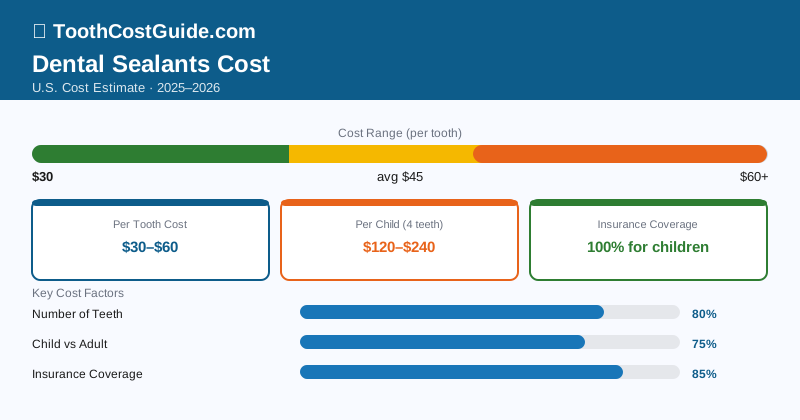
Dental sealants cost $30–$60 per tooth without dental insurance in the United States. Because most children need four molars sealed, the typical total runs $120–$240 per appointment. Most dental insurance plans cover sealants at 100% for patients under 18, bringing the out-of-pocket cost to zero for children with good coverage. Adults paying out of pocket for sealants will generally find them to be one of the most affordable preventive procedures in dentistry.
Sealant Types and Their Costs
| Sealant Type | Cost Per Tooth (No Insurance) |
|---|---|
| Resin-based sealant (standard) | $30–$60 |
| Glass ionomer sealant | $30–$55 |
| Four first molars (common age 6–7) | $120–$240 |
| Four second molars (common age 11–14) | $120–$240 |
| Adult sealant (single tooth) | $30–$60 |
| Sealant replacement / repair | $30–$50 |
What Affects the Cost of Dental Sealants
Number of teeth being sealed. The per-tooth price stays roughly the same whether you seal one tooth or eight. Most patients seal all four permanent first molars at age 6–7, then four second molars around age 11–14. Sealing eight teeth at one visit runs $240–$480 without insurance, but your dentist may offer a small discount for multiple teeth treated in one appointment.
Type of sealant material. Resin-based sealants are the most common and offer excellent durability — they typically last 5–10 years before needing replacement or repair. Glass ionomer sealants release fluoride into the surrounding enamel and are sometimes preferred for teeth where moisture control is difficult, though they tend to wear faster. Both are priced similarly.
Geographic location and practice type. Sealant costs vary by region. Urban practices in high-cost-of-living cities may charge $50–$60 per tooth, while suburban or rural offices commonly charge $30–$45. Dental school clinics charge significantly less — often $15–$30 per tooth under faculty supervision.
Whether the tooth has early decay. If X-rays or exam reveal incipient (early) decay in a molar pit or fissure, the dentist may need to clean out the area before sealing. This can add a small preparation charge or upgrade the treatment to a preventive resin restoration (PRR), which costs $70–$150 per tooth and is a hybrid between a sealant and a tiny filling.
Dental sealants are among the most cost-effective preventive procedures available. Research consistently shows they reduce the risk of pit-and-fissure cavities in molars by up to 80%, meaning each $30–$60 sealant can prevent a $200–$300 filling down the road.
Cost by Patient Age and Complexity
Children ages 6–7 (first molars). The most common and most insurance-friendly scenario. Most plans cover sealants at 100% for children through age 14 or 18. A child getting four molars sealed at no cost to the family is the norm for insured patients.
Children ages 11–14 (second molars). Second molars erupt in early adolescence and also benefit greatly from sealants. Insurance coverage typically extends to these teeth as well if applied within the age limits of the plan.
Teenagers and young adults. Some insurance plans cover sealants through age 18 or 21. Young adults who haven’t had sealants and are cavity-prone can benefit, though adult coverage is less common. Check your plan’s specific age cutoff.
Adults without prior sealants. Insurers rarely cover sealants for adults over 18–21. Paying $30–$60 per tooth out of pocket is still reasonable, especially for patients who are highly cavity-prone or have deep molar grooves that trap food and bacteria.
Sealant replacement. Sealants don’t last forever — they chip, wear, or partially detach over time. Replacing a sealant costs $30–$50 per tooth, and dentists check for sealant integrity at routine exams. Some practices include minor sealant repairs at no charge during regular cleanings.
With vs. Without Dental Insurance
Dental insurance is exceptionally favorable for sealants on children. Most PPO and HMO plans cover sealants at 100% (no copay) for patients under 14 or under 18, depending on the plan. Some plans extend coverage to age 21.
With insurance (child): $0 out of pocket for up to 8 sealants is common. No deductible applied, and sealants usually don’t count against the annual maximum because they fall under “preventive” or “diagnostic” benefits.
With insurance (adult): Most plans do not cover sealants for adults, or cover them at 50–80% as a basic preventive service. Read the exclusions section of your plan carefully — age limits are strictly enforced.
Without insurance: At $30–$60 per tooth, sealing four molars costs $120–$240. Even without insurance, this is money well spent. Compare that to $200–$400 to fill a cavity in the same tooth — the math strongly favors sealants.
Check whether your plan counts sealants toward the annual maximum. Many plans categorize sealants as preventive care, which is often covered at 100% and excluded from the annual benefit cap — meaning sealants won’t eat into the dollars available for fillings or crowns.
How to Save Money on Dental Sealants
Use a dental school clinic. Dental schools supervised by licensed faculty apply sealants for $15–$30 per tooth — roughly half the cost of a private office. The process may take longer, but sealants are a straightforward procedure that students perform frequently.
Ask about bundled pricing. Some practices offer a discount when sealing multiple teeth in one visit. It never hurts to ask: “Is there a per-visit price if we do all four at once?”
Apply during a routine cleaning. Many dentists can apply sealants at the end of a routine cleaning appointment, saving you a separate co-pay or exam fee. Confirm the sealant will be added to your cleaning appointment before arriving.
Community health programs. Many state and local public health departments offer free or low-cost sealant programs for school-age children, often conducted at schools. Check your state dental association’s website or the CDC’s “Seal America” resources.
Timing matters for adult coverage. If your insurance plan covers sealants only through a certain age and your child is approaching the cutoff, schedule before their next birthday to ensure coverage.
Financing Options
Sealants are inexpensive enough that financing is rarely needed for a single patient. However, for families sealing multiple children’s teeth in one visit, the total can reach $400–$600 without insurance.
HSA/FSA funds. Dental sealants are eligible medical expenses under Health Savings Accounts and Flexible Spending Accounts. Using pre-tax dollars provides an effective 22–37% discount depending on your tax bracket.
In-office payment plans. For uninsured families with multiple children, ask if the practice offers a small payment plan or a cash-pay discount. Many small practices will accommodate patients they see regularly.
Dental discount plans (not insurance). Plans like Careington or the Aetna Dental Access network offer discounted rates at member dentists. A $120/year membership plan may offer sealants at $20–$35 per tooth, paying for itself quickly if multiple family members need work.
Bottom Line
Dental sealants are one of the most straightforward, cost-effective investments in dental health you can make. At $30–$60 per tooth, they’re inexpensive by any dental standard — and free for most insured children. The CDC and American Dental Association recommend sealants for all permanent molars in school-age children because the evidence for cavity prevention is strong.
Adults who are cavity-prone or have deep molar grooves can also benefit, even without insurance coverage. The $30–$60 per tooth cost is a fraction of what a cavity in the same tooth would cost to treat later.
Dental cost estimates in this guide reflect U.S. national averages for 2024–2025 and may vary significantly by geographic region, provider type, and individual treatment needs. Always request a written treatment plan with itemized costs before agreeing to any dental work. Confirm coverage details directly with your insurance provider.