Most patients assume sealants are just for kids. Wrong. Adults with deep grooves in their molars — especially those prone to cavities — can benefit just as much, and the cost is surprisingly manageable.
What Dental Sealants Actually Are
A sealant is a thin, plastic coating painted onto the chewing surfaces of back teeth (molars and premolars). It flows into the pits and fissures where cavities most commonly start and hardens into a protective shield. The application takes about 5 minutes per tooth and involves no drilling.
The CDC reported in 2023 that sealants prevent 80% of cavities in the back teeth during the first two years, and continue protecting against 50% of cavities for up to four years. That’s a meaningful reduction for people who’ve struggled with cavity-prone molars.
What Sealants Cost for Adults
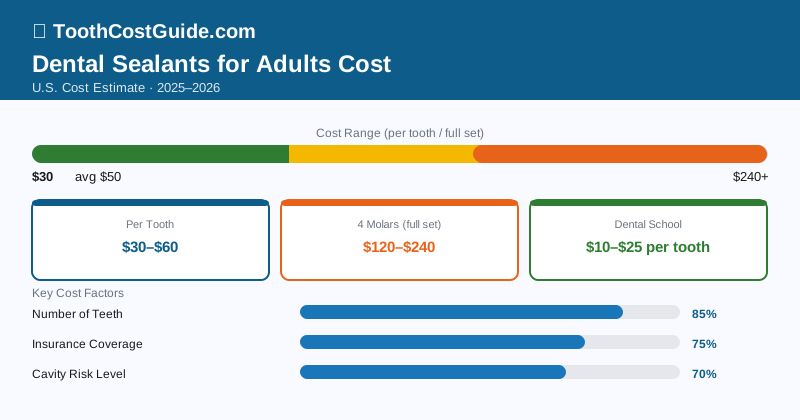
| Sealant Scenario | Average Cost |
|---|---|
| Per tooth (no insurance) | $30–$60 |
| Full set of 4 molars (cash price) | $120–$240 |
| At a dental school | $10–$25 per tooth |
| With PPO insurance (adult) | Often $0–$20 per tooth |
| With Medicaid (adult) | Rarely covered; state-dependent |
Adults typically need sealants on 4–8 teeth at most. The most common candidates are second molars that were never sealed in childhood, or premolars with unusually deep anatomy.
Does Insurance Cover Sealants for Adults?
This is where it gets complicated. The American Dental Association found in a 2022 member survey that nearly 90% of dental plans cover sealants for children up to age 14. Adult coverage is far less consistent.
Many PPO plans exclude sealants entirely for patients over 18. Others cover them with an age limit of 21 or 25. A smaller number of plans cover adult sealants when there’s documented clinical necessity — meaning your dentist notes you’re high-risk for cavities.
Before getting sealants placed, call your insurance company and ask specifically: “Do you cover sealants (ADA code D1351) for adults, and is there an age limit?” That one phone call can save you from a surprise bill.
- Adults who had no sealants as children and have cavity-prone molars
- Patients with deep, narrow grooves that trap food and are hard to clean
- Anyone with a history of recurrent cavities on molar chewing surfaces
- People with dry mouth (from medications or medical conditions) who have reduced saliva protection
- Adults starting orthodontic treatment — sealants on back teeth before braces go on can prevent cavities during treatment
How Long Do Sealants Last?
With normal wear, sealants on adult teeth last 5–10 years. Some hold up even longer. Your dentist checks them at each cleaning appointment and can reapply if a sealant chips or wears through. Reapplication costs the same as the original application — $30–$60 per tooth.
Sealants don’t protect the sides of teeth or between teeth, so you still need to floss. And they won’t stop a cavity that’s already forming — if there’s any early decay present, your dentist needs to address that first.
Are They Worth It for Adults?
Run the numbers. One cavity on a molar that requires a composite filling costs $150–$300. A sealant on that same tooth costs $30–$60 and can prevent the cavity entirely. If you’re someone who gets one or two new cavities per year despite good brushing habits, sealants pay for themselves on the first cavity they prevent.
Not everyone needs them. If you’ve gone a decade without a new cavity, your natural tooth anatomy and hygiene routine are working fine. But if cavities keep appearing on your back teeth, sealants are one of the most cost-effective preventive tools available to adults.
Sealants cannot be placed over active cavities. If your dentist finds decay during the exam, the cavity must be treated first — which adds to your total cost. Be sure your dentist does a thorough exam and possibly x-rays before recommending sealants so you’re not surprised by additional treatment.
Reducing Your Cost
Dental schools offer sealants at 50–70% below private practice rates. Community health centers and Federally Qualified Health Centers (FQHCs) use sliding-scale fees based on income. If you’re uninsured, ask your dentist whether they offer cash-pay discounts — many will reduce the fee 10–20% for patients paying at time of service.
The bottom line: adult dental sealants are a smart, low-cost preventive investment for anyone with a history of molar cavities. At $30–$60 per tooth, it’s one of the cheapest things your dentist can do with a measurable, proven payoff.