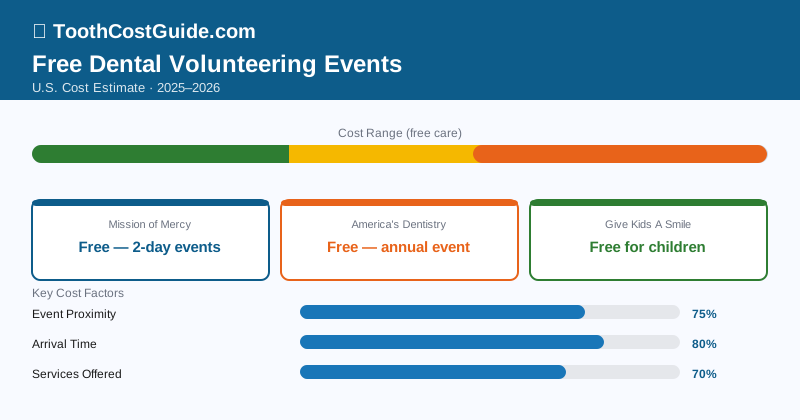
Free dental clinic events provide $500–$3,000+ in dental treatment per patient at no cost — including extractions, fillings, cleanings, and sometimes root canals — in single-day or weekend events held across the country throughout the year. Knowing which events to look for and how to prepare can mean the difference between getting treated and being turned away.
| Event Type | Organizer | Services | States/Frequency | Avg. Value per Patient |
|---|---|---|---|---|
| America’s Dentistry Day | ADA Foundation | Preventive, basic restorative | National, annual (Feb) | $200–$600 |
| Mission of Mercy (MOM) | State dental associations | Comprehensive (extractions, fillings, cleanings) | 30+ states/year | $500–$3,000 |
| Dentistry From The Heart | DFTH organization | Extractions, fillings, cleanings | 100+ cities/year | $200–$800 |
| Remote Area Medical (RAM) | RAM Foundation | Full dental + medical + vision | Rural/underserved areas | $300–$2,500 |
| Give Kids A Smile | ADA Foundation | Children’s preventive + restorative | National, Feb + year-round | $200–$600/child |
| State dental outreach events | State dental associations | Varies | Varies | $200–$1,500 |
| Veteran-focused dental events | Various nonprofits | Comprehensive | Varies | $500–$2,500 |
How It Works
These events operate through the voluntary participation of licensed dentists, dental hygienists, dental assistants, and support staff who donate their time and skills. Equipment, supplies, and venues are funded through donations, dental associations, and corporate sponsors.
Typical event structure:
- Doors open early (often 5:30–7 a.m.) and close when capacity is reached
- Patients receive a numbered ticket or wristband upon arrival
- A triage nurse or dentist does a brief intake
- Patients are assigned to treatment stations based on need
- Treatment is provided on-site using portable dental units or the host facility’s dental chairs
- No payment, no insurance filing, no documentation of immigration status required at most events
Mission of Mercy events (often called “MOM” events) are the most comprehensive, typically held in large arenas or convention centers. A full state MOM event may treat 1,500–2,500 patients over two days, with 150+ volunteer providers, providing over $1 million in free care.
Remote Area Medical began as a program to provide care in remote areas globally and now focuses heavily on rural US communities. RAM events include dental, medical, and vision services at a single location, often serving 1,000–2,000 patients per event.
Costs & Savings Details
What you can actually receive at these events:
Mission of Mercy / RAM events:
- Tooth extractions (simple and surgical): Up to 4–6 extractions per patient
- Dental fillings (composite or amalgam)
- Dental cleanings and exams
- Dental X-rays
- Some events: dentures, partial dentures
- Some events: root canals on anterior teeth
- Emergency treatment for pain/infection
Dentistry From The Heart:
- Extractions, fillings, cleanings
- Treatment stops when volunteers reach capacity
- Services vary by event
America’s Dentistry Day (February):
- Preventive care (cleanings, fluoride, sealants)
- Some restorative work depending on volunteer participation
Average per-patient treatment value by event type:
- Small local events: $200–$500
- State-level MOM events: $600–$2,000
- Multi-day RAM events: $500–$2,500
Eligibility / Who Qualifies
Most large-scale free dental events have minimal to no eligibility requirements:
Mission of Mercy and RAM: Open to anyone who is uninsured or underinsured. No income verification, no ID required at most events. Priority may be given to patients with acute dental pain.
Dentistry From The Heart: Open to all — no income requirement. First-come, first-served.
Give Kids A Smile: Primarily for children 0–18. Priority for uninsured or low-income children. No formal income test at most events.
America’s Dentistry Day: Open to all uninsured patients. Priority for low-income individuals.
Veteran-focused events: Typically restricted to current military, veterans, or their families. Some events require a VA card or DD-214.
Pros and Cons
Pros
- Completely free — no payment, no insurance, no credit
- No documentation requirements at most events
- Real dental treatment, not just screenings
- Multiple procedures in a single visit possible
- Builds community and connects patients with follow-up resources
Cons
- Events are sporadic — not a reliable ongoing care source
- Long lines — patients often arrive at 3–5 a.m. to secure a spot
- Treatment is limited to what can be done in a single visit
- Highly popular events run out of capacity by mid-morning
- Complex treatment plans (implants, extensive rehabilitation) cannot be addressed in one visit
Do not rely on free clinic events as your primary dental care strategy. They are lifelines for urgent needs, but dental health requires ongoing, preventive care. Use free events to address immediate pain and infection, then pursue a sustainable ongoing care solution (FQHC, dental school, or insurance).
Step-by-Step Guide
Find upcoming events in your area:
- Mission of Mercy: search “[State] Mission of Mercy dental” or check your state dental association’s website
- RAM: visit ramusa.org for upcoming event schedule
- Dentistry From The Heart: visit dentistryfromtheheart.org/events
- Give Kids A Smile: visit adafoundation.org/gkas
- General search: “[City/State] free dental clinic 2025”
- Dial 2-1-1 (United Way helpline) for local event listings
Register if pre-registration is available: Some events require pre-registration to guarantee a spot. Check the event website or call the organizing dental association. Others are walk-in only.
Plan your arrival time: For large MOM and RAM events, patients begin lining up at 3–5 a.m. even when doors open at 7–8 a.m. Bring a chair, warm clothes, water, snacks, and entertainment. The earlier you arrive, the more treatment options you’ll have.
Know what to bring: Photo ID (helpful but often not required), any dental X-rays you have, a list of medications and medical conditions, and any insurance cards (Medicaid/CHIP — even at free events, providers may bill for reimbursable items on your behalf).
Know what to prioritize: When you reach the triage station, clearly communicate your most urgent dental problems. Staff will prioritize treatment — acute pain, swelling, and infection get attention first.
Ask about follow-up resources: At the event, ask volunteers about ongoing care options — many events partner with FQHCs, dental schools, or local nonprofits to connect patients with continuing care.
Watch event social media: Free clinic events often announce last-minute cancellations, additions, or overflow capacity openings via Facebook or their organization’s website. Follow event organizers online.
State Mission of Mercy events are the most comprehensive free dental events in the US, but they typically occur once a year per state and fill up within hours of opening. To maximize your chances: (1) Find your state’s MOM event date 6+ months in advance, (2) Set an alarm for the pre-registration date if available, (3) Plan to be in line 2–3 hours before doors open. For the RAM event schedule (which includes dental), check ramusa.org in January for the year’s upcoming dates.
Bottom Line
Free dental clinic events provide real, comprehensive dental treatment to hundreds of thousands of Americans each year. For patients in acute dental pain who cannot access other care, these events are true lifelines. The key is knowing which events are available in your area, arriving early enough to secure treatment, and having a plan for ongoing care after the event addresses your immediate needs. Start with dentistryfromtheheart.org, ramusa.org, and your state dental association’s website to find events near you.