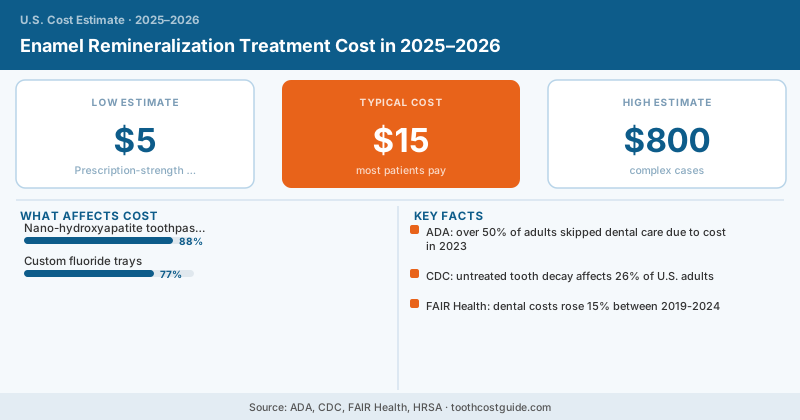
In 2010 this cost essentially nothing — fluoride varnish at your regular cleaning. In 2026, it’s a menu of treatments ranging from free to $800+, including some legitimately impressive technology that can stop cavities before they form. Here’s what each option does and what it costs.
Enamel Remineralization Treatment Costs
| Treatment | Cost Per Visit/Session |
|---|---|
| Professional fluoride varnish | $20–$50 (or included in cleaning) |
| Silver diamine fluoride (SDF) | $75–$150 per tooth |
| Icon resin infiltration (white spot lesion) | $200–$400 per tooth |
| Prescription-strength fluoride toothpaste | $5–$25/month |
| Calcium phosphate paste (MI Paste) | $15–$35 per tube OTC |
| Custom fluoride trays + gel | $50–$150 for trays; $10–$30/refill gel |
| Remineralizing program (multiple sessions) | $300–$800 total |
The dramatic cost range reflects the dramatic difference in what these treatments accomplish. Fluoride varnish applied at a cleaning is a different beast than Icon resin infiltration for post-orthodontic white spot lesions.
What Remineralization Actually Means
Enamel is the hardest tissue in the human body — but it’s not static. Every day, acids from bacteria and food dissolve minerals out of the enamel surface (demineralization). Saliva and fluoride deposit minerals back in (remineralization). When demineralization wins, you get a cavity.
The early stage of this process — before a cavity breaks through — is called a white spot lesion (WSL). You’ve seen them: chalky white spots on teeth, especially common after braces come off. At this stage, the enamel surface is intact but the subsurface is demineralized. This is the window when remineralization treatments can actually reverse the process without a drill.
Once enamel is completely broken through (a cavitated lesion), remineralization can’t close the gap. You need a filling.
Can:
- Reverse early-stage demineralization (white spot lesions) with proper treatment
- Stop an active pre-cavity from progressing
- Strengthen enamel against future acid attacks
- Improve appearance of white spots (especially with Icon resin infiltration)
- Reduce sensitivity from thin enamel
Can’t:
- Repair a cavity that has already broken through the enamel surface
- Regenerate enamel that’s been completely eroded
- Replace broken or chipped tooth structure
- Work without addressing the underlying cause (diet, oral hygiene, dry mouth)
Fluoride Varnish — The Foundation
Professional fluoride varnish is painted onto teeth at your cleaning appointment. It delivers a high-concentration fluoride dose that sticks to enamel for several hours, providing a significantly stronger remineralization boost than regular toothpaste.
Most dental plans cover fluoride varnish for children up to age 16 at no cost. For adults, it’s typically $20–$50 if your plan doesn’t cover it. The ADA recommends fluoride varnish for patients at elevated caries risk at least twice per year.
If you’re paying out of pocket, ask to have fluoride varnish included in your cleaning rather than billed separately — many offices do this automatically, especially for patients with active cavities or sensitivity.
Silver Diamine Fluoride (SDF) — The Aggressive Option
SDF is a silver fluoride liquid that’s been used in Japan and Australia for decades and received FDA clearance in the US in 2014. It works faster and more aggressively than standard fluoride.
Advantages: it arrests active cavities, works well for elderly patients who can’t tolerate drilling, and costs $75–$150 per tooth. Disadvantage: it permanently stains arrested cavities black. For many patients — especially those with cavities on back teeth — the dark staining is acceptable given the alternative (drilling and filling).
SDF is increasingly used for:
- High-risk pediatric patients who can’t cooperate with drilling
- Elderly patients (especially in nursing facilities)
- Patients with multiple active cavities who need a “holding strategy”
- Interproximal cavities (between teeth) detected on X-rays
Icon Resin Infiltration — For White Spots
This is the premium option for visible white spot lesions, particularly post-orthodontic white spots that appear when braces come off. Icon (from DMG America) uses a low-viscosity resin that penetrates into the demineralized enamel body, replacing the lost mineral content and sealing the surface.
The result: white spots visually blend into surrounding tooth color. Not perfect for every patient, but clinically significant improvement in 70–80% of cases. Cost is $200–$400 per tooth.
Icon requires multiple steps (acid etching, infiltrant application, curing) and takes about 15 minutes per tooth. It’s not covered by most dental insurance plans as a preventive treatment, though some plans categorize it under restorative at 50–80% coverage.
If you have white spots from wearing braces, get them evaluated before pursuing whitening treatments. Whitening tends to make white spots more visible initially (by brightening surrounding enamel while the spots remain chalky). Remineralization first — then whitening if needed. Icon works best before significant external discoloration complicates the picture.
At-Home Products That Actually Work
Not everything needs a dental appointment. Products with evidence behind them:
Prescription fluoride toothpaste (1.1% NaF) — Dentists can prescribe this for high-risk patients. It’s far stronger than OTC toothpaste (0.15% vs 0.24%). Cost: $5–$25/month. Cover the same amount as regular toothpaste on your brush; spit but don’t rinse.
MI Paste (casein phosphopeptide-amorphous calcium phosphate / CPP-ACP) — Delivers calcium and phosphate directly to enamel. Works well alongside fluoride (don’t apply simultaneously — they compete). OTC without prescription, $15–$35/tube.
Nano-hydroxyapatite toothpaste — Increasingly popular as a fluoride alternative. Contains a synthetic version of the mineral that makes up enamel. Evidence is promising but not as robust as fluoride at this point. Cost: $10–$25/tube.
Custom fluoride trays — Your dentist makes trays that fit your teeth; you fill them with prescription fluoride gel and wear for 5 minutes daily or nightly. Works well for rampant caries risk. Trays cost $50–$150 upfront; gel refills are $10–$30.
Insurance Coverage for Remineralization Treatments
- Fluoride varnish — Usually covered for children; adult coverage varies by plan (check your benefits)
- SDF — Coverage improving rapidly; CDT code D1354 is now recognized by most major plans
- Icon resin infiltration — Often not covered or covered at restorative rates; check your plan
- Prescription fluoride toothpaste — May be covered under medical or dental pharmacy benefits
- Custom fluoride trays — Usually covered under preventive at 80–100%
The Real Cost of Not Treating Early Lesions
A white spot lesion caught early and treated with Icon or fluoride costs $200–$400 to address. That same lesion progressing to a full cavity requires a filling at $150–$350, and if it reaches the pulp, a root canal and crown at $1,500–$3,500. Early remineralization treatment isn’t just good dentistry — it’s the cheapest dentistry possible at the point before drilling is required.
If your dentist says “watch this area” — ask what you can actively do to support remineralization in the meantime. Passive watching wastes the intervention window.