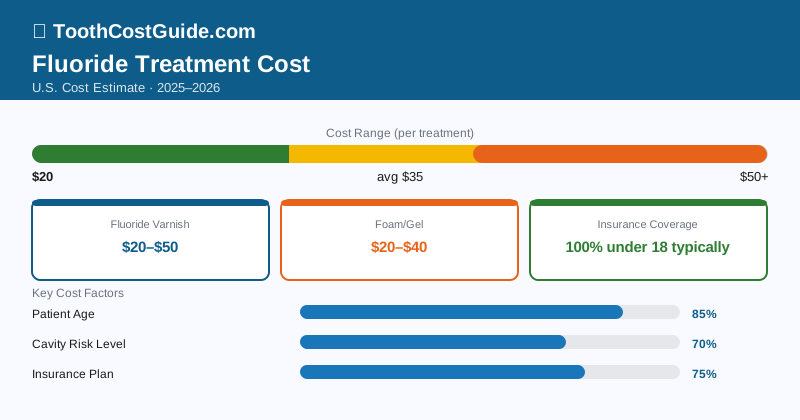
In-office professional fluoride treatments cost $20–$50 per visit without dental insurance in the United States. Children’s cleanings almost always include fluoride as a bundled preventive service, and most dental insurance plans cover it at 100% for patients under 18. Adults pay more out of pocket since many plans limit or exclude adult fluoride coverage. High-concentration prescription fluoride gels and toothpastes for home use add $10–$30 per tube, typically covered at a partial rate or not at all.
Fluoride Treatment Types and Their Costs
| Treatment Type | Cost (No Insurance) |
|---|---|
| In-office fluoride varnish (children) | $20–$40 |
| In-office fluoride varnish (adults) | $25–$50 |
| In-office fluoride foam/gel tray | $20–$45 |
| Silver diamine fluoride (SDF, per tooth) | $25–$75 |
| Prescription fluoride toothpaste (5,000 ppm) | $10–$30 per tube |
| Prescription fluoride gel (home tray use) | $15–$30 |
What Affects the Cost of Fluoride Treatment
Patient age and insurance status. Fluoride treatment for children is covered at 100% by the vast majority of dental insurance plans — it’s treated as a core preventive service. Adult fluoride coverage is inconsistent: some plans cover it, many don’t, and those that do may limit it to once or twice a year or require documentation of elevated cavity risk. Age is therefore the biggest cost factor for insured patients.
Type of fluoride product applied. Fluoride varnish — a sticky resin applied directly to teeth with a small brush — is the current standard and requires no trays or suction. It’s fast, well-tolerated by children, and associated with minimal fluoride ingestion. Fluoride foam and gel trays take 1–4 minutes to set and deliver higher fluoride concentrations, often used for patients with high cavity risk. Both are priced similarly, but varnish has largely replaced tray-based applications in most practices.
Silver diamine fluoride (SDF). SDF is a relatively newer application used to arrest active cavities, especially in primary teeth, elderly patients, or anyone for whom drilling is difficult or not desired. It’s applied directly to a decayed area with a small brush, costs $25–$75 per tooth, and leaves a black stain on the treated area. SDF is gaining acceptance as a minimally invasive alternative to drilling, particularly for managing decay in young children.
Frequency of treatment. The American Academy of Pediatric Dentistry recommends fluoride every 6 months for children at elevated risk. For adults, dentists may recommend two to four applications per year for patients with active decay, dry mouth (xerostomia), or undergoing cancer radiation treatment to the head and neck. Each application is billed separately.
In-office fluoride costs $20–$50 per visit, but for insured children it’s almost always free. For adults, the key question is whether your plan covers adult fluoride — check your Evidence of Coverage or call your insurer before your next cleaning, since the procedure takes only minutes and is easy to add to a routine visit.
Cost by Type and Complexity
Standard fluoride varnish for low-risk patients. A quick, one-minute application at the end of a routine cleaning. Used for children and lower-risk adults. Cost: $20–$40. Typically bundled into cleaning appointments; rarely billed separately for children.
Fluoride varnish for high-risk adults. Same product, same application, but billed as a separate line item for adults not covered under preventive benefits. Dentists may apply it two to four times per year for patients with receding gums, exposed root surfaces, dry mouth, or a history of frequent cavities. Cost per visit: $25–$50.
Silver diamine fluoride (SDF) for active decay. Used primarily in pediatric patients with early cavities in baby teeth or in elderly patients who cannot tolerate drilling. Applied per tooth, with follow-up applications often needed every 6–12 months. Cost: $25–$75 per tooth per application. Insurance coverage for SDF is improving but still inconsistent — verify with your plan.
Prescription fluoride home products. Dentists prescribe high-concentration fluoride toothpaste (1.1% sodium fluoride, 5,000 ppm) or fluoride gels for patients who need more than OTC products provide. A tube costs $10–$30 at a pharmacy or online. Some insurance plans cover these under prescription benefits rather than dental benefits, so check both sides of your coverage.
With vs. Without Dental Insurance
For children, fluoride treatment is nearly always covered at 100% as a preventive service. Most plans allow one or two fluoride treatments per benefit year per child, and the treatment does not count toward the annual maximum.
With insurance (child): $0 out of pocket is the norm. The fluoride varnish is applied at the routine cleaning visit, and your insurer pays the full $20–$40 charge.
With insurance (adult): Coverage is variable. Some PPO plans cover adult fluoride at 100%; others specifically exclude it for adults over 18 or 21. A 50% coverage rate is common when adult fluoride is covered at all, meaning you’d pay $10–$25. Call your insurer and ask specifically: “Is procedure code D1206 (fluoride varnish) covered for adults, and what is the patient copay?”
Without insurance: At $20–$50 per visit, fluoride treatment is one of the more affordable line items at a dental office. Skipping it to save money is rarely wise — the cost of one cavity it prevents ($200–$400 for a filling) vastly exceeds several years of fluoride treatments.
Professional fluoride applications are billed under ADA codes D1206 (fluoride varnish) or D1208 (fluoride gel or foam). If your insurer says “fluoride isn’t covered,” ask them to check those specific codes — some plans have outdated language but do cover the current procedures.
How to Save Money on Fluoride Treatment
Bundle with routine cleanings. Fluoride is cheapest — and often free — when added to a routine cleaning visit rather than scheduled as a standalone appointment. You avoid a separate exam fee and the procedure takes only minutes to add.
Use OTC fluoride products between visits. While not a substitute for professional treatment, daily use of fluoride toothpaste and fluoride mouthwash strengthens enamel between visits. High-risk patients can ask about over-the-counter fluoride rinses (ACT, Colgate Total) to reduce cavity risk without additional out-of-pocket cost.
Request SDF evaluation for early decay. If your dentist spots an early cavity, ask whether silver diamine fluoride is appropriate before agreeing to a filling. SDF costs $25–$75 per tooth and can arrest decay in early-stage cavities, potentially avoiding the $200–$400 drilling and filling cost.
Community water fluoridation. If your tap water is fluoridated (roughly 73% of U.S. community water systems), you’re receiving continuous low-dose fluoride protection at no cost. Drinking fluoridated tap water has been shown to reduce cavities by 25% on its own.
Dental school clinics. Professional fluoride treatments at dental school clinics cost $10–$20, about half the private-office rate. For adults paying out of pocket who need frequent fluoride applications, this is a meaningful saving over time.
Financing Options
Fluoride treatments are low-cost enough that formal financing isn’t relevant for most patients. However, for uninsured adults who need frequent high-risk fluoride applications or SDF treatments across multiple teeth, small costs add up.
HSA/FSA eligibility. Professional fluoride treatments are eligible expenses under Health Savings Accounts and Flexible Spending Accounts, as are prescription fluoride home products. Use pre-tax dollars to pay — depending on your bracket, that’s an effective 22–37% discount.
Dental discount memberships. In-office discount plans offered by dental practices (typically $99–$199/year) often include one or two free fluoride treatments per year as part of the annual membership. If you’re uninsured and visit the dentist twice yearly, these plans often cover their cost through the included services alone.
Bundled preventive packages. Some dental offices offer annual “preventive care” packages for uninsured patients that bundle two cleanings, exams, X-rays, and fluoride for a flat fee of $200–$350. This approach brings per-visit fluoride cost to effectively $0 as part of the package.
Bottom Line
In-office fluoride treatment is a $20–$50 investment that’s free for most insured children and modestly priced even without insurance. It’s one of the most evidence-backed preventive procedures in dentistry — decades of research confirm that professional fluoride reduces cavity incidence, particularly for high-risk patients including those with dry mouth, gum recession, or a history of frequent decay.
Adults sometimes skip fluoride under the assumption it’s a “kids’ thing,” but dentists and the American Dental Association now recommend professional fluoride for all high-risk adults. At $25–$50 per application, the cost is minimal compared to the fillings, crowns, and root canals it may prevent.
Dental cost estimates in this guide reflect U.S. national averages for 2024–2025 and may vary significantly by geographic region, provider type, and individual treatment needs. Always request a written treatment plan with itemized costs before agreeing to any dental work. Confirm coverage details directly with your insurance provider.