Picture this: you’re 63, you’ve just retired, and your employer dental coverage ended last Friday. Now what? For millions of adults who find themselves in exactly this situation, AARP’s partnership with Delta Dental is often the first place they look — and sometimes the right answer. But “sometimes” is doing a lot of work in that sentence.
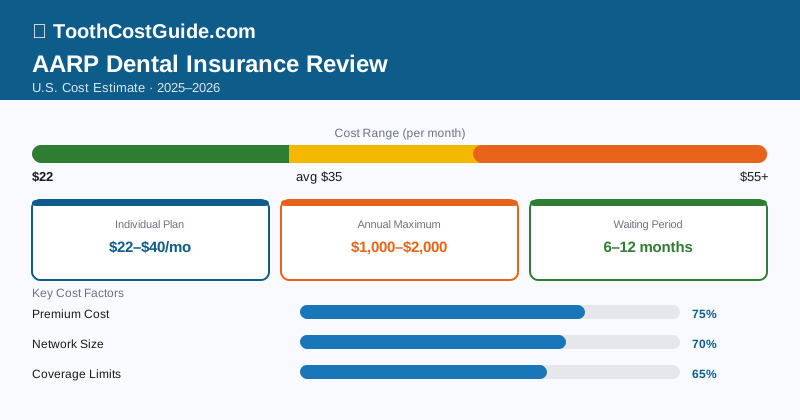
AARP’s dental plans run $27–$62/month for individuals with annual benefits of $1,000–$2,000. Whether that’s a good deal depends almost entirely on what dental work you need and when you need it.
| AARP/Delta Dental Plan | Monthly Premium | Annual Maximum | Preventive Coverage | Basic Coverage | Major Coverage |
|---|---|---|---|---|---|
| Dental Insurance Plan (entry) | ~$27–$35/mo | $1,000 | 100% (no wait) | 80% after 6-mo wait | 50% after 12-mo wait |
| Dental Insurance Plan (enhanced) | ~$47–$62/mo | $2,000 | 100% (no wait) | 80% after 6-mo wait | 50% after 12-mo wait |
| Dental Savings Plan | ~$11–$18/mo | No insurance benefit | Discount 10–60% | Discount 10–60% | Discount 10–60% |
Two Products, One Brand
AARP offers two fundamentally different things under the same dental umbrella, and they’re often confused.
AARP Dental Insurance Plans are actual insurance — monthly premiums, deductibles, annual maximums, the works. They’re administered by Delta Dental, one of the largest dental networks in the country. You must be an AARP member to buy in (membership runs $12–$16/year depending on how far in advance you pay). Plans are available in all 50 states, though the monthly rate varies by location — sometimes significantly.
The coverage structure follows the standard dental insurance playbook:
- Preventive care (cleanings, exams, X-rays): 100% covered, no waiting period
- Basic care (fillings, simple extractions): 80% covered after a 6-month wait
- Major care (crowns, dentures, root canals): 50% covered after a 12-month wait
AARP Dental Savings Plan is a discount membership — not insurance. Pay a small monthly fee, get access to Delta Dental’s negotiated fee schedules, pay discounted rates directly to the dentist. No claims, no annual limits, no waiting period. Just a discount card that actually works.
The Numbers Behind the Decision
Here’s where things get concrete. Take someone who needs two cleanings, one filling, and one crown in a single year.
Insurance plan (entry-level) — year 2+ math:
- Annual premium: ~$360–$420
- Two cleanings: $0 (100% covered preventive)
- One filling at $200: you pay $40 (80% coverage, 20% copay)
- One crown at $1,400: plan pays up to the $1,000 annual maximum — you pay the rest
- Your total out of pocket: roughly $860
- Without any insurance: $1,950
- Net savings: ~$1,090
That’s a solid outcome. But year 1 is a different story entirely.
The 6- and 12-month waiting periods mean that if you enroll in October needing a crown, you’re on your own until next October. The insurance doesn’t care that you’ve been paying premiums for months. If you can’t wait, you’re paying full price regardless. This is the scenario that frustrates most new enrollees.
Dental Savings Plan math:
- Annual cost: ~$168
- Crown at participating dentist (35% discount): $1,400 → $910, saving $490
- Two cleanings (30% discount): $300 → $210, saving $90
- Net benefit after $168 membership cost: $412
The Savings Plan wins when you need work now. The insurance plan wins for ongoing moderate-to-heavy dental use starting in year 2.
Who Can Actually Join
- Age 50 or older (household members of AARP members also qualify in some cases)
- Must hold an active AARP membership
- No medical underwriting — you can’t be rejected because of dental history
- Enrollment is open year-round, not limited to open enrollment windows
- Available in all 50 states (premium amounts vary)
That guaranteed acceptance and open enrollment are genuine advantages. If you’re 58 and have had lousy teeth your whole life, you can still get covered.
What Works, What Doesn’t
What works:
- Year-round enrollment with no health screening
- Delta Dental’s network covers most US dentists — finding a participating provider is rarely a problem
- The Savings Plan gives immediate, same-day discounts for people who can’t wait out a 12-month period
- Both plans can run simultaneously during the waiting period gap (use Savings for immediate needs, let insurance mature)
What doesn’t:
- The 12-month wait for major coverage is brutal if you need a crown now
- A $1,000–$2,000 annual maximum doesn’t go far — one crown plus an implant drains it completely
- Premiums are higher than what you’d pay through an employer group plan
- Major work covered at only 50% leaves substantial costs on you
If you enroll in AARP dental insurance knowing you need a crown or dentures, be aware of the 12-month waiting period. Enrolling in October to get a crown in December will leave you unprotected. Either enroll 12 months in advance or use the Savings Plan for immediate discounts while the waiting period passes.
How to Actually Use These Plans Well
Get a dental exam before you pick a plan. This matters more than most people realize. Walk into a dentist’s office and get a full exam and X-rays before you enroll in anything. If you need $5,000 in dental work, the insurance plan’s waiting periods make it nearly useless in year 1 — the Savings Plan might serve you better while the clock runs. If your teeth are in reasonable shape, the insurance plan is the smart long-term choice.
Check your state’s premiums before assuming the national rate. Premiums vary a lot by geography. A California resident might pay $20/month more than someone in Alabama for the same plan tier. Get an actual quote at aarp.org/dental before doing any math.
Verify your dentist is in the Delta Dental network. Visit deltadental.com and confirm your preferred dentist participates in the AARP Delta Dental plan specifically — not just Delta Dental in general. Some dentists participate in certain Delta Dental plan types but not others. A five-minute call can prevent a nasty surprise later.
Use both cleanings in your first plan year. Even if you’re waiting out the 12-month period for major work, the preventive coverage kicks in immediately. Two cleanings and an exam in year 1 can return $200–$400 in value on a $360/year premium.
Run both plans at once if you have immediate needs. The Savings Plan at $168/year runs fine alongside the insurance plan. Use the Savings Plan for the crown you need now; let the insurance plan mature so you have full coverage from year 2 onward. The total cost is modest, and it eliminates the most painful aspect of the waiting period.
AARP members over 65 on Medicare should compare the AARP Delta Dental plans against dental riders on Medicare Advantage plans. Some Medicare Advantage plans include dental benefits that can rival or exceed AARP’s plans — and are bundled into health coverage you may already be paying for. Compare total cost (premium + out-of-pocket) before choosing.
The Verdict
AARP’s Delta Dental plans are a legitimate, accessible option for the 50+ crowd without employer coverage. The guaranteed acceptance and open enrollment windows solve two real problems for this demographic. But the 12-month waiting period for major work and the modest $1,000–$2,000 annual cap mean you need to be strategic about when you enroll and which plan tier you choose.
For someone whose dental needs are primarily preventive, the entry-level plan at around $30/month is solid value. For someone who needs a crown next month, start with the Savings Plan, let the insurance waiting period run in the background, and you’ll be in much better shape by month 13.
Frequently Asked Questions
AARP Delta Dental plans for members 50+ range from $27 to $62 per month for individual coverage, depending on the plan level and your location. These premiums typically cover preventive services like cleanings and exams with little to no out-of-pocket cost, while major procedures carry higher patient responsibility.
AARP Delta Dental plans generally cover preventive care (cleanings, exams, X-rays) at 100%, basic procedures (fillings, extractions) at 70-80%, and major work (crowns, root canals) at 50%. Annual maximum benefits range from $1,000 to $2,000, meaning you pay anything beyond that limit out-of-pocket.
Most AARP Delta Dental plans include waiting periods of 6-12 months for basic and major services, though preventive care is typically available immediately. If you need a crown or root canal, you may need to wait up to a year before the plan pays benefits, so enrollment timing matters significantly for those with planned procedures.