What does it mean when a 34-year-old finally gets diagnosed with a tongue-tie that’s been there since birth? For many adults, it means finally understanding why certain speech sounds always felt effortful, why they can’t stick their tongue past their lower lip, or why the gap between their front teeth keeps coming back after orthodontic treatment.
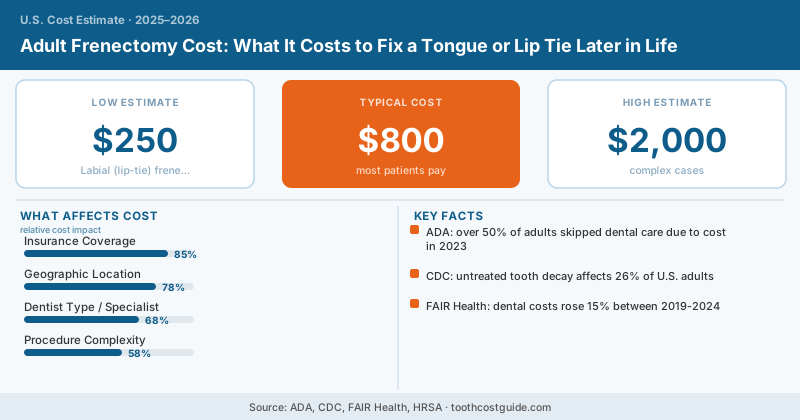
A frenectomy — removing or releasing the small band of tissue (frenum) connecting the tongue or lip to the mouth — costs $300–$1,500 for adults, varying by method and provider.
| Frenectomy Type/Method | Typical Cost |
|---|---|
| Lingual (tongue-tie) frenectomy, laser | $500–$1,500 |
| Lingual frenectomy, scalpel | $300–$800 |
| Labial (lip-tie) frenectomy, laser | $400–$1,200 |
| Labial frenectomy, scalpel | $250–$600 |
| Combined with orthodontic gap closure | $500–$2,000 (total case) |
Why Adults Are Getting This Done Now
Tongue-tie (ankyloglossia) awareness has increased significantly in pediatric and lactation circles over the past decade, largely driven by breastfeeding difficulties in infants. That same awareness has led more adults to recognize symptoms they’ve had their whole lives but never had a name for: difficulty with certain consonant sounds, jaw fatigue from compensating tongue posture, or chronic snoring linked to tongue positioning.
Others come to a frenectomy through orthodontics. A labial frenum — the tissue connecting the upper lip to the gum between the front teeth — that’s attached too low or too thick can pull on the gum, contributing to a persistent gap (diastema) that keeps reopening even after braces close it. Orthodontists frequently recommend a frenectomy either before or after gap-closing treatment specifically to prevent relapse.
Laser vs. Scalpel: Why the Price Differs
Laser frenectomy uses a soft-tissue diode or CO2 laser to cut and simultaneously cauterize the tissue, which usually means less bleeding, less need for stitches, and faster initial healing. The laser equipment itself represents a real investment for the practice, which is reflected in the higher fee.
Scalpel (traditional) frenectomy costs less but typically requires a few dissolvable stitches and slightly more post-procedure bleeding and swelling in the first 24-48 hours. Clinically, both methods are considered effective; the choice often comes down to what equipment the specific provider has and personal preference on healing experience.
For adults, especially those addressing tongue-tie for speech or function, many providers recommend specific tongue-stretching exercises for 1-2 weeks after the procedure to prevent the tissue from reattaching and restricting movement again. Ask upfront whether this guidance is included in your fee or requires a referral to a myofunctional therapist, which can add $75-$200 per session if multiple visits are needed.
Who Performs Adult Frenectomies
- General dentists with laser training handle many straightforward cases, particularly labial frenectomies for orthodontic purposes
- Periodontists often handle cases involving gum recession where the frenum is actively pulling gum tissue away from the tooth
- Oral surgeons typically handle more complex lingual cases, especially those requiring deeper tissue release
Insurance and Documentation
Getting insurance to cover an adult frenectomy hinges almost entirely on documented functional necessity. A dentist or physician noting specific symptoms — speech sound distortion, gum recession with active tissue pull, or feeding/swallowing complaints — gives an insurer a legitimate medical basis for the claim. A frenectomy requested purely to close a cosmetic gap, without any functional complaint, is far more likely to be denied as elective.
If speech is a concern, a referral to and evaluation by a speech-language pathologist before the procedure can strengthen the case for coverage and also confirms whether the frenectomy alone will actually resolve the speech pattern in question — sometimes it doesn’t, and therapy alone is the better first step.
Frenectomy for the sole purpose of closing a front tooth gap without orthodontic evaluation first can sometimes address the wrong root cause — a gap can also be caused by tooth size, jaw width, or missing teeth elsewhere, none of which a frenectomy fixes. Get an orthodontic evaluation before committing to frenectomy for cosmetic gap closure alone.
The Bottom Line
Adult frenectomy costs $300-$1,500, with laser methods costing more than scalpel but often healing faster. Whether insurance covers it comes down to documented function — speech, gum health, or feeding difficulty — versus pure cosmetic preference. If you suspect an undiagnosed tongue-tie or lip-tie is behind a lifelong issue, a consultation with a dentist experienced in adult frenectomies is a reasonable first step before assuming surgery is even necessary.
Frequently Asked Questions
An adult frenectomy typically costs $300–$1,500, with laser frenectomies at the higher end due to the equipment involved and traditional scalpel procedures often costing less. The exact price depends on whether it's a lingual (tongue) or labial (lip) frenectomy and whether it's performed by a general dentist, periodontist, or oral surgeon.
Adults seek frenectomies for several reasons: an undiagnosed tongue-tie causing speech difficulty or difficulty with certain sounds, gum recession caused by a tight lip frenum pulling on the gumline, orthodontic relapse or a persistent gap between front teeth linked to frenum attachment, and in some cases, sleep apnea or snoring related to restricted tongue mobility.
Coverage depends on medical necessity documentation. If the frenectomy addresses a functional problem — speech impairment, gum recession, or feeding/swallowing difficulty — it's more likely to be covered under dental or medical insurance. Purely cosmetic gap-closure requests without a documented functional issue are less likely to be approved.