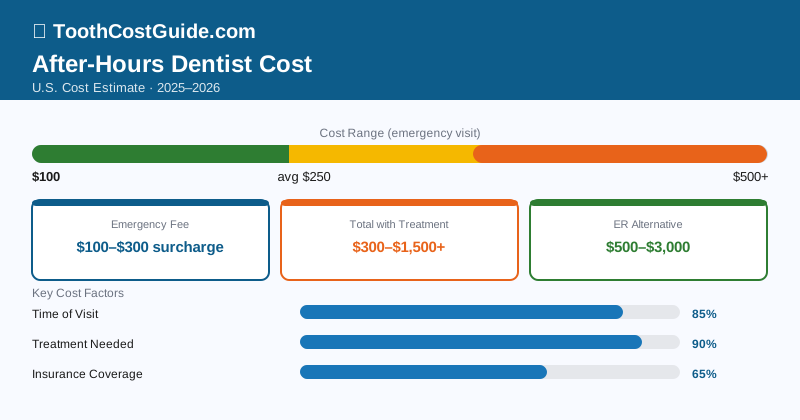
That cracked tooth that was tolerable all week gets significantly less tolerable at 8 PM on Saturday. The question isn’t just whether you should call a dentist — it’s whether the pain warrants paying $100–$300 more than a Monday morning appointment would cost. After-hours dental care runs $200–$600 total for a typical emergency visit including exam, X-rays, and basic treatment. The surcharge alone adds $100–$300 on top of normal fees.
Understanding what drives those numbers helps you decide whether to seek immediate care or manage through the night.
| Service | Regular Hours | After-Hours Total | Emergency Surcharge |
|---|---|---|---|
| Emergency exam + X-ray | $100–$200 | $200–$400 | $100–$200 |
| Emergency exam + temporary filling | $150–$350 | $300–$600 | $100–$250 |
| Emergency exam + extraction | $200–$500 | $350–$750 | $100–$300 |
| Emergency exam + antibiotics Rx | $75–$150 | $175–$400 | $100–$250 |
| Weekend urgent care dental chain | $150–$350 | $150–$350 | Often no surcharge |
What Drives the After-Hours Price Premium
When exactly you’re calling. Dentists typically define after-hours as evenings past 5–6 PM, weekends, and holidays. Some charge premiums only on Sundays and holidays, with Saturday appointments billed at regular rates. The more unusual the hour, the higher the surcharge.
Whether you’re an existing patient. Dentists often prioritize their own patients for emergency slots and may waive or reduce the surcharge for established patients they know. A new patient calling at 9 PM on a Sunday is, from the dentist’s perspective, a higher imposition — and the fee reflects that.
Solo practice vs. large group. A solo dentist who has to personally drive back to the office charges more for after-hours than a multi-dentist practice with an on-call rotation. Corporate dental chains like Aspen Dental, Western Dental, and Comfort Dental build extended hours directly into their standard schedule — often no surcharge at all. The trade-off is longer waits and a different care dynamic.
What treatment is needed. The emergency surcharge covers the visit itself. Treatment costs stack on top. A simple after-hours visit for a temporary filling might total $300–$400. Getting a molar extracted at 9 PM Saturday pushes costs to $400–$750 or more.
Four Ways After-Hours Care Typically Works
Emergency exam only — $100–$300 after-hours. The most common scenario. The dentist examines the tooth, takes targeted X-rays, issues a prescription for antibiotics or pain medication, and schedules definitive treatment during regular hours. You get stabilization and pain management tonight; the actual fix happens Monday.
Exam plus temporary treatment — $200–$500. A temporary filling, a crown re-cemented, or a medicated dressing placed over a painful exposed area. Quick work; the fee mostly reflects the after-hours availability premium rather than the procedure itself.
Exam plus definitive treatment — $300–$750+. If an extraction or the start of a root canal is needed tonight, the dentist performs the procedure. Costs add up fast: after-hours exam fee + treatment fee + surcharge. A molar root canal at 9 PM Saturday is the expensive end of this spectrum.
Teledentistry consultation — $50–$100. Platforms that connect you with an on-call dentist via video can assess your symptoms, advise whether you need to be seen immediately, and prescribe antibiotics in states that allow telehealth prescribing. Not a replacement for in-person care when it’s genuinely needed, but useful for reassurance and prescription access at 2 AM when you’re not sure how serious things are.
What Insurance Covers After Hours
The underlying treatment gets covered at the same rates as regular-hours care. The surcharge is where coverage gets murky:
- Emergency exam: Covered at 80–100% regardless of time of day for most plans
- Emergency surcharge: Some plans cover it within the standard limited exam fee; many don’t list it separately. The practical result: you often pay the surcharge out of pocket even with good insurance
- Treatment performed: Covered at standard rates (filling, extraction, root canal — whatever applies)
The key question to ask your insurance: “Is ADA code D0140 (limited oral evaluation) covered at the same rate regardless of when the visit occurs?” This determines whether the time-of-day premium affects your benefits.
Best practice: If your situation allows even a 10-minute window before heading out, call your insurance’s emergency or member services line. Know what’s covered before you commit to an expensive after-hours visit.
How to Find After-Hours Care
- Call your regular dentist’s after-hours line first. Most practices have a recorded message with an emergency contact number or a dentist on call. If they accommodate you, you’ll likely pay less than at an emergency chain.
- Search “emergency dentist near me open now.” Google Maps filters by current hours and often shows real-time status.
- Call 1-800-DENTIST (800-336-8478). Free referral service connecting callers with emergency dentists by zip code.
- Try teledentistry for non-severe situations. If you’re uncertain whether you need immediate care, a virtual consultation helps you decide without committing to a full in-person visit.
- Consider dental chains with extended hours. Aspen Dental, Comfort Dental, and similar chains often have 7 AM–7 PM weekday hours and Saturday appointments built in — typically at no surcharge.
- Assess honestly whether it can wait. Pain that’s manageable with ibuprofen plus acetaminophen, no swelling, no fever — that’s probably a morning appointment, not an emergency. Saving the surcharge is worth one uncomfortable night if the symptoms are truly manageable.
Can You Wait Until Morning?
Honestly, often yes. And doing so saves $100–$300.
Safe to wait:
- Pain is controlled (or at least tolerable) with OTC ibuprofen and acetaminophen
- No swelling of the face, jaw, or neck
- No fever
- You can open your mouth normally
- The tooth is sensitive or aching but not causing uncontrollable pain
Should not wait:
- Facial or neck swelling, or swelling that’s visibly growing
- Fever above 101°F alongside dental pain
- Difficulty swallowing or opening your mouth
- Throbbing pain that’s completely unresponsive to OTC medication
- Any concern that infection may be spreading
The after-hours emergency surcharge ($100–$300) is worth paying when you have signs of spreading infection, uncontrollable pain, or a true emergency. It’s often avoidable when pain is manageable with OTC medications and treatment can wait until morning.
Practical Ways to Reduce the Cost
Wait until morning when it’s safe to do so. This is the biggest single cost reduction. The same treatment costs $100–$300 less at 9 AM than at 9 PM.
Use dental chains with standard extended hours. Aspen Dental, Western Dental, Comfort Dental often have late-weekday and Saturday hours as part of their normal schedule — no emergency surcharge. Call first to check availability.
Ask about the surcharge explicitly when calling. “Is there an after-hours fee in addition to the exam and treatment?” Knowing the surcharge amount lets you compare costs between providers before driving somewhere.
GoodRx for antibiotics if that’s all you need. If you primarily need a prescription antibiotic to get through the weekend, a teledentistry visit costs $50–$100 and avoids the full in-person after-hours visit charge. A 10-day amoxicillin course with GoodRx runs $4–$10 at major pharmacies.
Severe swelling of the jaw, neck, or face; difficulty breathing or swallowing; fever above 102°F with dental pain; or swelling that’s visibly spreading by the hour are true medical emergencies. Skip the after-hours dentist and go to an emergency room or call 911.
The Bottom Line
After-hours dental care costs $100–$300 more than regular-hours care. Total visit costs run $200–$600 for exam plus basic treatment. Dental chains with built-in extended hours often skip the surcharge entirely. If pain is manageable with OTC medication and there are no infection signs, waiting until morning is usually the financially smart move. If infection is involved, don’t delay regardless of the extra cost.
Frequently Asked Questions
A typical after-hours emergency visit costs $200–$600 total, which includes the exam, X-rays, and basic treatment. The emergency surcharge alone adds $100–$300 to what you would pay during regular business hours, making the after-hours premium a significant portion of your bill.
Most dental insurance plans cover emergency treatments the same way they cover regular visits, but you may owe higher out-of-pocket costs due to deductibles and co-insurance (typically 20–50% of the treatment cost). However, many plans do not cover the emergency surcharge itself, leaving that $100–$300 fee entirely your responsibility.
Call an emergency dentist or visit an urgent care clinic that offers dental services; a typical weekend visit will cost $200–$600 for evaluation and basic relief treatment. If the pain is unbearable and you cannot reach a dentist, over-the-counter pain relievers and a salt-water rinse can provide temporary relief until you can see a dentist during regular hours on Monday.