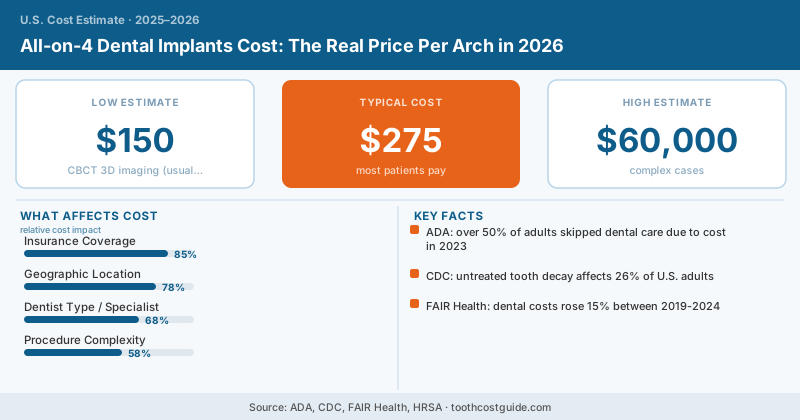
The $15,000-$30,000 quote for All-on-4 is normal. The confusion starts when a patient sees an ad for “All-on-4 starting at $9,995” and assumes that number is the full price — then discovers extractions, bone grafting, sedation, and even the final prosthetic weren’t included.
All-on-4 replaces an entire arch of missing or failing teeth using just 4 strategically placed implants supporting a fixed, non-removable prosthetic bridge. The technique was specifically engineered to work even with reduced bone volume, often avoiding the need for a separate bone graft — a major reason the price stays lower than traditional implant-supported dentures using 6-8 implants.
| Component | Typical Cost |
|---|---|
| All-on-4 per arch (implants, abutments, prosthetic) | $15,000–$30,000 |
| Both arches (upper and lower) | $30,000–$60,000 |
| Extractions (if teeth remain, per tooth) | $150–$650 |
| CBCT 3D imaging (usually required) | $150–$400 |
| IV sedation (often recommended) | $300–$800+ |
| Temporary “provisional” prosthetic | Often included, or $1,500–$3,000 separate |
| Final permanent prosthetic (zirconia upgrade) | $3,000–$8,000 additional |
Why Advertised Prices Vary So Widely
The dental implant marketing space is notorious for headline numbers that represent only a fraction of the real total. A “starting at” price frequently covers only the 4 implants and a basic acrylic temporary prosthetic — not extractions of remaining teeth, not the CBCT scan required for surgical planning, not sedation, and not the upgrade to a more durable zirconia final prosthetic that most patients ultimately choose after the initial healing period.
Ask any clinic quoting All-on-4 for a complete itemized breakdown covering every CDT procedure code involved, not just the implant placement fee. This is the single most effective way to compare quotes across practices honestly.
Acrylic vs. Zirconia: The Prosthetic Upgrade That Changes Everything
Most All-on-4 cases start with a temporary acrylic prosthetic worn during the 3-6 month healing period while the implants integrate with bone (osseointegration). Once healing is confirmed, patients typically choose between:
Acrylic final prosthetic — less expensive, lighter, but more prone to staining and wear over 5-10 years, sometimes requiring replacement.
Zirconia final prosthetic — significantly more durable and stain-resistant, often lasting 15-20+ years, but adding $3,000-$8,000 to the total case cost.
Many advertised “low starting price” packages quote the acrylic-only total, with zirconia positioned as a separate upsell after treatment has already begun.
Some patients only need All-on-4 on one arch, with the opposing arch retaining natural teeth or receiving a different, less expensive solution. Before assuming you need both arches replaced at $30,000-$60,000 total, get a clear diagnosis on each arch independently — some practices default to recommending both because the case is more profitable, not because both are clinically necessary.
Where Financing Actually Fits
Given the total investment, in-house financing and third-party medical credit (CareCredit, Lending Club Patient Solutions, Proceed Finance) are the norm rather than the exception for All-on-4 cases. Interest-bearing plans over 24-60 months are common when the promotional 0%-interest window doesn’t cover the full balance. Because implants are a qualified medical/dental expense, HSA and FSA funds can also be applied — a meaningful tax advantage on a five-figure procedure.
What Insurance Realistically Covers
Standard dental insurance plans were largely built before implants became mainstream, and most cap implant-related benefits at $1,000-$2,000 lifetime or annually — a small fraction of an All-on-4 case. Some plans will pay toward the extractions or a portion of the prosthetic under separate restorative benefit codes. Submit a detailed pre-treatment estimate before starting, itemized by CDT code, so you know exactly which components (if any) your specific plan will reimburse.
Be cautious of any practice pressuring same-day financing decisions with an unusually short “today-only” discount window on a procedure this significant. Take the written treatment plan home, get at least one second opinion for a case this large, and confirm the surgeon’s specific experience with full-arch implant cases before committing.
The Bottom Line
All-on-4 at $15,000-$30,000 per arch is a major financial commitment, and advertised low prices almost always exclude extractions, imaging, sedation, or the final zirconia prosthetic upgrade. Get a fully itemized quote, confirm whether both arches are truly necessary, and compare at least two providers before signing a financing agreement for a procedure this significant.
Frequently Asked Questions
All-on-4 dental implants typically cost $15,000–$30,000 per arch (upper or lower), or $30,000–$60,000 for both arches together. The price includes the 4 implants, the abutments, and a fixed full-arch prosthetic, but extractions, bone grafting, and sedation are sometimes billed separately depending on the practice.
Heavily discounted advertised prices often reflect a base package that excludes extractions, CBCT imaging, sedation, the temporary prosthetic, and sometimes even the final permanent prosthetic itself. Ask specifically what CDT procedure codes and components are included in any advertised price before assuming it reflects your total cost.
Standard dental insurance rarely covers the full cost of All-on-4, since implants are frequently classified as a separate benefit category with low annual maximums, typically $1,000–$2,000. Some plans provide partial reimbursement toward extractions or the prosthetic portion. Financing through CareCredit, in-house payment plans, or medical credit lines is far more common than full insurance coverage.