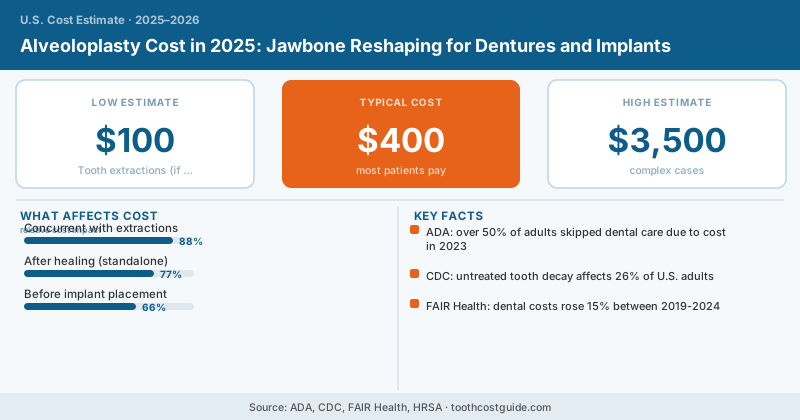
Most people getting multiple extractions before dentures don’t realize there’s often an extra step: reshaping the jawbone itself. Alveoloplasty — the surgical contouring of the alveolar ridge (the bony ridge that holds teeth) — is what makes a denture fit properly against a flat, smooth surface instead of a lumpy, irregular one.
The cost is usually $300–$1,200 per arch, and it’s frequently done at the same appointment as extractions, so many patients don’t realize it’s a separate billable procedure until the explanation of benefits arrives.
Alveoloplasty Cost Breakdown
| Procedure | Cost Range |
|---|---|
| Alveoloplasty (per arch, with extractions) | $300–$700 |
| Alveoloplasty (per arch, standalone surgery) | $600–$1,200 |
| Tori removal (separate bony growths) | $350–$1,000 |
| Tooth extractions (if applicable, each) | $150–$650 |
| Complete dentures (upper or lower, after healing) | $1,200–$3,500 |
| Surgical consultation | $100–$250 |
What Alveoloplasty Actually Does
When teeth are removed, the bone that surrounded them doesn’t always heal into a smooth, flat ridge. You can end up with:
- Sharp bony spicules — thin, pointed remnants of the socket wall that protrude under the gum tissue
- Undercuts — concave areas where the bone curves inward, preventing a denture from seating properly
- Irregular ridges — uneven bone height from multiple extractions at different times
- Exostoses or tori — bony outgrowths that developed independently (more common on the palate and lingual mandible)
Alveoloplasty removes and smooths these irregularities so the overlying gum tissue heals flat and the eventual denture or implant has a stable, comfortable surface to sit against.
When It’s Done
Concurrent with extractions: The most common scenario. When multiple teeth are being removed in preparation for full dentures, the oral surgeon or general dentist reshapes the ridge at the same surgical appointment. This is the most efficient approach — the area is already open and anesthetized, and the patient heals from both procedures simultaneously.
After healing (standalone): If a patient received extractions elsewhere and healed with an irregular ridge, alveoloplasty can be done as a standalone procedure — but it’s more involved because the gum tissue has to be re-opened.
Before implant placement: Sometimes an uneven ridge needs minor recontouring before dental implants can be placed at the correct depth and angle. This is distinct from bone grafting — alveoloplasty removes excess bone to create a flat surface; bone grafting adds bone volume where it’s deficient.
These two procedures are often confused. Alveoloplasty removes and reshapes existing bone — it reduces bone height or smooths irregularities. Bone grafting adds bone material where density or volume is lacking. A patient can need both: alveoloplasty to smooth a sharp ridge, and bone grafting elsewhere to build up a resorbed area before implants. They’re billed and priced separately.
Healing Time and Denture Timeline
After alveoloplasty concurrent with extractions, the soft tissue typically requires 4–8 weeks of initial healing before a denture can be fitted. Full bone remodeling takes 3–6 months, which is why dentures placed immediately after extraction often need relining later as the ridge continues to change shape.
The American Prosthodontic Society notes that this resorption process can reduce ridge height by 30–50% in the first year after full arch extractions — which is why some patients need denture relining 6–12 months after their initial fitting even when everything was done correctly.
Insurance Coverage
Alveoloplasty is typically covered by dental insurance as an oral surgical procedure when performed in conjunction with extractions — often at 50–80% after deductible. The CDT code is D7310 (alveoloplasty in conjunction with extractions) or D7320 (alveoloplasty not in conjunction with extractions — the standalone surgery, which may face more scrutiny from payers).
If your insurer denies the claim as “not necessary,” your dentist can submit supporting documentation showing the ridges would otherwise prevent proper denture seating.
Medicaid and Low-Income Options
Medicaid dental coverage for adults varies significantly by state, but alveoloplasty performed in conjunction with medically necessary extractions is covered in most states that include oral surgery in adult dental benefits. Check your state’s specific coverage at the Medicaid.gov state plan page.
Community health centers with dental departments (federally qualified health centers) offer alveoloplasty on a sliding fee scale. The Health Resources and Services Administration (HRSA) reports over 9,000 FQHCs in the U.S. — many with oral surgery capabilities.
Skipping alveoloplasty to save money when it’s clinically indicated can cost more long-term. A denture that sits on an irregular ridge creates pressure points that accelerate bone resorption, causes sores, and may need frequent adjustments. The denture may not fit well enough to use comfortably at all. For a $300–$700 procedure at the time of extractions, it’s usually the right call to include it.
Questions to Ask Before Surgery
- Is alveoloplasty included in the extraction quote, or billed separately?
- How much ridge reshaping is anticipated — one quadrant or the full arch?
- Are there any tori or exostoses that should also be addressed at the same time?
- Will an immediate denture be placed the same day, or will I wait for healing?
- What does the follow-up reline process look like, and what does it cost?
Getting the full cost picture before surgery — not just the extraction fee — prevents billing surprises when the EOB arrives.
Frequently Asked Questions
Alveoloplasty typically costs between $300 and $1,200 per arch (upper or lower jaw). The final cost depends on the complexity of bone reshaping needed, whether it's done with extractions, and your geographic location and dental provider.
Most dental insurance plans cover alveoloplasty as a surgical procedure when it's medically necessary for denture or implant placement, typically at 50–80% after your deductible. However, some plans classify it as cosmetic and exclude it entirely, so you should verify coverage with your insurer before scheduling.
Yes, alveoloplasty is almost always performed during the same appointment as multiple tooth extractions, which reduces overall treatment time and allows the surgeon to contour the bone while it's already exposed. This combined procedure typically takes 30–90 minutes depending on the number of teeth and extent of bone reshaping needed.