Maya was 38 when her dentist mentioned her crowding was getting worse and might cause gum problems down the line. Braces, finally. Then came the second shock after the cost itself: her dental plan covered orthodontics — but only for dependents under 19. She was on her own.
That scenario plays out constantly, and it’s exactly why “are braces covered for adults?” is one of the most-asked questions in dentistry. The answer is a frustrating “sometimes, partially.” Let’s make it concrete.
What Adult Braces Cost — and What Insurance Pays
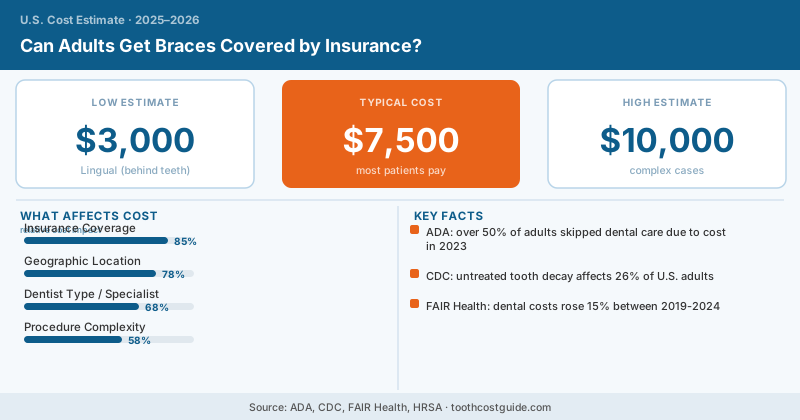
| Treatment | Total Cost | Typical Insurance Benefit | Your Likely Cost |
|---|---|---|---|
| Metal braces | $3,000–$6,000 | $1,000–$2,500 lifetime | $2,500–$4,500 |
| Ceramic braces | $4,000–$7,000 | $1,000–$2,500 lifetime | $3,000–$5,500 |
| Lingual (behind teeth) | $5,000–$10,000 | $1,000–$2,500 lifetime | $4,000–$8,000 |
| Invisalign | $3,500–$7,000 | $1,000–$2,500 lifetime | $2,500–$5,000 |
Notice the pattern: the benefit is a fixed lifetime dollar amount, not a percentage. Whether your braces cost $4,000 or $9,000, the plan pays the same capped sum. That’s the single most important thing to understand about adult ortho coverage.
Regular dental work draws from an annual maximum that resets every year. Orthodontics is different — it draws from a separate lifetime maximum, often $1,000–$2,500, that never refills. The NADP reports orthodontic coverage commonly carries this lifetime cap. Use it on braces in your 30s and it’s gone if you need ortho again later.
How to Actually Find a Plan That Covers Adults
Not all plans exclude adults — you just have to shop deliberately:
- Read the age clause. Many plans cap ortho at 18 or 19. Look specifically for “adult orthodontic coverage” in the benefits summary.
- Expect a waiting period. Most plans make you wait 6–12 months before ortho benefits start. Enroll early.
- Check the lifetime maximum. A $2,500 lifetime benefit is far more useful than $1,000. Compare this number directly.
- Confirm aligners are included. Some plans cover metal braces but exclude clear aligners. If you want Invisalign, verify it qualifies.
Our orthodontic insurance coverage guide digs deeper into reading these clauses.
Don’t enroll in a plan the week before starting braces and expect immediate payout. The 6–12 month waiting period exists precisely to block that move, and starting treatment during the wait can void the benefit entirely. If braces are on your horizon, get the right plan in place months ahead.
Cutting the Out-of-Pocket Cost
Even with insurance, you’ll likely owe several thousand dollars. Ways to soften it:
- FSA/HSA dollars — orthodontics is an eligible expense, so paying with pre-tax money effectively discounts the cost. See FSA for dental expenses.
- In-office payment plans — most orthodontists spread payments interest-free across the 18–24 month treatment.
- Cheaper treatment types — metal braces cost less than ceramic or lingual and work just as well clinically.
- Compare options first — our adult braces cost breakdown helps you match treatment to budget.
Frequently Asked Questions
Why do plans treat adult braces differently than kids’ braces? Insurers historically viewed adult orthodontics as more elective and cosmetic, so many built in age cutoffs and lower lifetime caps. That’s slowly changing as plans recognize that adult crowding and bite problems are functional health issues, not just cosmetic ones.
Can I use two insurance plans to cover more? If you have dual coverage (say, your plan plus a spouse’s), coordination of benefits can sometimes stack two lifetime maximums. The rules are strict and plan-specific, so call both insurers and ask how they coordinate ortho before assuming you’ll get double.
Is it worth getting insurance just for braces? Run the math. If a plan costs $40/month with a $2,000 lifetime ortho benefit and a 12-month wait, you’ll pay ~$480 in premiums during the wait to unlock $2,000. That’s often worth it — but only if the plan genuinely covers adults and you’ll start treatment soon after the wait ends.
Adult braces coverage is real, just narrower than you’d hope. Shop for the lifetime maximum, mind the waiting period, and stretch the rest with pre-tax dollars and payment plans.
Frequently Asked Questions
Some do. Many dental plans that include orthodontic coverage extend it to adults, but historically a lot of plans capped ortho benefits at age 18 or 19. When adult coverage exists, it's almost always a separate lifetime maximum — typically $1,000–$2,500 — rather than the annual benefit used for cleanings and fillings.
Adult braces run $3,000–$7,000 total depending on type. Traditional metal braces sit at the low end ($3,000–$6,000), ceramic and lingual cost more, and Invisalign lands around $3,500–$7,000. After a typical $1,500–$2,000 lifetime ortho benefit, expect to pay $2,500–$5,000 yourself.
Yes, and this is the key difference from regular dental coverage. Ortho benefits use a separate lifetime maximum — once it's used, it's gone, even across multiple plans or treatments. The NADP notes that orthodontic coverage commonly carries a lifetime cap, often between $1,000 and $2,500, regardless of how long you keep the plan.
Almost always. Plans frequently require 6–12 months of continuous enrollment before orthodontic benefits activate, specifically to discourage people from signing up only when they want braces. If you're shopping for a plan to cover braces, enroll well before you plan to start treatment.
Usually, yes — most plans treat clear aligners and metal braces as the same orthodontic benefit and pay the same lifetime maximum toward either. The catch is that Invisalign often costs more total, so the same dollar benefit covers a smaller share. Confirm your plan doesn't specifically exclude aligners before assuming.