Marcus, age 7, hadn’t lost that stubborn bottom front tooth for months after his adult tooth started pushing through behind it — a “shark tooth” situation his pediatric dentist said needed a nudge. His mom expected the extraction to be quick and cheap. She was right about quick. But the $280 bill — after insurance — surprised her.
Baby tooth extractions are among the most common pediatric dental procedures. They’re usually simple, but costs vary more than most parents expect. Here’s what you need to know before you get the bill.
When Is Baby Tooth Extraction Necessary?
Primary (baby) teeth normally fall out on their own as the permanent teeth push up beneath them. But extraction is sometimes needed when:
- A tooth is over-retained — the permanent tooth is erupting but the baby tooth hasn’t loosened
- Tooth decay is severe — infection or cavities that can’t be saved with a filling or pulpotomy
- Dental trauma — a knocked or cracked baby tooth that’s too damaged to preserve
- Orthodontic reasons — creating space before braces or an expander
- Dental abscess — infection at the root requiring removal
The American Academy of Pediatric Dentistry (AAPD) recommends retaining primary teeth whenever possible, since they hold space for permanent teeth and guide proper jaw development. But when a tooth has to come out, it’s better to act promptly than to let infection or misalignment worsen.
Baby Tooth Extraction Cost Breakdown
| Procedure | Low | Typical | High |
|---|---|---|---|
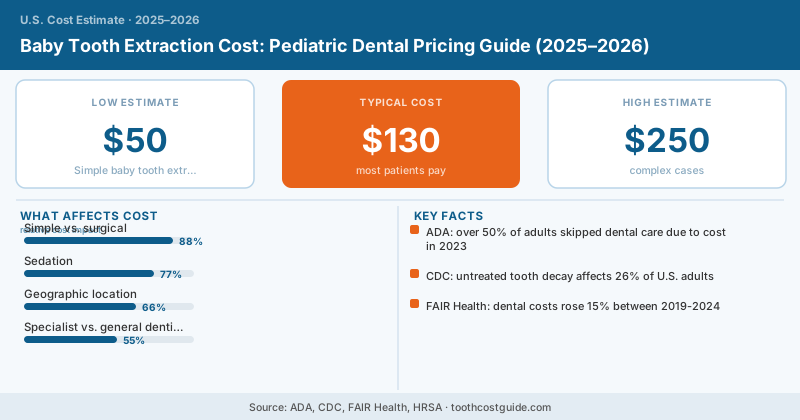
| Simple baby tooth extraction | $50 | $130 | $250 |
| Extraction with local anesthesia | $80 | $175 | $350 |
| Surgical extraction (complex) | $150 | $275 | $500 |
| Nitrous oxide sedation (add-on) | $50 | $100 | $200 |
| IV/general sedation (facility fee) | $500 | $1,200 | $3,000 |
| Space maintainer after extraction | $250 | $400 | $800 |
What Affects the Price?
Simple vs. surgical. A baby tooth that’s already loose or has minimal root structure left is a simple extraction — quick, straightforward, and at the lower end of the price range. A tooth that’s firmly embedded, has long roots, or has fused to the bone (ankylosis) requires surgical technique: incisions, possibly bone removal, and sutures.
Sedation. This is the biggest wild card in pediatric dental pricing. A cooperative 10-year-old who needs one extraction might need nothing beyond local anesthetic (a shot of Novocain). A fearful 4-year-old with multiple extractions might need nitrous oxide, oral conscious sedation, or even general anesthesia at an outpatient surgical center — which can run $1,200–$3,000 or more for the facility and anesthesiologist fees.
Geographic location. Pediatric dental fees in urban areas run significantly higher than rural markets. A simple extraction in New York City might be $250; the same procedure in rural Tennessee might be $80.
Specialist vs. general dentist. Pediatric dentists (pedodontists) complete 2–3 additional years of training after dental school and typically charge more than general dentists for the same procedure. But their experience with child behavior management often makes difficult extractions smoother — and avoids the need for sedation in many cases.
If a baby molar is extracted before the permanent tooth is ready to erupt (typically several years), your dentist will likely recommend a space maintainer — a small appliance that holds the gap open so neighboring teeth don’t drift and block the incoming adult tooth. The AAPD strongly recommends space maintainers for back teeth extracted prematurely. Budget $250–$800 for this additional cost.
Insurance Coverage for Baby Tooth Extractions
Most dental insurance plans cover pediatric extractions at 70–80% after the deductible for simple extractions, and 50% for surgical extractions. Children’s dental benefits under the Affordable Care Act are considered essential health benefits — meaning most plans sold through the marketplace must cover pediatric dental care.
Under Medicaid and CHIP, pediatric dental coverage (including extractions) is typically free or very low cost. According to the Centers for Medicare & Medicaid Services, all 50 states provide dental coverage for children through Medicaid or CHIP, though the scope of services varies by state.
Sedation coverage is more variable. Nitrous oxide is often covered at 50–80%. IV sedation and general anesthesia may require prior authorization and are typically covered only when medically necessary (e.g., a young child who can’t cooperate with treatment, multiple extractions needed, or significant medical complexity).
What to Expect During the Appointment
For a simple extraction, the whole appointment takes 20–30 minutes. The dentist:
- Applies topical numbing gel before the injection
- Administers local anesthetic and waits for full numbness
- Uses an elevator to loosen the tooth
- Extracts the tooth with forceps
- Places gauze to control bleeding
Children are generally surprised by how quick and painless (pressure without pain) the procedure is once they’re numb. The tooth fairy awaits.
Recovery is typically 24–48 hours of mild soreness manageable with children’s Tylenol or ibuprofen. A soft diet for 24 hours is usually recommended.
If your child develops increasing pain, swelling, or fever after an extraction — especially after 48 hours — contact the dentist immediately. These can be signs of infection or dry socket (though dry socket is rare in children). Don’t wait for the next available appointment; call and explain symptoms.
Finding Affordable Pediatric Dental Care
Medicaid/CHIP: If your child qualifies, coverage is comprehensive and low-cost. Use the insure kids now finder (insurekidsnow.gov) to check eligibility.
Dental school pediatric clinics: Many dental schools have pediatric dental residency programs that provide care at reduced fees under faculty supervision. Wait times may be longer, but costs are significantly lower.
Community health centers: FQHCs and school-based dental programs offer sliding-scale fees for families who qualify based on income.
Dental discount plans: For uninsured families, plans like Careington or DentalPlans.com offer 20–50% discounts at participating providers for a low annual fee ($100–$200/year for the family).
Bottom Line
Baby tooth extraction costs $50–$350 for simple cases, with sedation and surgical complexity pushing totals to $500 or more. Insurance typically covers 70–80% of basic extractions, and Medicaid/CHIP covers pediatric dental for qualifying families. If your child’s dentist recommends an extraction, don’t delay — baby teeth serve real structural and developmental purposes, and infection or overcrowding from a retained tooth costs more to fix later than a timely extraction costs now.
Frequently Asked Questions
A simple baby tooth extraction typically costs $50–$150 per tooth, while surgical extractions for impacted or deeply rooted teeth run $200–$400. The final price depends on complexity, your location, and whether sedation is needed — urban practices and specialists generally charge higher rates than rural general dentists.
Most dental insurance plans cover 80% of basic extractions after meeting a deductible (usually $25–$100), leaving parents with $15–$80 out-of-pocket per tooth. However, coverage may be reduced to 50% for surgical extractions, and some plans exclude cosmetic or elective removals of healthy baby teeth.
Extraction is recommended when an adult tooth erupts behind or beside a baby tooth (shark tooth situation) and the baby tooth hasn't loosened after 2–3 months, or when decay, infection, or overcrowding puts development at risk. Most baby teeth shed naturally by age 12–13, so extraction is typically a minor intervention to guide proper adult tooth alignment rather than a major procedure.