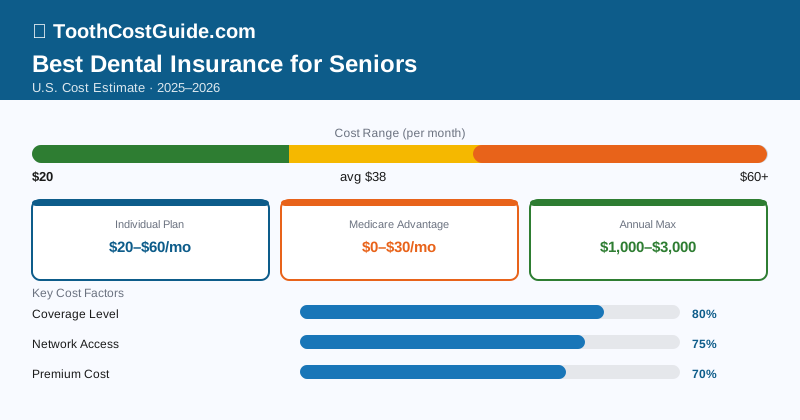
Medicare covers a lot of things. Dental care isn’t one of them — not routine cleanings, not crowns, not dentures. So when you hit 65 and your employer dental plan disappears along with your paycheck, you’re suddenly shopping for something you’ve never had to buy on your own before.
Here’s the situation: seniors have the highest dental costs of any age group. NADP research puts average annual out-of-pocket dental spending for adults 65+ at $685, and that’s an average year. A single crown runs $1,500, a bridge $3,500–$6,000, a full denture $1,500–$3,000. The right dental insurance plan saves $1,000–$3,000 per year. The wrong one costs you premiums for coverage that barely fires when you need it.
| Plan | Monthly Premium | Annual Max | Waiting Period | Best Feature |
|---|---|---|---|---|
| AARP Dental (Delta Dental) Value | $26–$38 | $1,000 | 6–12 months | AARP brand trust, wide network |
| AARP Dental Premier | $40–$52 | $2,500 | Shorter waits | High annual maximum |
| Humana Dental Preventive | $20–$30 | Preventive only | None | Lowest cost |
| Humana Complete | $38–$58 | $1,000–$2,000 | 12 months major | Broad coverage |
| Cigna Dental 1500 | $35–$50 | $1,500 | 6–12 months | Mid-range max |
| Spirit Dental Gold | $33–$45 | $3,000 | None | No wait, high max |
| Spirit Dental Platinum | $45–$57 | $5,000 | None | Best for high needs |
| Medicare Advantage (top plans) | $0–$50 added | $1,500–$3,000 | Usually none | Combined medical/dental |
What Seniors Need That Standard Plans Often Don’t Provide
Shopping at 65 is fundamentally different from shopping at 35. The features that looked adequate when you were younger may be entirely wrong for where you are now.
Annual maximum. The $1,000 cap that was fine when you only needed cleanings starts failing the moment a crown enters the picture. One crown at $1,500 essentially wipes out the full benefit of a $1,000-max plan. Seniors frequently face multiple major procedures in a single year — crowns cracking, old fillings failing, bridges needing replacement. You want $2,000+.
Denture coverage. About 30% of seniors over 65 are edentulous (no natural teeth), and 36% wear some form of denture. Dentures aren’t a fringe case for this age group — they’re a core need. Check not just whether a plan “covers dentures” but what percentage, and whether there’s a replacement clause limiting how often you can get new ones.
Waiting periods. A 12-month wait for major work is manageable at 40. At 65, when you’re already managing multiple dental issues and want coverage now, it’s a serious problem. Many seniors enrolling in individual plans for the first time face an entire year of exposure.
Missing tooth clause. Seniors are the population most likely to have missing teeth at enrollment. This clause can quietly eliminate coverage for implants and bridges replacing teeth that were gone before the policy started.
Network footprint. Snowbirds and retirees who split time between states need a plan that works in both places. Not all carriers have equally strong networks in every region.
Medicare Advantage dental. Before buying any standalone plan, compare it against what’s available in your county through Medicare Advantage. Sometimes the MA option is better — and cheaper.
Seniors with known upcoming dental needs — a crown in the next 6 months, dentures being discussed, multiple fillings needed — should choose Spirit Dental Gold/Platinum or a Medicare Advantage plan with comprehensive dental rather than a standard plan with a 12-month wait for major work.
Plan-by-Plan Breakdown
AARP Dental Insurance (underwritten by Delta Dental)
You need to be an AARP member to access these plans — about $16/year, which is essentially nothing. Two options:
Value Plan ($26–$38/month): $1,000 annual maximum. Preventive covered immediately at 100%. Fillings: 6-month wait, then 80% coverage. Crowns and dentures: 12-month wait, then 50%. $50 individual deductible. The network is Delta Dental’s — 155,000+ dentists, the largest in the country.
Premier Plan ($40–$52/month): $2,500 annual maximum. Same waiting period structure, better maximum, slightly better coverage percentages on some procedures. This is the one to get if you want the AARP name and a maximum that actually holds up when something breaks.
The honest verdict: AARP’s brand trust is real, the network is excellent, but the Value plan’s $1,000 max is too low for most seniors. If you’re going AARP, go Premier.
Humana
Humana has multiple tiers aimed at different needs:
Preventive Value (~$20–$30/month): Covers only preventive care — cleanings, X-rays, exams. Nothing for fillings or crowns. Zero annual maximum constraint on the preventive-only coverage. Right for exactly one person: the senior in genuinely excellent dental health who just wants cleanings covered and expects nothing else.
Dental Savings Plus (~$10–$15/month): A discount plan, not insurance. You get 15–50% off at participating dentists, but there’s no coverage percentage, no claims, no annual maximum. Useful as a supplement but not a replacement for real insurance.
Humana Loyalty Plus (~$38–$55/month): No waiting period for preventive and basic. Some states include no-wait major coverage. $1,000–$2,000 annual max depending on tier. This is Humana’s most useful plan for seniors who can’t wait a full year for coverage.
Complete Dental (~$40–$58/month): Comprehensive across all tiers, but that 12-month wait for major work applies. Annual max $1,500–$2,000.
Humana’s network is enormous — 277,000+ dentists nationally, making it the easiest carrier to find participating providers almost anywhere.
Cigna Dental
Dental 1000 (~$25–$40/month): $1,000 max, standard waiting periods. Fine for light dental use.
Dental 1500 (~$35–$50/month): $1,500 annual max. 6-month wait for basic, 12-month for major. 100% preventive, 80% basic, 50% major. 90,000+ dentists in network.
Dental 1500 Plus (~$45–$60/month): Adds orthodontic coverage (not especially relevant for most seniors) and sometimes has shorter waiting period options.
Cigna is particularly strong in major metro areas. If you’re in a city, your dentist is probably in-network.
Spirit Dental & Vision
Spirit is the outlier. It does something most plans don’t: covers everything from day one with no waiting periods, no missing tooth clause (in most states), and annual maximums that are meaningfully higher than the industry norm.
Gold ($33–$45/month): No waiting periods. $3,000 annual max. 50% major, 80% basic, 100% preventive. Available in all 50 states; 130,000+ network dentists.
Platinum ($45–$57/month): Same structure, $5,000 annual max. For seniors facing extensive near-term work.
For seniors, Spirit’s combination of no-wait coverage and high maximums solves the two biggest problems simultaneously. You’re not waiting a year, and you’re not capped at $1,000 after your first crown.
Medicare Advantage with dental
This option deserves serious attention every fall. During Medicare open enrollment (October 15–December 7), you can switch to an MA plan that includes dental. The range is wide:
- Top Humana and Aetna MA plans in some counties: $0 added premium, $2,000–$3,000 dental benefit
- Select BlueCross BlueShield MA plans: $0–$50 added premium, $1,500–$2,500 dental benefit
- UnitedHealthcare MA options: $0–$25 added, $1,000–$2,500 dental benefit
These benefits change annually — a great plan this year might trim benefits next year. Check medicare.gov’s plan finder every fall. If an MA plan in your county offers $2,000+ in dental at $0 added premium, that often beats paying $40–$55/month for a standalone plan.
One thing to watch: many MA plans advertise dental but only offer preventive-level benefits. Read what the dental benefit actually covers before you switch your entire Medicare coverage around it.
Comparing the Options Honestly
| AARP/Delta Premier | Humana Loyalty Plus | Spirit Gold | Medicare Advantage (top) | |
|---|---|---|---|---|
| Monthly cost | $40–$52 | $38–$55 | $33–$45 | $0–$50 added |
| Annual max | $2,500 | $1,000–$2,000 | $3,000 | $1,500–$3,000 |
| Waiting periods | Yes (12 mo. major) | Varies by state | None | Usually none |
| Missing tooth clause | Varies | Sometimes | No (most states) | Varies by plan |
Practical Strategies for Seniors
Compare Medicare Advantage every fall without fail. Dental benefits shift annually. Set a calendar reminder for October 15 and actually log into medicare.gov to see what’s available in your county. This 30-minute annual review can save you $500–$600/year in unnecessary standalone premiums.
If you have immediate dental needs, don’t buy a waiting-period plan. Choose Spirit Gold or an MA plan with comprehensive dental. A 12-month wait when you need a crown in three months is worthless coverage.
Dental schools for dentures and implants. These procedures routinely cost $2,000–$5,000+. Dental schools do the same work for 40–60% less, supervised by licensed faculty. Even with insurance, the lower base price reduces your net cost significantly.
Use your benefits before December 31. Whatever plan you’re on, whatever remains of your annual maximum at year-end disappears on January 1. Schedule any deferred treatment before the reset.
Many dental insurers limit coverage for seniors in subtle ways — “first-year maximums” that cap benefits at $500 in year one even if the stated maximum is $2,000, or “progressive coverage” that starts at 15% and reaches full 50% only in year three. Read the actual plan documents, not just the marketing summary, before enrolling.
For most seniors, the best dental insurance is either (1) a Medicare Advantage plan with $1,500–$3,000 in comprehensive dental benefits at $0 added premium, or (2) Spirit Dental Gold/Platinum for immediate coverage with no waiting periods and annual maximums of $3,000–$5,000. AARP and Humana are solid mid-tier choices for seniors with stable dental health who can tolerate standard waiting periods.
The Short Version
Seniors need more from dental insurance than they did at 35 — higher maximums, shorter waits, denture coverage, no missing tooth clause. Most standard $1,000-max plans fail that test completely.
Spirit Dental Gold and Platinum lead for seniors with near-term dental needs. AARP’s Premier plan is the right choice for those who want Delta Dental’s massive network and can tolerate standard waiting periods. Medicare Advantage with strong dental benefits is often the smartest overall move — check what’s available in your county each fall during Medicare open enrollment. The best plan is the one that actually pays when something breaks, not just when you get a cleaning.
Frequently Asked Questions
Dental insurance premiums for seniors typically range from $20 to $60 per month, depending on the plan type and coverage level. AARP/Delta plans and Humana tend to fall on the lower end ($20–$40/month), while more comprehensive plans with higher annual maximums may cost $50–$60/month.
No, traditional Medicare does not cover routine dental care, including cleanings, fillings, or crowns. Seniors must purchase standalone dental insurance, a Medicare Advantage plan with dental benefits, or pay out-of-pocket for dental services, which is why many opt for plans with annual maximums between $1,000–$5,000.
The American Dental Association recommends two cleanings per year for most seniors, and most dental insurance plans cover preventive cleanings at 100% with no copay. However, you'll typically need to meet any annual deductible first, which usually ranges from $0–$150 depending on your plan.