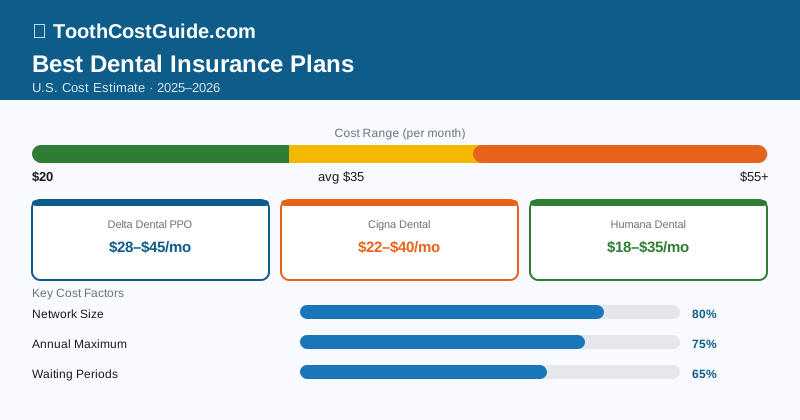
Delta Dental has the biggest network. Humana has even more dentists. Guardian tends to have better annual maximums on group plans. Cigna’s DHMO option is the cheapest way in. So which plan is actually best?
Honest answer: it depends more on your situation than the carrier. The plan your employer subsidizes is almost always the best value regardless of carrier — subsidized premiums and group maximums beat anything you can buy individually. But if you’re shopping on your own, the carrier differences matter.
Here’s what the major carriers actually offer, where they’re strong, and what they leave on the table.
| Carrier | Network Size | Annual Max | Preventive | Basic | Major | Orthodontics |
|---|---|---|---|---|---|---|
| Delta Dental PPO | 156,000+ dentists | $1,000–$2,500 | 100% | 80% | 50% | Varies |
| Cigna Dental | 93,000+ dentists | $1,000–$2,000 | 100% | 80% | 50% | Optional |
| Humana Dental | 277,000+ dentists | $1,000–$2,000 | 100% | 70–80% | 50% | Optional |
| Guardian Dental | 100,000+ dentists | $1,000–$3,000 | 100% | 80% | 50% | Optional |
| Ameritas | 65,000+ dentists | $1,000–$5,000 | 100% | 80% | 50% | Optional |
Delta Dental: The Network Play
Delta Dental is the largest dental insurance carrier in the US — not by number of enrollees, but by network footprint. Over 156,000 participating dentists across 50 states through its network of independent member companies (Delta Dental of California, Delta Dental of Michigan, etc.).
What this means practically: if you’re moving, traveling, or want the best chance your dentist is in-network without checking, Delta Dental is the most likely to have that covered. The Premier network is particularly strong — dentists in Premier accept Delta’s fee schedule and can’t balance-bill you for the difference.
Where Delta Dental shines:
- Employer group plans, where the employer’s negotiated rates are significantly better than individual market pricing
- Patients who travel frequently and want a nationwide network that reliably works
- The ADA recognizes Delta Dental as the network most dentists participate in — fewer out-of-network surprises
Where it falls short:
- Individual market plans cap at $1,000–$1,500 annual maximums at most tiers — not enough for a bad dental year
- Individual premiums run $35–$55/month, which is middling for what you get
- The PPO and Premier network tiers aren’t the same — a dentist in Premier but not PPO can charge different rates
Best for: Employer plans. If Delta Dental is what your employer offers, use it without question — the group discount and employer subsidy make it the best value in that context.
Cigna: Flexibility and Budget Options
Cigna covers over 17 million dental members with a network of 93,000+ dentists. The interesting thing about Cigna is the range — from DHMO plans at the low end to comprehensive PPO at the high end.
The DHMO (dental HMO) option deserves attention: in some markets it runs $8–$15/month with $0 copays on cleanings and very low copays on fillings and other procedures. The catch is that you pick a primary dentist and stay in-network. If you like your current dentist and they’re in Cigna’s DHMO network, this is the cheapest way to get dental coverage period.
Where Cigna shines:
- Budget-conscious patients willing to work within the DHMO model
- Digital tools — claims tracking and provider search are genuinely good online
- Cigna + Oscar plans in some states combine medical and dental billing
- Good option for employer-sponsored plans where Cigna is the carrier
Where it falls short:
- Smaller PPO network than Delta Dental and Humana
- Individual PPO plans typically max out at $1,000–$1,500 annually
- DHMO plans restrict provider choice significantly — switching dentists is a process
Best for: Patients whose employer offers Cigna, or budget-focused patients open to a dental HMO model.
Humana: Sheer Scale
Humana’s headline number is its network size: 277,000+ participating dentists. That’s more than any other major carrier by raw count. For patients in suburban or rural areas where finding in-network dentists can be a challenge, Humana’s scale matters.
The Preventive Plus plan (~$17–$20/month in many markets) covers cleanings and X-rays at 100% immediately. No major work, but if you just want cleanings covered while you’re healthy, this is one of the cheapest ways to get there.
The Loyalty Plus benefit is a meaningful differentiator: Humana increases your annual maximum each year you stay enrolled. It rewards continuity of coverage with improving benefits — less common among major carriers.
Where Humana shines:
- Largest provider network — most accessible in areas where other carriers struggle
- Low-cost preventive-only entry point (~$17–$20/month)
- Loyalty Plus annual max increase rewards long-term enrollment
- DHMO plans available at very low cost
Where it falls short:
- Base individual plans exclude major work — you need to pay for a higher tier to get crown coverage
- Standard 12-month waits on major work apply to most individual plans
- PPO maximum typically $1,000–$1,500 on base individual plans
Best for: Patients prioritizing provider access, rural and suburban patients, and people who mainly want preventive coverage at a low premium.
Guardian: The Group Plan Leader
Guardian’s reputation is built on its employer group plans. Larger employers who negotiate with Guardian often land annual maximums of $1,500–$3,000 — significantly above the individual market standard. If you have Guardian through work, it’s worth actually reading your Summary of Benefits — you might have better coverage than you think.
The DentalGuard Preferred network offers solid fee schedule discounts. Guardian also has a Gold Enhancement rider on some plans that increases benefits over time, similar to Humana’s Loyalty Plus approach.
Where Guardian shines:
- Employer group plans with higher-than-average annual maximums ($2,000–$3,000)
- Strong orthodontic coverage on higher-tier plans
- Benefits may scale up over time with enhancement riders
Where it falls short:
- Individual market plans are more constrained than group offerings
- Network of 100,000+ is solid but trails Humana and Delta Dental
- Some plans have 12-month waits for major services
Best for: Employees whose company offers Guardian group dental — the group plan terms are often better than individual market alternatives.
The “best” dental insurance plan is the one your employer subsidizes. Employer-sponsored plans typically offer better annual maximums, lower premiums, and no waiting periods compared to individual market plans from the same carriers. If your employer offers dental benefits, use them — even if you’re young and healthy.
How to Actually Compare Plans
When you’re evaluating specific plan options — during open enrollment or individual plan shopping — five things matter more than the carrier name on the card:
1. Annual maximum, per person
$1,000 is the industry floor. Two cleanings + one crown can consume a $1,000 max in a single year. Look for $1,500 minimum, $2,000 if possible. Per-person maximums are better than shared family caps.
2. Waiting periods for major services
Standard: 6 months for fillings, 12 months for crowns. Some plans have shorter waits or none. If you have upcoming major work, the waiting period structure determines whether the coverage is usable in year one.
3. Deductible structure
Most plans run $50–$100 individual deductibles on basic and major services, but not preventive. Some premium plans have $0 deductibles. Know what you’ll owe before insurance kicks in.
4. Whether your specific dentist is in-network
This one matters more than anything else. Call your dentist’s office and ask directly: “Do you accept [Plan Name] from [Carrier]?” Don’t rely on online directories — they’re often outdated. A plan with a smaller network that includes your dentist is worth more than a plan with a massive network that doesn’t.
5. Orthodontic coverage, if relevant
Usually an add-on rider. Standard lifetime max $1,000–$2,000 per child; adult ortho coverage is frequently excluded. If you have kids approaching braces age, orthodontic coverage is worth more than the premium increase.
Individual vs. Employer vs. Marketplace
Employer plans almost always win on value. Employers subsidize 50–100% of premiums; group rates are lower; waiting periods are often waived; annual maximums tend to be higher. Even a mediocre employer plan is usually better than a good individual plan on cost alone.
ACA Marketplace plans include adult dental as an optional add-on ($15–$40/month) and require pediatric dental as an essential health benefit for children. Standalone dental plans on the marketplace may have limited networks in some states. Worth comparing against direct individual options.
Individual market (direct purchase): Buying directly from carriers or through a broker. Highest premiums, lowest annual maximums, most common waiting periods. Reasonable for maintaining coverage between jobs. Not the best value for long-term coverage if an employer plan is available.
Before buying individual dental insurance, calculate your actual expected dental costs for the next 12 months using a realistic assessment of what treatments you need. Compare total out-of-pocket (premiums + copays + anything exceeding the annual max) against the self-pay discounted rate from a dental school or discount plan. Sometimes the math strongly favors not buying insurance.
When Insurance Falls Short
Even solid dental coverage leaves gaps. A $1,500 crown at 50% coverage leaves you with a $750 patient balance, and that’s before you hit the annual maximum. Common ways to cover what insurance doesn’t:
CareCredit: Accepted at most dental offices. Offers 0% promotional financing for 6–24 months. Useful when you’ve got a $500–$2,000 balance after insurance and need to spread it out.
HSA/FSA: Dental copays, deductibles, and all out-of-pocket dental costs are fully eligible for HSA and FSA funds. If you have workplace access to either, use pre-tax dollars for every dental cost. This effectively reduces what you pay by 20–37% depending on your tax bracket.
Always get a written treatment plan before agreeing to any dental work. When evaluating insurance plans, ask your dentist’s office to verify your specific coverage before treatment — particularly for major procedures where the difference between “covered” and “covered up to our annual maximum” can mean hundreds of dollars in unexpected bills.
Matching Carrier to Need
- You want the widest network: Humana (277,000+ providers)
- You want the most dentists who “accept” the plan: Delta Dental (most participation in employer networks)
- You want the lowest monthly cost: Cigna DHMO in markets where it’s available
- You want the highest annual maximum (individual market): Ameritas or Spirit Dental (up to $5,000)
- You want the best employer group plan terms: Guardian or Delta Dental
No carrier is cleanly “best” across all dimensions. The right choice depends on where you live, who your dentist is, and whether you’re buying individually or through an employer. Start with in-network verification for your preferred dentist, then compare annual maximums and waiting periods within the plans that pass that test.
Frequently Asked Questions
A single composite resin filling typically costs between $150–$300 per tooth without insurance, depending on the filling size and location. Root canals, which sometimes require filling, cost $800–$1,500, while amalgam (silver) fillings are slightly cheaper at $100–$200 per tooth.
Most dental plans, including Delta Dental, Cigna, Humana, and Guardian, cover preventive care (cleanings, exams, X-rays) at 100% with no copay when you use in-network providers. However, coverage for fillings, crowns, and major procedures drops to 50–80%, and annual maximums typically range from $1,000–$2,000 per person per year.
Most dental insurance plans impose a 6–12 month waiting period for major restorative work such as crowns, bridges, and root canals, though preventive care is usually covered immediately. Some plans waive waiting periods if you had continuous coverage with a previous insurer, so check your plan documents before scheduling expensive procedures.