Most mouthwash is expensive minty water. That’s not cynicism — it’s the honest reading of what “ADA-accepted” actually means for cosmetic oral rinses versus therapeutic ones.
But for patients with active gum disease — specifically gingivitis or early periodontitis — certain mouthwashes have solid clinical evidence behind them. The key is knowing which type of mouthwash addresses which problem, and which ones are marketing to people who need actual treatment.
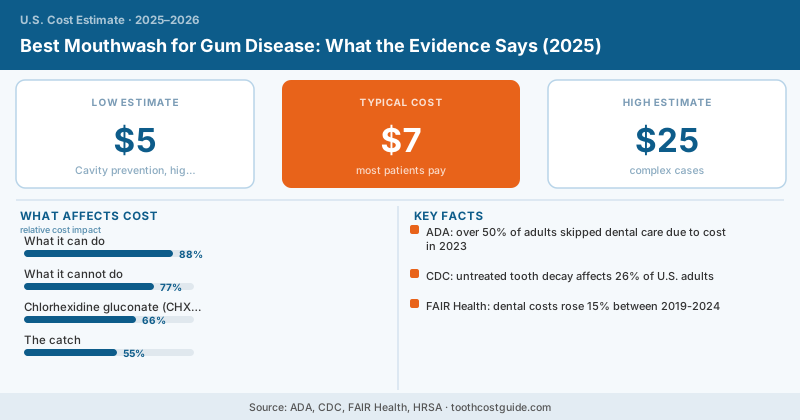
What Mouthwash Can and Can’t Do
What it can do:
- Reduce bacteria counts in the oral cavity (temporarily)
- Reduce gingivitis inflammation with regular antimicrobial use
- Deliver fluoride to enamel and gum margins (fluoride rinses)
- Freshen breath by killing volatile sulfur compound (VSC) producers
- Reduce plaque formation between brushing sessions (with antimicrobial agents)
What it cannot do:
- Remove existing plaque or calculus (only mechanical removal does this)
- Reach bacteria in deep periodontal pockets (>3mm) without irrigation
- Treat established periodontitis or replace professional treatment
- Substitute for brushing or flossing
The clinical literature is consistent: mouthwash as an adjunct to proper brushing and interdental cleaning produces measurable benefits. Mouthwash used alone, instead of brushing, produces essentially nothing.
The Main Types: What They Actually Treat
Antimicrobial Mouthwash (for gingivitis)
Chlorhexidine gluconate (CHX) is the gold standard antimicrobial oral rinse. It’s available by prescription only at 0.12% concentration in the U.S. (Peridex, PerioGard — generic available).
What makes it different: chlorhexidine has “substantivity” — it binds to oral tissues and continues releasing antimicrobial agents for 8–12 hours after rinsing. No OTC mouthwash does this. A 2017 Cochrane review of 51 trials concluded CHX reduces plaque by 33–56% and gingivitis by 35–45% compared to placebo or control at 4–12 weeks.
Cost: $15–$25 for a 16 oz bottle (prescription required; generic is cheaper than brand-name).
The catch: CHX stains teeth brown with regular use — especially if you drink coffee, tea, or red wine. Most patients use it for 2–4 week courses (post-surgery, after scaling and root planing, during periodontal treatment) rather than indefinitely. Your dentist prescribes it for specific situations, not as a permanent daily rinse.
Essential Oil Rinses (Listerine) — for Gingivitis Maintenance
Listerine Original and its variants (Total Care, Cool Mint) contain the four “essential oil” actives: thymol, eucalyptol, menthol, and methyl salicylate in an alcohol base (~21.6% ethanol). This combination has genuine antimicrobial activity — less potent than CHX but without the staining issue.
A 2016 ADA-commissioned review found that essential oil rinses reduce plaque by 24–26% and gingivitis by 20–26% versus water control. The ADA has accepted Listerine Antiseptic (and several variants) for reducing plaque and preventing gingivitis.
Cost: Listerine Total Care ~$7–$12 per 1-liter bottle.
Good for: Patients with mild gingivitis looking for an adjunct to brushing. Not a replacement for professional dental cleanings, but a legitimate add-on.
CPC Rinses (Crest Pro-Health, Colgate Total)
Cetylpyridinium chloride (CPC) is an antimicrobial agent used in Crest Pro-Health, Colgate Total, and similar rinses. Clinical evidence supports modest reductions in plaque and gingivitis, though generally less than essential oil rinses or CHX.
CPC rinses can cause brown tooth and tongue staining, similar to CHX but typically less severe. They’re alcohol-free, which makes them better tolerated by patients with dry mouth or who prefer to avoid alcohol.
Cost: $5–$10 for major brands.
Fluoride Mouthwash — for Cavity Prevention, Not Gum Disease
ACT Anticavity, Colgate Phos-Flur, and similar fluoride rinses use 0.05–0.2% sodium fluoride as their active ingredient. Their purpose is completely different from antimicrobial rinses: they deliver fluoride to enamel and gum margins to prevent and reverse early cavities.
They don’t treat gingivitis. They don’t kill bacteria in any clinically meaningful way. They’re cavity prevention tools — excellent ones — but they’re misunderstood by many patients as “gum disease treatment.”
Cost: $6–$9 per bottle.
Which Mouthwash for Which Situation
| Situation | Recommended Rinse | Cost |
|---|---|---|
| Mild gingivitis (bleeding gums) | Listerine Total Care daily | $7–$12 |
| Post-scaling and root planing | Chlorhexidine 0.12% (Rx, 2–4 wk course) | $15–$25 |
| Post-oral surgery | Chlorhexidine 0.12% (Rx) | $15–$25 |
| Cavity prevention, high risk | ACT Anticavity fluoride rinse | $6–$9 |
| Dry mouth | Biotene Oral Rinse (alcohol-free) | $8–$12 |
| Orthodontic patients | ACT fluoride rinse + Listerine separate | $13–$21 |
| Sensitive gums, alcohol-averse | CPC rinse (Crest Pro-Health, alcohol-free) | $5–$10 |
Listerine’s traditional formulas use ~21% ethanol as both solvent and antimicrobial enhancer. Some research has associated long-term heavy use of high-alcohol mouthwash with oral cancer risk in combination with tobacco and alcohol consumption — but the evidence is weak and confounded. For most users, alcohol content in mouthwash is not a meaningful risk. If you have dry mouth, alcohol-free variants (Listerine Total Care Zero, CPC rinses) are preferable because alcohol worsens xerostomia.
The Breath Problem: Mouthwash vs. Treating the Cause
If you’re using mouthwash primarily for bad breath, the cause determines the treatment.
Tongue biofilm is the primary source of VSCs (volatile sulfur compounds) responsible for most halitosis. Mouthwash temporarily reduces VSC production. A tongue scraper plus mouthwash addresses both biofilm removal and bacterial suppression — more effective than mouthwash alone.
Gum disease produces its own characteristic odor from bacterial byproducts in periodontal pockets. Mouthwash can’t reach pocket depths of 4–7mm. Addressing the underlying periodontal disease is the only effective long-term solution.
Dry mouth causes bad breath because saliva normally dilutes bacteria and raises oral pH. Addressing xerostomia (switching medications, using salivary substitutes, increased water intake) is more effective than masking with mouthwash.
When Mouthwash Is Actually Worth Buying
Listerine Total Care or Antiseptic ($7–$12) twice daily is a legitimate adjunct for gingivitis patients. The evidence supports it, the cost is low, and the ADA Seal is well-earned.
Chlorhexidine 0.12% when prescribed by your dentist — absolutely. Short courses after surgical procedures or scaling and root planing reduce post-treatment infection and speed healing.
Fluoride rinse (ACT) if you’re cavity-prone, in orthodontic treatment, have dry mouth, or have gum recession exposing root surfaces. Root surfaces are far more cavity-prone than enamel — fluoride rinse matters more here than in a patient with healthy gums.
Mouthwash is not a substitute for professional treatment of established gum disease. If your dentist has identified periodontal pockets of 4mm or greater, bleeding on probing, or bone loss on X-rays, you need scaling and root planing or periodontal maintenance — not a bottle of Listerine. Use mouthwash as directed alongside treatment, not instead of it.
The Bottom Line
Spend $7–$12 on Listerine Total Care or a comparable ADA-accepted antimicrobial rinse if you have a history of gingivitis and want extra protection beyond brushing and flossing. Use it correctly: rinse for 30 full seconds, don’t dilute with water, and don’t eat or drink for 30 minutes after.
Skip premium “whitening” or “advanced” mouthwash variants — the active antimicrobial ingredients are identical to the standard formulas, and the price markup is for marketing, not clinical benefit.
And see your dentist. For active gum disease, a $10 bottle of mouthwash is not treatment — it’s an adjunct to treatment you should be getting.
Frequently Asked Questions
Prescription chlorhexidine typically costs $15–$25 per bottle without insurance, while over-the-counter options like Listerine Total Care range from $7–$12. With dental insurance, your copay for prescription rinses is usually $0–$15, though coverage varies by plan; OTC mouthwash is rarely covered and must be paid out-of-pocket.
Most dental insurance plans do not cover over-the-counter mouthwash because it is considered a consumer product rather than a medically necessary treatment. Prescription chlorhexidine may be covered under your plan's pharmacy or periodontal benefit (typically at 50% coinsurance), but you should confirm with your insurer before filling, as coverage depends on your specific policy and whether a periodontist recommends it.
Prescription chlorhexidine is typically recommended for 2–4 weeks of daily use to treat active gingivitis or early periodontitis, not as a long-term maintenance rinse due to side effects like tooth staining and tartar buildup. Alcohol-free OTC alternatives like Crest Pro-Health are safer for extended use (30+ days) if your dentist recommends ongoing rinse therapy, but mouthwash should always complement, not replace, flossing and professional cleanings.