Most people who use a water flosser had the same thought at first: this can’t possibly replace floss. Then they use it for a week and stop missing floss at all.
That reaction isn’t just habit. A clinical trial published in the Journal of Clinical Dentistry found that the Waterpik Water Flosser was 51% more effective at reducing gingivitis and 52% more effective at reducing gingival bleeding than string floss — in patients with braces. For non-orthodontic patients, a separate study showed a 29% greater reduction in bleeding sites versus string floss at 4 weeks.
But “more effective” comes with a caveat that matters.
What Water Flossers Actually Do
Water flossers use a pressurized pulsating stream — typically 1,200 pulses per minute — to flush debris and disrupt bacteria in the sulcus (the space between tooth and gum). The pulsation matters: it’s not just a water stream. It creates a compression and decompression effect that dislodges biofilm more effectively than water pressure alone.
What they don’t do: physically remove the sticky film of mature biofilm (plaque) the way string floss or an interdental brush scrapes it off. Water flossers excel at flushing out loosened debris and bacteria. They’re less effective at the mechanical disruption of established plaque on the tooth surface itself.
The practical implication: water flossers work best as a complement to brushing, or as a primary interdental cleaning method for people who simply won’t maintain a consistent string floss habit.
The Models Worth Buying
| Model | Price | Tank Size | Pressure Settings | Best For |
|---|---|---|---|---|
| Waterpik WP-660 Aquarius | $55–$80 | 22 oz | 10 settings | Most adults, general use |
| Waterpik WP-900 Complete Care | $90–$120 | 22 oz | 10 settings + sonic brush | Combo unit, counter space |
| Waterpik Cordless Select WF-10 | $40–$60 | 7 oz | 3 settings | Travel, small bathrooms |
| Oral-B Water Flosser Advanced | $45–$70 | 600 mL | 3 settings | Existing Oral-B users |
| Nicwell Professional | $25–$40 | 200 mL | 10 settings | Budget pick |
Top Pick: Waterpik WP-660 Aquarius (~$55–$80)
This is the most-studied water flosser on the market — the model used in most of the clinical research published about water flossing. That alone gives it credibility no competitor can match. It holds 22 oz of water (enough for 90 seconds of flossing without refilling), offers 10 pressure settings from 10 to 100 PSI, and comes with 7 tips including an orthodontic tip and a periodontal pocket tip.
The countertop design isn’t compact, but the tank size makes it practical for daily use. You’re not constantly refilling.
Who it’s for: Most adults. If you have gum disease, braces, implants, or bridges — or if you haven’t been flossing consistently — this is the starting point.
Travel Pick: Waterpik Cordless Select WF-10 (~$40–$60)
Battery-powered, holds 7 oz of water, fits in a carry-on. Three pressure settings instead of ten. The smaller tank means you’ll need to pause and refill for a thorough flossing session. The clinical performance is similar to the countertop models at comparable pressure settings.
Don’t buy this as your primary home model — the tank size is genuinely limiting for daily use. It shines as a travel unit or bathroom-challenged apartment supplement.
Budget Pick: Nicwell Professional (~$25–$40)
The Nicwell won’t appear in any peer-reviewed studies, but it uses a comparable pulsation mechanism and holds 200 mL. At this price, it’s a reasonable entry point for testing whether you’ll actually use a water flosser before investing in a Waterpik. If you use it consistently for three months, upgrade.
Standard water flosser tips clean along the gumline. The Waterpik orthodontic tip (included with WP-660, sold separately ~$8) has a tapered end designed to flush around brackets and wires. For patients in braces, it reduces the manual effort required to clean around hardware by roughly half. If you have braces, it’s not optional — it’s the main reason to own a water flosser.
Water Flosser vs. String Floss: The Honest Comparison
Don’t expect a clean winner here. They do different things well.
String floss wins on: Mechanical removal of adherent plaque between teeth with tight contacts. If you have no spaces between teeth and no restorations, string floss physically scraped between contact points removes biofilm that water won’t dislodge.
Water flosser wins on: Cleaning below the gumline in pockets, around implants, bridges, and orthodontic brackets — anywhere string floss can’t reach or is difficult to manipulate. The 2018 ADA-accepted claim allows Waterpik to state it’s “an effective alternative to floss” for reducing gingivitis.
Practical reality: A 2023 survey published in JADA found that only about 32% of American adults floss daily. A water flosser that someone actually uses every day will improve gum health more than a floss pick sitting unused in the cabinet. For most non-flossers, a water flosser is a more sustainable habit.
Who Benefits Most
Orthodontic patients: The biggest win. String floss under archwires requires a threader and 20+ minutes per session. A Waterpik with an orthodontic tip takes 90 seconds.
Implant and bridge patients: String floss around an implant crown can damage the peri-implant tissue or fray under a pontic. Water is safer. Use the Waterpik implant tip.
Periodontal disease patients: The periodontal pocket tip can direct water 3–4mm below the gumline — deeper than a standard tip. Useful for patients on periodontal maintenance protocols.
People who hate string floss: They won’t start flossing consistently because their dentist told them to. A water flosser gives them a viable alternative they might actually maintain.
Water flossers don’t replace brushing. Some patients assume that owning a water flosser means they can skip other cleaning steps. It’s an addition to — not a replacement for — brushing and either flossing or interdental brushes. Your dentist will still probe your pocket depths at every checkup regardless.
Tips for Effective Use
- Start at the lowest pressure setting. Jumping to high pressure causes gum soreness that discourages continued use. Spend the first week at 4–5 out of 10.
- Aim at the gumline, not between teeth. The goal is flushing the sulcus, not blasting the interproximal space.
- Keep your lips slightly closed over the tip to prevent a bathroom catastrophe. Lean over the sink.
- Floss before brushing. Water first dislodges debris; brushing then removes it. Or water after brushing — evidence supports both sequences.
- Replace tips every 3–6 months. Waterpik sells replacement tip sets for $10–$15.
The Cost Math
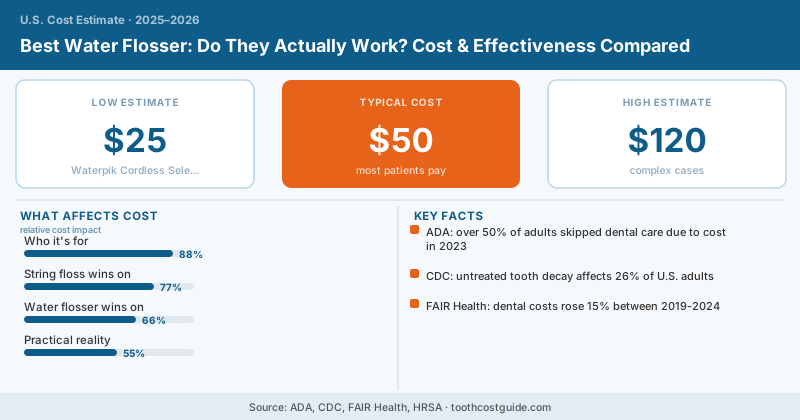
A Waterpik WP-660 costs $60–$80 and lasts 3–5 years. Replacement tips run $10–$15 per year. Total cost: $70–$95 for year one, $10–$15/year thereafter.
Compare that to the cost of gum disease treatment: a single scaling and root planing session runs $600–$1,200. One prevented periodontal maintenance visit more than pays for the device.
For patients with braces, implants, or a history of gum problems, a water flosser isn’t optional equipment — it’s cost-effective preventive care.
Frequently Asked Questions
Mid-range water flossers like the Waterpik WP-660 typically cost $50–$80, while budget models start around $20–$35 and premium countertop units can reach $100+. Most users find the $50–$80 range offers the best balance of durability and effectiveness for daily home use.
Most dental insurance plans do not cover water flossers since they are considered optional oral hygiene devices rather than medically necessary equipment. You will typically pay the full out-of-pocket cost ($20–$80), though some flexible spending accounts (FSAs) or health savings accounts (HSAs) may allow you to use pre-tax dollars for the purchase.
Yes—a Journal of Clinical Dentistry study found that water flossers were 51% more effective at reducing gingivitis and 52% more effective at reducing gingival bleeding than string floss in patients with braces. Water flossers are also recommended for implants, bridges, and crowns since the pressurized stream can clean around these surfaces better than traditional floss.