You’re talking to someone and notice they keep glancing at your smile. You check later: the dark triangular gaps at the base of your front teeth are more noticeable than you realized. These “black triangles” — or open gingival embrasures in clinical terms — are one of the most common aesthetic complaints after orthodontic treatment and one of the least discussed before braces go on.
Here’s what they actually cost to fix.
Why Black Triangles Form
The dark triangle appearance happens when the papilla (the small triangle of gum tissue between teeth) doesn’t fill the space between teeth at the gumline. This happens for several reasons:
- Gum recession from periodontal disease or aggressive brushing (the most common cause — CDC data shows about 47% of adults over 30 have some form of gum disease)
- Post-orthodontic spacing — teeth moved together at the crown level but the gum tissue didn’t fill in
- Tooth shape — teeth that are triangular rather than rectangular leave more open embrasure space
- Age — gum tissue naturally recedes over time
The treatment depends on the cause, the size of the triangle, and how many spaces are involved.
| Treatment | Average Cost Per Space |
|---|---|
| Dental bonding / composite resin | $300–$600 |
| Interproximal reduction (IPR) + bonding | $400–$800 |
| Porcelain veneers (to reshape teeth) | $900–$2,500 per tooth |
| Bioclear matrix composite | $350–$700 |
| Hyaluronic acid filler (non-surgical gum) | $200–$800 per area |
| Gum grafting (for recession-caused gaps) | $600–$1,200 per site |
The Most Affordable Option: Composite Bonding
For small-to-medium black triangles between front teeth, dental bonding is the standard first-line treatment. Your dentist adds tooth-colored composite resin to the sides of adjacent teeth, subtly widening them to close the gap visually.
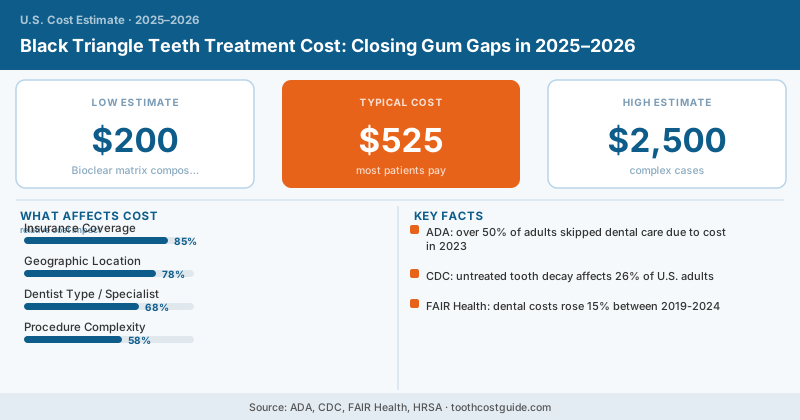
Cost: $300–$600 per space. A set of 6 upper front teeth with black triangles between all of them would cost $1,500–$3,000 for bonding. It takes one appointment, requires no anesthesia, and lasts 5–10 years with proper care.
The Bioclear method is a slightly more refined version of composite bonding that uses matrix bands for more predictable results — costs about the same.
When IPR Is Part of the Solution
Interproximal reduction (IPR) is the controlled reshaping of tooth contact points using fine diamond strips. When teeth are slightly triangular in shape (wider at the top, narrower at the bottom), IPR can reshape them into more rectangular profiles — making the tooth-to-tooth contact lower, which reduces the visual gap.
IPR alone doesn’t close black triangles. It’s used in combination with orthodontic movement or bonding. Your orthodontist may recommend it during active aligner treatment to help teeth seat properly and reduce black triangle formation.
Yes — and it’s under-discussed in orthodontic consultations. When crowded teeth are straightened, teeth that were overlapping come apart. If the gum papilla doesn’t fill in the newly created contact area (which depends on bone levels and the shape of the tooth contact point), black triangles appear. This is more common in adults over 35. Ask your orthodontist about your black triangle risk before starting treatment, especially if you already have some gum recession.
Veneers: The Premium Option
If you want to address black triangles while also improving overall smile aesthetics, porcelain veneers are the most comprehensive solution. By reshaping multiple front teeth simultaneously, a skilled cosmetic dentist can eliminate black triangles while also correcting color, length, and shape.
Cost: $900–$2,500 per tooth. For 6–8 upper front teeth: $5,400–$20,000.
Veneers aren’t the right choice just for black triangle correction — the cost-benefit ratio favors bonding unless you have additional cosmetic goals for the same teeth.
The Gum Filler Option
Injectable hyaluronic acid fillers have been used off-label by periodontists and some cosmetic dentists to plump gum papillae and close small black triangles. It’s temporary (6–12 months), costs $200–$800 per treatment area, and isn’t widely available yet.
It’s best for small triangles caused by mild recession where surgical grafting seems excessive. Not appropriate for large gaps or those caused by significant bone loss.
Black triangles caused by active periodontal disease (bone loss) won’t be fixed by bonding or veneers alone — the underlying gum disease must be treated first. Putting cosmetic bonding over an area with active infection is a short-term patch that will fail when the tissue continues to recede. Always get a full periodontal assessment before any cosmetic treatment for black triangles.
Insurance Coverage
Black triangle treatment is cosmetic and typically not covered. Exception: if the black triangles are caused by gum disease (the most common underlying cause), the periodontal treatment itself — scaling, root planing, grafting — may be covered at 50–80% as a major dental procedure. The aesthetic correction layer on top of that remains out-of-pocket.
For most patients with 2–4 black triangles from orthodontic treatment, expect to pay $600–$2,400 for composite bonding out-of-pocket — no insurance benefit.
Frequently Asked Questions
Black triangle treatment typically costs $300–$2,500 per space, depending on the method used. Dental bonding is usually the most affordable option at $300–$600 per tooth, while more advanced techniques like interdental papilla reconstruction or gum grafting can range from $1,200–$2,500 per space.
Most dental insurance plans classify black triangle closure as cosmetic and do not cover the cost, leaving you responsible for 100% out-of-pocket expense. Some plans may cover a portion if the treatment is deemed medically necessary to address gum disease or bone loss, but you should verify with your specific insurer before scheduling.
Yes—dental bonding is a non-surgical option that closes black triangles in a single appointment with minimal recovery time, though results may not be permanent and bonding can chip or stain over time. Surgical alternatives like interdental papilla reconstruction or gum grafting offer longer-lasting results but require 1–2 weeks of healing and cost significantly more ($1,200–$2,500+).