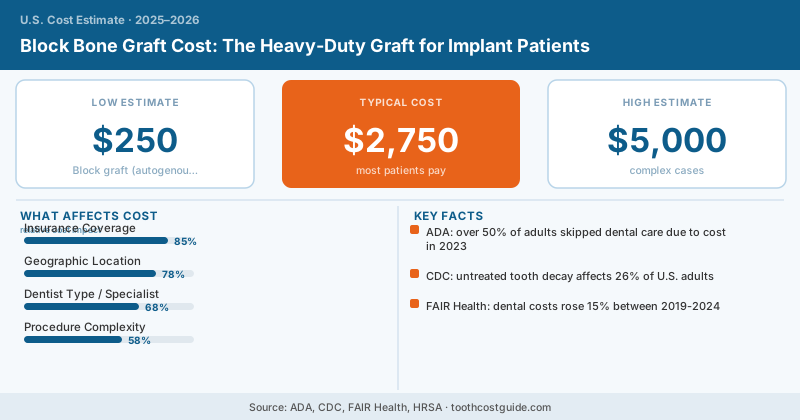
A block bone graft is the bone graft you get when the standard graft isn’t enough — and it costs $2,000–$3,500 per site without insurance. That’s several times the price of a routine socket graft, because instead of packing in granular material, the surgeon screws a solid block of bone into your jaw.
You’d need one if you’ve lost a lot of bone width or height, usually after a tooth has been missing for years or a previous graft failed. Without enough bone, a dental implant has nothing to anchor into. The block rebuilds the foundation.
How Block Grafts Compare
| Graft Type | Use Case | Cost Per Site |
|---|---|---|
| Socket preservation (particulate) | After extraction | $250–$1,200 |
| Ridge augmentation (particulate) | Minor bone loss | $600–$1,800 |
| Block graft (autogenous/allograft) | Major bone loss | $2,000–$3,500 |
| Sinus lift (separate procedure) | Upper back jaw | $1,500–$5,000 |
| Donor-site surgery (if autogenous) | Harvest own bone | $500–$1,500 |
The American Association of Oral and Maxillofacial Surgeons describes block grafting as a technique for significant ridge deficiencies — the cases where simpler grafts can’t restore enough volume. The ADA’s coding reflects this complexity, placing block grafts among the higher-cost bone procedures.
Where the Block Comes From
There are two routes. An autogenous block uses your own bone, often harvested from the back of your jaw or chin — which means a second surgical site and added cost. An allograft block uses processed donor bone, avoiding the harvest surgery but sometimes costing more in materials. Your surgeon will recommend based on how much bone you need and your healing profile.
A block graft isn’t a one-and-done visit. After placement, the bone needs 4 to 9 months to integrate before an implant can go in. That means the graft cost ($2,000–$3,500) comes well before the implant cost ($3,000–$5,000). Plan for the full multi-stage expense and timeline, not just the first invoice.
Is There a Cheaper Path?
Sometimes. If your bone loss is borderline, a particulate ridge augmentation or a dental bone graft using granular material may do the job for far less. Ask your surgeon whether a block is truly necessary or whether a smaller graft could work. Get the reasoning in writing.
Don’t shop for the cheapest block graft without checking the surgeon’s experience. Block grafting is technique-sensitive — a failed graft means redoing the whole thing, doubling your cost and adding months. Experience matters more here than on routine procedures.
Insurance Reality
Dental insurance frequently classifies bone grafts as not covered or only partially covered, and annual maximums rarely stretch to a $3,000 graft plus a later implant. Medical insurance occasionally helps when bone loss stems from trauma or disease. Reviewing how dental insurance works before scheduling avoids nasty surprises.
Managing the Cost
University oral surgery programs perform block grafts at reduced rates under faculty oversight. A dental savings plan trims 15% to 25% off surgical fees with no waiting period. And because the total bill is large, many patients use CareCredit to spread it across interest-free months.
Bottom Line
A block bone graft is expensive because it’s doing heavy structural work — rebuilding a jaw that can’t hold an implant on its own. If a smaller graft would suffice, take it. But when you genuinely need the volume, the block is what stands between you and being told your jaw can’t support a tooth replacement at all.
Frequently Asked Questions
A block bone graft typically costs $2,000–$3,500 per site without insurance coverage. This price is significantly higher than a particulate (granular) bone graft, which usually ranges from $500–$1,500, because the procedure involves surgically securing a solid block of bone to your jaw rather than packing in granular material.
Most dental insurance plans classify bone grafts as major restorative procedures and cover 50% of the cost after you meet your deductible, though some plans cover only 0% if deemed cosmetic or implant-related. Your out-of-pocket cost typically ranges from $1,000–$3,500 depending on your plan's annual maximum and whether the graft is deemed medically necessary versus elective for implant placement.
You need a block bone graft when you've lost significant bone width or height in your jaw—usually after a tooth has been missing for several years or a previous particulate graft has failed. Your oral surgeon will determine this based on imaging and bone measurements; if standard grafts won't provide enough volume for a stable implant, a block graft becomes necessary and typically adds 4–6 months to your implant timeline for healing.