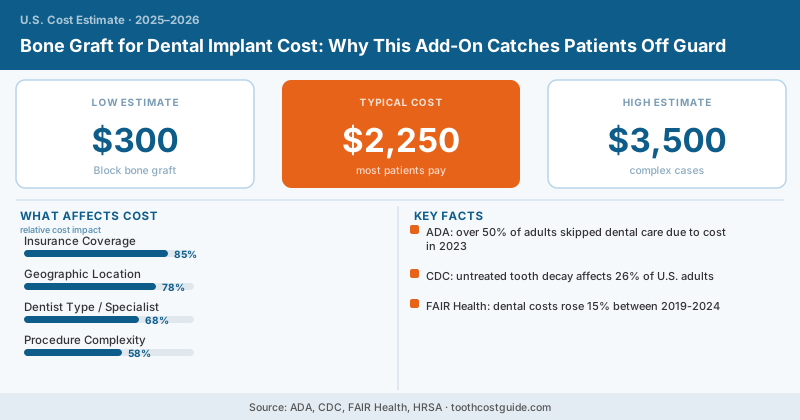
“Why is my implant quote now $1,200 more than what I was originally told?” This question comes up constantly, and the answer is almost always the same: bone grafting. Nobody can confirm whether you need it until a 3D scan actually measures the bone at your specific implant site — which means the number on your initial estimate is sometimes incomplete by design, not by deception.
Bone grafting adds material — either your own bone, donor bone, synthetic substitute, or a combination — to rebuild adequate volume and density before an implant can be safely and successfully placed. The cost ranges from $300 to $3,000+ depending on the extent needed.
| Graft Type | Typical Cost | When It’s Needed |
|---|---|---|
| Socket preservation (at time of extraction) | $300–$800 | Preventing bone loss right after a tooth is pulled |
| Minor ridge augmentation | $600–$1,200 | Narrow ridge, minor width deficiency |
| Block bone graft | $1,500–$3,000 | Significant bone loss, larger defects |
| Sinus lift (upper back molars) | $1,500–$3,500 | Insufficient bone below the sinus cavity |
| Guided bone regeneration (GBR) with membrane | $600–$2,500 | Combined with implant placement |
Why Bone Loss Happens in the First Place
When a tooth is lost — whether pulled or extracted long ago — the bone that used to support its root begins resorbing (shrinking) almost immediately, since it no longer receives the stimulation from chewing forces that a tooth root provides. Studies on post-extraction bone changes show significant width and height loss can occur within the first 6-12 months if nothing is done to preserve the socket. The longer a gap sits untreated, the more bone volume is typically lost, which is exactly why dentists frequently recommend socket preservation grafting at the time of extraction — even years before an implant is planned.
Sinus Lifts: The Specific Case for Upper Back Teeth
The upper jaw’s back molars sit close to the maxillary sinus cavities, and after those teeth are lost, the sinus floor can gradually drop into the space once occupied by tooth roots — further reducing available bone height. A sinus lift procedure raises the sinus membrane and packs bone graft material underneath it, creating enough vertical bone to support an implant. This is one of the more involved grafting procedures, typically costing $1,500-$3,500, and usually requires 4-9 months of healing before implant placement can proceed.
Depending on the extent of bone loss, some grafts can be placed simultaneously with the implant itself (saving a separate healing period and appointment), while more extensive grafts require healing first before an implant can be placed safely. Ask your surgeon specifically: “Based on my CBCT scan, can grafting and implant placement happen in the same visit, or do I need to heal from the graft first?” This affects both your total timeline and, in some cases, the total cost.
Graft Material Options and Why They Vary in Price
Autograft (your own bone), typically harvested from the jaw or chin, is considered the gold standard for integration since it’s your own living bone tissue, but it requires a second surgical site and is used less often now given strong alternatives.
Allograft (donor human bone, processed and sterilized) is widely used, cost-effective, and has a strong track record.
Xenograft (processed bovine or porcine bone mineral) is common for sinus lifts and larger grafts, valued for its slow resorption rate which helps maintain volume over time.
Synthetic/alloplastic materials are lab-created and avoid any biological donor tissue concerns, though cost and specific application vary by product.
Ask which material your surgeon plans to use and why — cost differences between these options are generally modest, but healing time and long-term volume retention can differ.
Getting Insurance to Help
Socket preservation grafts done at the time of an extraction are the most likely to see partial insurance coverage, since they’re often billed alongside a covered extraction procedure. Larger grafts and sinus lifts tied specifically to elective implant placement see far less consistent coverage. Submit a detailed pre-treatment estimate itemizing the graft separately from the implant itself, so you can see exactly which portion, if any, your plan will help cover.
Smoking significantly impairs graft healing and integration, increasing the risk that the graft itself will fail before an implant can even be placed on top of it. If you smoke and are planning implant treatment involving bone grafting, ask your surgeon for a specific pre-surgical timeline for cessation — this isn’t just general health advice, it materially affects whether the graft you’re paying for actually succeeds.
The Bottom Line
Bone grafting adds $300-$3,000+ to an implant case and frequently isn’t confirmed until after CBCT imaging reveals the actual bone volume at your specific site. Ask your surgeon early whether grafting is likely based on how long the tooth has been missing, and get a full itemized estimate that separates the graft cost from the implant cost so there are no surprises mid-treatment.
Frequently Asked Questions
A minor socket preservation graft costs $300–$800, a more extensive ridge or block graft runs $800–$3,000, and a sinus lift (needed for upper back molar implants with insufficient bone) costs $1,500–$3,500. Many patients don't discover they need grafting until after their initial CBCT scan, since it depends on bone volume at the specific implant site.
Bone graft necessity often can't be confirmed until a CBCT 3D scan is taken and evaluated, which sometimes happens after an initial consultation and estimate. Some practices provide a 'best case, no grafting needed' estimate initially, then add the grafting cost once imaging reveals insufficient bone volume at the planned implant site.
Coverage varies significantly by plan. Some dental insurance covers a portion of bone grafting when it's clearly linked to a covered implant or extraction, particularly socket preservation grafts done immediately after tooth removal. More extensive grafts like sinus lifts and larger ridge augmentations are less consistently covered and should be confirmed with a pre-treatment estimate.