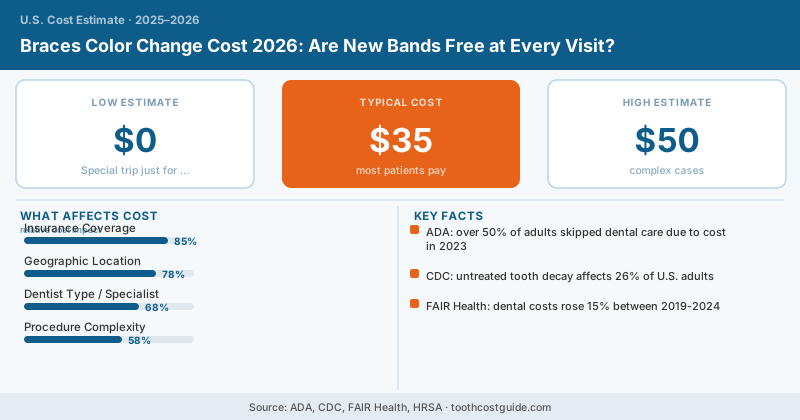
Here’s a question that comes up at almost every kid’s braces appointment: “Can I get new colors?” And the answer parents want to know — does it cost extra? In the vast majority of cases, no. Swapping the colored bands on braces is free at your regular adjustment visits, when those bands get replaced anyway. But there are a few situations where you’ll pay $20 to $50, and they’re worth knowing.
The colored parts are called elastic ligatures — small rubber bands that hold the wire into each bracket. They wear out and lose their stretch, so your orthodontist replaces them at every adjustment. Since they’re getting changed regardless, picking a new color costs nothing.
| Color Change Scenario | Typical Cost | Notes |
|---|---|---|
| At a scheduled adjustment visit | $0 (included) | Bands replaced anyway |
| Special trip just for new colors | $20–$50 | Some practices charge a visit fee |
| Clear/ceramic ligatures upgrade | $0–$25 | Sometimes a small premium |
| Color change on aligners | N/A | Aligners have no bands |
How the Colors Work
Each time you see your orthodontist for an adjustment — usually every four to eight weeks — they remove the old ligatures, change or adjust the wire, and put fresh ligatures on. That’s your free chance to pick a new color. Kids go wild with it: holiday themes, school colors, favorite sports teams. Adults often choose clear or silver to keep things discreet.
The bands come in basically every color imaginable. They don’t affect how the braces work — they’re purely the holders for the archwire — so your choice is entirely cosmetic. The teeth move the same whether you pick neon green or invisible.
Because ligatures are swapped at every adjustment, color changes are simply part of the braces treatment you’re already paying for. There’s no separate “color fee” at a normal visit. This is one perk that clear aligners like Invisalign don’t offer — no bands means no color fun.
When You Actually Pay
The cost shows up when you want colors changed outside a scheduled visit. Say your daughter has a school dance Friday and wants pink bands, but her next adjustment isn’t for three weeks. A special trip just for new ligatures may carry a $20–$50 chair-time fee at some practices, though plenty do it for free as a goodwill gesture.
Clear or tooth-colored ligatures used with ceramic braces sometimes carry a tiny premium, since they cost the practice a bit more and can stain faster. But this is minor — usually $25 or less if charged at all.
The Bigger Picture: Compliance and Cost
There’s a real reason orthodontists encourage kids to engage with color choices. The American Association of Orthodontists has emphasized that patient engagement improves treatment outcomes — a kid who’s excited about their braces is more likely to follow the rules, keep them clean, and avoid the foods that break brackets. The CDC’s oral-health data consistently links good home care during orthodontics to fewer complications and white-spot cavities.
So those free color changes aren’t just fun — they’re a small psychological tool that can keep treatment on track and prevent costly repairs from broken brackets. A motivated patient finishes faster, and faster means cheaper if your orthodontist bills per visit.
Don’t Forget the Real Costs
While colors are essentially free, the treatment around them isn’t. Standard braces run thousands, and every case ends with retention — budget $150–$500 for a retainer to hold the result once the colorful bands come off for good.
For the treatment itself, an FSA for dental expenses covers orthodontics with pre-tax dollars, and a CareCredit dental plan can spread payments out monthly.
Light-colored bands — white, clear, yellow — stain easily with curry, coffee, tomato sauce, and dark sodas, looking grimy long before your next visit. If staining bugs you, pick darker colors or metallic shades, or just rinse well after meals. It won’t cost extra, but it saves the “why are my braces brown” disappointment.
Bottom Line
Changing braces colors is one of the few genuinely free perks of orthodontic treatment — included at every routine adjustment, with a small fee only for off-schedule trips. It’s a tiny bit of fun in a long process, and it quietly helps keep young patients engaged and on track.
Frequently Asked Questions
Changing braces colors is completely free at your routine adjustment visits, which typically happen every 4–8 weeks. You'll only pay $20–$50 if you request a color change outside your scheduled appointment or want multiple changes between visits.
Most dental insurance plans cover orthodontic treatment, including routine color changes, as part of your overall braces coverage since the bands are replaced during standard adjustment appointments. Out-of-pocket costs for color swaps at regular visits are typically $0, though emergency or extra color changes may not be covered and could cost $20–$50 out of pocket.
Yes, you can change to any available color at each regular adjustment visit at no additional cost, since your orthodontist replaces the elastic ligatures anyway. However, if you want to change colors between scheduled appointments (typically 4–8 weeks apart), most offices will charge $20–$50 for the extra visit or service.