The reason orthodontists offer free consultations isn’t altruism — it’s because braces pricing varies by 30–40% from one practice to another in the same city, and they want to be the one who quotes you first. Getting only one orthodontic quote is one of the most common ways people overpay.
Here’s what braces actually cost, what determines your number, and how to work the system.
Estimates based on 2026 national averages adjusted for your state. Actual costs vary by provider, complexity, and plan details. Get a written treatment estimate before proceeding.
Braces Cost by Type
| Braces Type | Typical Cost |
|---|---|
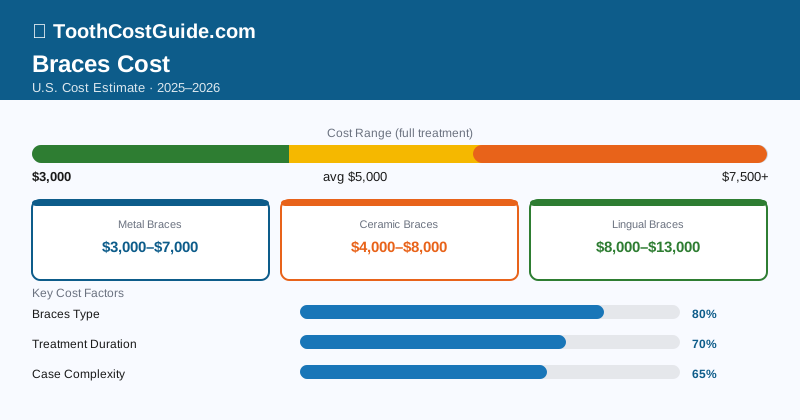
| Traditional metal | $3,000–$7,500 |
| Ceramic (tooth-colored) | $4,000–$8,000 |
| Self-ligating (Damon system) | $3,500–$8,000 |
| Lingual (behind the teeth) | $8,000–$13,000 |
| Invisalign (for comparison) | $3,000–$8,000 |
| Phase 1 / partial / limited braces | $1,500–$3,500 |
These are treatment totals — every adjustment appointment, any mid-treatment broken bracket repairs the practice absorbs, and the retainers at the end are generally included. Confirm what’s in the quote before you sign.
What Determines Your Specific Price
Case complexity is what orthodontists actually price around. A 12-year-old with mild crowding who finishes in 14 months is priced very differently from a 25-year-old with a skeletal open bite and a 28-month treatment plan. Orthodontists estimate treatment duration from clinical records (photos, x-rays, models) taken at consultation, and set fees based on that estimate.
If your orthodontist sees you and quotes at the low end of their range, your case is likely straightforward. High-end quotes mean complexity — more appointments, more adjustment, possibly surgical referral.
Braces type adds cost above the metal baseline:
Metal braces remain the most effective appliance for complex tooth movement. The mechanics are simple, durable, and well-understood. Children and teens often choose colorful elastic ties — aesthetics become a fun part of the process rather than a disadvantage. Metal braces handle cases that clear aligners or ceramic braces struggle with.
Ceramic braces use tooth-colored or clear brackets that are much less visible. The same wire mechanics underneath. They cost $500–$1,500 more than metal. Two honest drawbacks: ceramic brackets are more brittle than metal (broken brackets are more common, especially in children), and the ceramic can stain with coffee, tea, and turmeric over a 24-month treatment.
Lingual braces are bonded to the back surfaces of your teeth — completely invisible from the front. The technical requirements are substantial: each bracket must be custom-fabricated, placement is extremely difficult, and speaking is affected for several weeks as your tongue adapts. Relatively few orthodontists offer them with genuine expertise. The price premium ($8,000–$13,000) reflects real complexity.
Your city and orthodontist. A pediatric orthodontist in suburban Ohio charges less than one in central Manhattan for the same case. The fee differential isn’t random — it tracks rent, labor costs, and market competition. If you live in a high-cost metro area and are willing to drive to a suburb or smaller city for appointments, you can sometimes save $800–$1,500 on the same quality of care.
The Phase 1 Question — Worth Asking
One of the most financially significant orthodontic decisions is whether your child needs Phase 1 (early interceptive) treatment, usually recommended for kids age 7–10.
Phase 1 runs $1,500–$3,500 and addresses specific developing problems — crossbites, underbites, severe crowding that’s affecting permanent tooth eruption. For genuine Phase 1 indications, early treatment prevents more complex and expensive problems later. For mild issues, it may not be necessary.
Phase 1 followed by Phase 2 comprehensive braces = $4,500–$10,000 total. Single-phase comprehensive treatment at age 11–13 = $3,000–$7,000.
If an orthodontist recommends Phase 1 at your child’s first consultation, get a second opinion. Ask the second orthodontist specifically: “Does this child need Phase 1 now, or can we achieve the same result with single-phase treatment later?” Their answer — and the reasoning they give — will tell you a lot about both orthodontists.
The American Association of Orthodontists recommends children have a first orthodontic evaluation by age 7 — not because most 7-year-olds need treatment, but so early problems can be identified. If you’re told Phase 1 is necessary, ask what specific problem requires treatment now rather than at age 11–12. Clear indications exist; vague explanations of “better outcomes with early treatment” are less compelling.
Insurance: The Lifetime Maximum Reality
Orthodontic benefits work differently from general dental benefits — they have a lifetime maximum (not an annual maximum) that’s typically $1,000–$3,000 per insured person.
What this means in practice: Your child has a $1,500 orthodontic lifetime maximum. Braces cost $5,000. Insurance pays $1,500. You pay $3,500.
That’s the extent of it — one-time use of a capped benefit. Once it’s used, it’s gone; there’s no “resetting” each year like the general dental maximum.
Key insurance considerations:
- Age limits: Many plans cover orthodontic treatment only up to age 18 or 19. Adult orthodontic benefits are excluded by a large share of plans.
- Waiting periods: Some individual-market plans require 12 months of enrollment before orthodontic benefits activate.
- Coverage verification: Call your insurer with codes D8080 (adolescent comprehensive orthodontics) or D8090 (adult). Ask: what’s my lifetime maximum, how much has been used, and does the plan cover clear aligners as well as braces?
For adults considering braces or Invisalign: check your plan before assuming you’re covered. Most adult Americans with employer dental plans have either no orthodontic benefit or a limited $500–$1,000 adult benefit.
How to Actually Pay Less
Free consultations at multiple practices. This is free money. Orthodontic offices universally offer complimentary consultations because they want to present their treatment plan and price before a competitor does. Getting 3 consultations for the same case — and letting each office know you’re comparing — is completely legitimate and regularly saves $500–$1,500.
Orthodontic residency clinics. Dental schools with accredited orthodontic programs treat patients under board-certified faculty supervision at 30–55% below private practice rates. A $5,500 braces case might run $2,500–$3,500 at a residency clinic. Treatment takes somewhat longer (more appointments, students learning), but the technical outcome is faculty-supervised and the oversight is rigorous. Find programs at adea.org.
In-house payment plans. Orthodontic practices routinely spread total fees across the treatment duration — 18–30 months at 0% interest is standard. Nobody gets braces at most offices without a payment plan option. Ask about the longest available plan to minimize monthly cash impact.
Use FSA funds for installment payments. If your employer offers a Flexible Spending Account, orthodontic treatment payments are eligible expenses. FSA contributions are pre-tax, which means a 22–35% effective discount on the amounts you pay from FSA funds.
Ask about a senior discount for the second child. Some orthodontic practices discount fees for sibling cases — particularly if both children are patients at the practice simultaneously. It’s worth asking.
Adult Braces: Longer, but Results Are the Same
Adults take 18–36 months on average, compared to 12–24 months for adolescents. The slower pace reflects that adult bone is fully calcified — teeth move more slowly without the active bone remodeling that occurs during adolescent growth. The clinical outcomes are equivalent; the timeline is longer.
Adult braces are also more expensive by roughly 10–20% at many practices, reflecting the longer estimated treatment duration priced into the fee.
One practical adult consideration: retainer vigilance after braces is more critical for adults than teenagers. Adult teeth that aren’t retained tend to relapse more noticeably. Permanent bonded retainers behind the front teeth, combined with removable retainers worn nightly, are increasingly the standard recommendation for adults.
Bottom Line
Metal braces cost $3,000–$7,500 and remain the most effective orthodontic appliance for complex cases. Ceramic braces at $4,000–$8,000 are a reasonable cosmetic step up. With orthodontic insurance covering $1,000–$3,000 of treatment, most families pay $2,500–$5,000 out of pocket for a child’s comprehensive case.
The number one money-saving move: get multiple consultations. Free, takes a few hours, and commonly reveals price differences of $800–$1,500 for equivalent treatment. Second best: orthodontic residency clinic if your schedule allows for the extra appointment time.
Before signing an orthodontic treatment contract: confirm the total fee in writing, ask exactly what is and isn’t included (adjustment appointments, emergency visits for broken brackets, retainers, post-treatment x-rays), verify the payment plan terms including what happens if treatment extends beyond the originally estimated duration, and check your insurance’s lifetime orthodontic maximum and any applicable waiting period before the first appointment.
Frequently Asked Questions
Traditional metal braces typically cost between $3,000 and $7,500 in the US, with significant variation based on your location, orthodontist experience, and treatment complexity. Prices can vary by 30-40% between practices in the same city, which is why getting multiple quotes is essential before committing.
Many dental insurance plans cover 50% of orthodontic treatment costs, though some plans cap coverage at $1,500-$2,000 total, leaving you to pay the remaining balance. Coverage eligibility often depends on age (some plans only cover minors), medical necessity, and your specific plan terms, so verify your coverage before starting treatment.
Most traditional braces treatment takes 18-24 months for significant tooth movement, though cases vary from 12-36 months depending on the severity of misalignment and patient compliance. Faster alternatives like clear aligners or accelerated orthodontics exist but may cost more and work best for mild to moderate cases.