Most people think of an overbite as just an aesthetic quirk — buck teeth, a prominent upper jaw. But a significant overbite can cause real problems: excessive wear on front teeth, jaw muscle fatigue, and in severe cases, sleep-related breathing issues. That’s why orthodontists take it seriously. Here’s what treatment costs and how the approach changes based on your age and the severity of the problem.
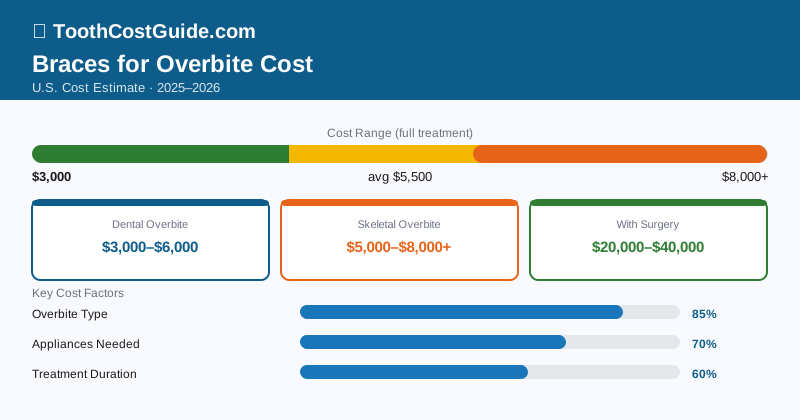
Treating an overbite with braces costs $3,000–$8,000 for comprehensive orthodontic care. The figure moves based on whether the issue is dental (teeth position) or skeletal (jaw structure), and how much of the patient’s jaw growth window is left. For children caught early, functional appliances can reshape jaw development. For adults with a severe skeletal overbite, jaw surgery enters the picture — and with it, costs of $20,000–$40,000.
| Overbite Treatment Option | Cost Without Insurance |
|---|---|
| Comprehensive braces (dental overbite) | $3,000–$7,500 |
| Invisalign for overbite correction | $3,000–$8,000 |
| Braces + rubber bands (Class II correction) | $3,500–$7,500 |
| Braces + Forsus appliance | $4,000–$7,500 (included) |
| Braces + Herbst appliance | $4,500–$8,000 (included) |
| Orthognathic jaw surgery (severe cases) | $20,000–$40,000 |
| Braces before/after jaw surgery (combined) | $8,000–$15,000 additional |
Dental Overbite vs. Skeletal Overbite: Why It Matters for Cost
This distinction shapes the entire treatment plan — and the price.
A dental overbite means the upper front teeth protrude because of tooth position, not jaw position. The jaw relationship underneath is essentially fine. Braces with rubber bands can correct this over 18–24 months at standard comprehensive braces prices. Many adults fall into this category.
A skeletal overbite means the upper jaw (maxilla) genuinely sits too far forward, or the lower jaw (mandible) is set too far back — the bones themselves are misaligned. Tooth movement alone can compensate partially, but it can’t fully correct a skeletal problem. In growing patients, functional appliances can actually redirect jaw growth. In adults with finished bone development, the options are dental compensation (which works up to a point) or jaw surgery (which corrects the underlying problem).
Treatment by Patient Age
Ages 9–12 — The Growth Window: This is where early treatment pays the biggest dividends. Functional appliances like the Herbst or Twin Block take advantage of active jaw development to guide the lower jaw forward. A Twin Block appliance (removable, worn most of the day) or cemented Herbst mechanism can shift the jaw relationship substantially in 9–12 months. Phase 1 treatment like this runs $1,500–$3,500. Many kids who get Phase 1 treatment still need comprehensive braces afterward, but the Phase 2 braces treatment is simpler and often shorter.
Ages 13–17 — Teens in Comprehensive Braces: After Phase 1 (if any), comprehensive braces address tooth positioning. Class II rubber bands — patient-worn elastics that run from upper to lower teeth in a specific pattern — provide continued bite correction during the braces phase. For teens with growth remaining, some additional jaw change is still achievable alongside the tooth movement.
Adults — The Harder Path: For a dental overbite, standard braces with rubber bands work well. For a moderate skeletal overbite in an adult, the orthodontist can “camouflage” the problem by adjusting tooth angles to create acceptable function, even if the jaw relationship isn’t perfectly corrected. For severe skeletal overbites in adults, this camouflage has limits — and surgery becomes the only way to achieve a complete fix.
Overbite correction in growing children (ages 10–14) is the most cost-effective approach. Functional appliances can modify jaw growth during this window. Waiting until adulthood means relying entirely on tooth movement, which is less efficient and may not fully correct a skeletal problem without surgery.
The Functional Appliance Lineup
Orthodontists have several tools for overbite correction in growing patients. Understanding what these devices do helps you ask better questions at consultations.
Rubber bands (elastics): The simplest approach. Patient-worn bands connecting upper and lower braces in a Class II pattern, worn 22+ hours a day. Zero additional cost beyond the braces fee. The catch: they only work when the patient wears them.
Forsus springs: A lightweight spring mechanism attached to the braces archwires. The orthodontist installs it — no patient compliance required. Typically worn for the last 6–12 months of braces treatment. Usually included in the comprehensive fee.
Herbst appliance: A fixed piston mechanism linking upper and lower archwires. Can’t be removed. Holds the lower jaw in a forward position 24 hours a day for 9–12 months. Very reliable because it doesn’t depend on patient cooperation. Generally included in the comprehensive treatment fee.
Twin Block: A removable Phase 1 device used in younger children, worn before braces are even placed. Includes bite blocks that naturally position the jaw forward throughout the day. Part of Phase 1 treatment costs ($1,500–$3,500).
When Jaw Surgery Enters the Equation
For adults with severe skeletal overbites, orthognathic surgery is the definitive solution. The process runs in three stages:
- Pre-surgical orthodontics (12–18 months): Braces are placed and teeth are aligned into their correct position within each arch. This actually makes the overbite look worse temporarily — the orthodontist is removing the dental compensation that masked the skeletal problem.
- Surgery: An oral and maxillofacial surgeon repositions one or both jaws. For overbite, this typically involves setting the upper jaw back, moving the lower jaw forward, or both.
- Post-surgical braces (6–12 months): Fine-tuning after the jaws are in their new positions.
Total cost for combined surgical orthodontic treatment: $20,000–$50,000. That’s not a typo. But medical insurance covers the surgical component when functional necessity is documented — and functional necessity (difficulty chewing, jaw pain, sleep issues) isn’t hard to document with a severe overbite.
Insurance: Two Different Plans, Two Different Benefits
For standard overbite treatment (braces, functional appliances): dental insurance orthodontic benefits apply.
- Lifetime maximum: $1,000–$3,000
- Coverage: 50% up to the maximum
- Age restrictions: Usually under 18–19
For jaw surgery: medical insurance is the relevant coverage. Surgery is billed as a medical procedure when functional impairment is documented. Medical insurance typically covers 50–80% after deductible and out-of-pocket maximum — but pre-authorization is non-negotiable. Get it in writing before anything starts.
The braces component of combined surgical orthodontic treatment is usually covered by dental insurance up to the orthodontic lifetime maximum. The surgery itself is billed to medical insurance. Getting pre-authorization from both insurers before starting combined surgical orthodontic treatment is essential — billing surprises in these cases can be enormous.
Strategies to Save
Early childhood treatment: Phase 1 functional appliance treatment at ages 9–12 costs $1,500–$3,500 and can prevent or reduce the scope of later comprehensive treatment. The American Association of Orthodontists recommends an age-7 orthodontic evaluation specifically to catch these cases while treatment options are broadest.
Understand what’s in the quoted fee: Some orthodontists include functional appliances in their comprehensive fee; others quote them separately at $500–$1,500. Compare apples to apples when reviewing multiple consultations.
Academic medical centers for surgical cases: For jaw surgery cases, combined orthodontic and surgical care at university hospitals or dental school academic centers can reduce total costs by 30–50%. The coordination is more complex, but the savings on a $35,000 total treatment plan are real.
In-network surgical providers: Choosing an in-network oral and maxillofacial surgeon with your medical insurance can save $5,000–$15,000 versus out-of-network care. Confirm surgeon network status before the pre-surgical orthodontic phase begins.
Bottom Line
Overbite correction costs $3,000–$8,000 for the vast majority of dental and moderate skeletal cases. The most important cost-control lever is patient age: catching an overbite in a growing child opens functional appliance options that can dramatically reduce long-term costs and avoid surgery. Severe adult skeletal cases requiring surgery push total treatment into the $20,000–$50,000 range, with the surgical portion partially or significantly offset by medical insurance. Two insurers, two sets of pre-authorizations — don’t let either one be a surprise.
Overbite correction is one of the most predictable orthodontic treatments when caught in growing children. Early Phase 1 treatment with functional appliances can prevent the need for jaw surgery entirely. Adults with skeletal overbites face higher costs and more limited options — making early childhood evaluation one of the most cost-effective dental decisions a parent can make.
Frequently Asked Questions
Traditional metal braces for overbite correction typically cost between $3,000 and $8,000, depending on severity and treatment duration. Ceramic braces run slightly higher at $4,000–$8,500, while Invisalign for overbite cases averages $4,000–$9,000, often on the higher end due to the number of aligners needed.
Most dental insurance plans cover 40–50% of orthodontic treatment costs, with lifetime orthodontic benefits typically capped at $1,500–$2,000. However, overbite correction is often considered medically necessary rather than cosmetic, which can improve coverage; you should verify your plan's orthodontic rider and call your insurer to confirm your out-of-pocket responsibility.
Treatment duration for overbite correction typically ranges from 18 to 36 months, with mild cases resolving in 18–24 months and severe overbites requiring up to 3 years or longer. The timeline depends on the degree of overbite, your age, and whether additional interventions like rubber bands or jaw surgery are needed.