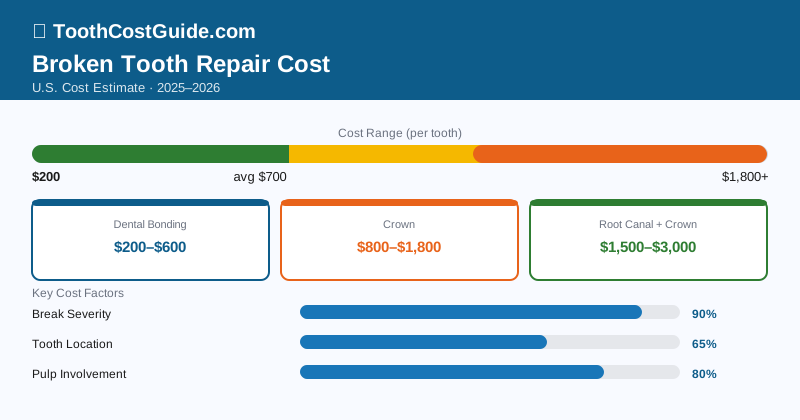
Most broken teeth aren’t the catastrophic events people fear. A chipped front tooth from biting something hard? That’s a $200–$600 bonding job, done in one afternoon. But the same tooth broken deeper — reaching the nerve — can run $1,700–$3,300 once you factor in root canal treatment and a crown. The difference isn’t the size of the break you can see. It’s how deep the fracture goes beneath the surface.
| Break Severity | Typical Treatment | Cost (No Insurance) |
|---|---|---|
| Minor chip (enamel only) | Dental bonding | $200–$600 |
| Medium chip/fracture | Porcelain veneer | $800–$2,000 |
| Broken cusp (no nerve exposure) | Dental crown | $1,000–$1,800 |
| Fracture into pulp (nerve exposed) | Root canal + crown | $1,700–$3,300 |
| Vertical root fracture | Extraction | $150–$600 |
| Emergency exam + X-rays | Diagnosis | $100–$250 |
What Drives the Cost Up or Down
Fracture depth is everything. Dental fractures follow a five-level classification. A craze line (surface hairline, no treatment needed) costs nothing. An enamel chip costs bonding rates. A fractured cusp that stops short of the pulp needs a crown. Anything that reaches the pulp chamber requires root canal therapy before a crown can go on. A fracture that continues below the gumline often means extraction. Where the break stops is what determines your bill.
Front tooth vs. back tooth. Front teeth broken cosmetically are often candidates for bonding or veneers — less expensive materials, simpler technique. A broken molar that takes the full force of your bite needs a durable crown, often zirconia or porcelain-fused-to-metal. Root canals on front teeth run $700–$900; molars go for $1,000–$1,500 because of their anatomy.
Whether the nerve is exposed. This is the tipping point between a manageable bill and an expensive one. You can’t determine this just by looking — you need X-rays and clinical testing. A dentist who recommends a root canal without testing the pulp’s vitality first is worth questioning.
Day and time you seek care. Dentists typically charge $50–$150 for emergency or same-day exam slots. Weekend and after-hours appointments add $100–$300 on top of that. If the tooth isn’t causing severe pain, waiting until Monday morning for a regular appointment saves real money.
Crown material selection. All-ceramic crowns (zirconia or lithium disilicate) run $1,200–$1,800 and look the most natural. Porcelain-fused-to-metal crowns cost $1,000–$1,500. Full gold crowns, rarely requested anymore for aesthetic reasons, run $1,300–$2,500 and are the most durable option for back teeth.
Your Treatment Options, Priced Out
Dental bonding — $200–$600. Composite resin shaped directly onto the broken area. No anesthesia needed for most chips. One appointment, typically under an hour. Best for small chips on front teeth where the fracture stays in enamel or barely into dentin. Lifespan is 5–10 years before it may need touching up or replacement. It’s the best deal in dental repair when it’s the right treatment.
Porcelain veneer — $800–$2,000. A thin ceramic shell bonded to the tooth’s front surface. More stain-resistant and durable than bonding. Requires light enamel reduction, two appointments, and a dental lab fabrication period. Front teeth with moderate chips or cosmetic concerns alongside the break are the sweet spot.
Dental crown — $1,000–$1,800. Caps the entire visible tooth structure above the gumline. Required when the fracture compromises the tooth’s structural integrity enough that a filling or bonding won’t hold under normal chewing. Two appointments: one to prepare and take impressions, one to seat the permanent crown a couple of weeks later.
Root canal + crown — $1,700–$3,300. When the fracture has exposed or infected the pulp, root canal treatment comes first. An endodontist or general dentist removes infected tissue, cleans the canals, and seals them. Then a crown follows. Severe spontaneous pain, swelling, or pain from biting hard enough to make you wince are all signs this path may be needed.
Tooth extraction — $150–$600. For vertical root fractures or teeth too fractured to restore, extraction is the endpoint. What comes after — nothing, a bridge at $3,000–$5,000, or an implant at $3,500–$6,000 — is a separate decision you can take your time on.
Insurance Coverage: The Real Numbers
Most dental plans handle broken teeth across two different benefit tiers:
- Bonding: 40–80% covered if classified as restorative (structural repair), not purely cosmetic
- Crown: 40–60% under major restorative; new policies often impose a 6–12 month waiting period
- Root canal: 40–60%; endodontist fees may exceed what your plan calls “reasonable and customary”
- Extraction: 75–90% for simple; 50–75% for surgical
- Annual maximum: $1,000–$2,000 per year — a root canal and crown together can hit this limit on a single tooth
Worked example (crown + root canal totaling $2,800 with 50% coverage):
- Insurance pays $1,400
- Your deductible: $100
- You owe: roughly $1,500
What to Do Right Now With a Broken Tooth
- Rinse gently with warm water. Control any bleeding with gauze.
- Save large tooth fragments in milk or saliva. Some can be bonded back.
- Cover sharp edges immediately. Temporary dental cement from a pharmacy ($10–$20) or even sugar-free gum prevents your tongue and cheek from getting cut.
- Call your dentist the same day if there’s pain, extreme sensitivity, or any swelling. A break with no symptoms can typically wait 24–48 hours.
- Eat only on the other side. Soft foods only. No temperature extremes.
- Take ibuprofen, not just acetaminophen. Ibuprofen’s anti-inflammatory action works better for dental pain specifically — 400–600 mg every 6 hours with food.
Smarter Ways to Manage the Cost
Don’t delay, even if it doesn’t hurt. An exposed dentin surface — even without nerve pain — starts collecting bacteria immediately. What costs $1,200 as a crown today can become a $3,000 root canal and crown case in a few months.
Ask honestly about bonding vs. crown for borderline breaks. For moderate fractures, some dentists will offer direct composite bonding as a temporary or even long-term solution at significantly lower cost. It won’t last as long as a crown, but the savings can be substantial if you’re tight on budget. Get an honest longevity estimate.
Dental schools are legitimate. Crowns at dental school clinics run $400–$700 — 40–60% below private practice prices. Root canals cost $300–$600. The trade-off is time; appointments run longer and scheduling can take a few weeks.
Know your waiting period before assuming coverage. If you enrolled in dental insurance recently, major restorative procedures like crowns may not be covered yet. Confirm before assuming your insurance will contribute.
A broken tooth with severe pain, swelling, or visible pus is infected and requires urgent care. Do not delay seeking treatment — dental infections can spread to the jaw, neck, or airway and become life-threatening. A tooth that “stopped hurting” after a fracture may indicate nerve death, not healing. See a dentist promptly.
The Bottom Line
Small chip, enamel only: $200–$600 with bonding. Broken cusp, crown required: $1,000–$1,800. Fracture into the nerve: $1,700–$3,300 for root canal plus crown. Get to a dentist before infection develops — that’s the line between the cheaper options and the expensive ones. Dental schools and discount plans cut costs 40–60% for uninsured patients. Remember: a break’s visible size matters much less than how deep it goes.
Frequently Asked Questions
A minor chip repaired with dental bonding typically costs $200–$600 and can be completed in a single appointment. If the crack is deeper and reaches the nerve, you'll need a root canal ($1,000–$1,500) plus a crown ($1,000–$1,800), bringing the total to $1,700–$3,300.
Most dental insurance plans cover 50–80% of bonding and crown costs if the break is accidental rather than from neglect. However, you'll typically pay a deductible ($50–$200) first, and your out-of-pocket cost for a crown usually ranges from $300–$900 after insurance.
Simple bonding repairs can be done the same day you visit the dentist, usually within 1–2 hours. If a root canal is needed, plan for 1–3 appointments over 1–2 weeks, with the final crown placed 1–2 weeks after the root canal is completed.