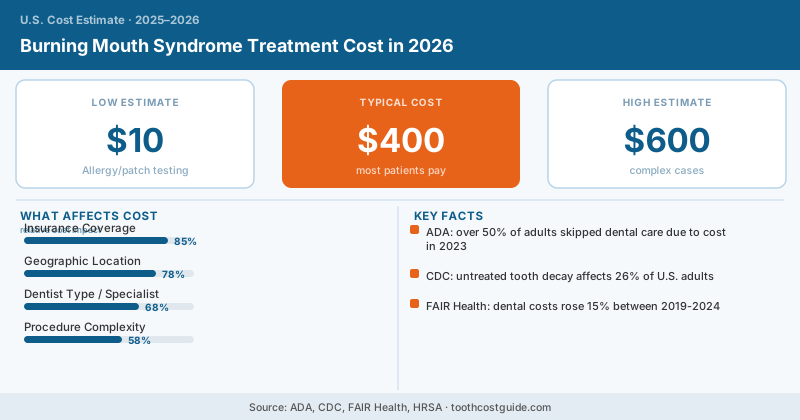
Imagine your tongue feeling scalded all day — like you sipped coffee that was too hot — except nothing’s actually wrong that you can see, and it never goes away. That’s burning mouth syndrome, and the frustrating part isn’t just the discomfort. It’s that diagnosing it means ruling everything else out first, and those tests add up.
What You’ll Spend
| Item | Typical Cost (No Insurance) |
|---|---|
| Dental/oral exam | $75–$200 |
| Blood work (vitamins, thyroid, glucose) | $100–$400 |
| Oral swab/culture (rule out thrush) | $50–$150 |
| Allergy/patch testing | $200–$600 |
| Specialist consult (oral medicine) | $150–$400 |
| Prescription medications (per month) | $15–$150 |
| Saliva-substitute / dry-mouth products | $10–$40 |
Why It’s a “Diagnosis of Exclusion”
Burning mouth syndrome is what’s left when every other explanation has been ruled out. The burning, tingling, or scalded sensation — usually on the tongue, lips, or roof of the mouth — has no visible cause. The National Institute of Dental and Craniofacial Research recognizes it as a chronic orofacial pain condition that disproportionately affects women, particularly after menopause.
Because there’s nothing to point to, your provider has to eliminate the look-alikes:
- Nutritional deficiency (B12, iron, zinc, folate) — blood work
- Oral thrush — a swab; see our oral thrush treatment cost guide
- Dry mouth from medications or conditions
- Allergic reactions to dental materials or toothpaste ingredients
- Diabetes or thyroid issues — blood work
- Acid reflux irritating the mouth
That diagnostic gauntlet is why the cost front-loads on testing rather than treatment.
Expect to spend $300–$1,000 just identifying the cause. That feels like a lot for “tests,” but it’s the whole game here. Roughly a third to half of burning-mouth cases turn out to have a treatable underlying trigger — a vitamin deficiency, a medication side effect, an allergy. Fix that, and the burning may resolve for the price of a supplement. Skip the testing and you’re treating blind.
When There’s No Underlying Cause
When all tests come back clear, it’s “primary” burning mouth syndrome — a neuropathic pain condition treated to manage symptoms rather than cure. Options your provider may try:
- Clonazepam (often dissolved in the mouth) for nerve-related burning
- Low-dose antidepressants that modulate pain signals
- Capsaicin or alpha-lipoic acid supplements
- Saliva substitutes if dryness worsens it
- Cognitive behavioral therapy for the stress component
Medications generally run $15–$150 a month depending on the drug and whether a generic exists. This is ongoing management, so budget monthly, not once.
Which Provider Do You See?
You may bounce between a dentist, your primary doctor, and an oral medicine specialist. That fragmentation can inflate costs — three exams instead of one. If your dentist suspects burning mouth syndrome early, asking for a direct referral to an oral medicine specialist can save redundant visits.
Insurance Realities
Here’s the tricky part: burning mouth syndrome straddles dental and medical. Blood work and physician visits usually run through medical insurance; the oral exam may go through dental. Prescriptions go through pharmacy benefits. That split means you’ll likely hit two deductibles. Our how dental insurance works guide helps you sort which bills land where.
Uninsured? A dental savings plan helps with the dental side, and pharmacy discount cards trim medication costs. Because management is long-term, small per-visit and per-prescription savings add up over months.
Burning mouth syndrome itself isn’t dangerous, but a new burning sensation paired with visible sores, white patches, swelling, or trouble swallowing needs prompt evaluation — those point to a different, treatable cause. Don’t assume the worst, but don’t ignore visible changes either.
Bottom Line
Burning mouth syndrome costs $300 to $2,000+ once you factor in the diagnostic workup and ongoing management. The money up front goes to ruling out causes — and finding a treatable one is the best-case outcome, since it can end the burning for the cost of a vitamin.
Frequently Asked Questions
Initial diagnosis typically costs $300-$800 and includes an oral exam ($75-$200), blood work to rule out vitamin deficiencies and thyroid issues ($150-$300), and possibly allergy testing ($100-$300). Additional specialist referrals to a neurologist or rheumatologist can add $200-$500+ depending on your location and whether imaging is needed.
Most dental and health insurance plans cover diagnostic tests like blood work and oral exams, though you'll typically pay a copay of $25-$50 per visit. However, many insurance plans classify certain treatments as experimental or cosmetic, potentially leaving you responsible for 20-50% of medication and specialist visit costs after deductibles are met.
Treatment is often ongoing for 6-12 months or longer, with total costs ranging from $1,000-$2,000+ depending on the underlying cause and medication needs. Most patients see a primary care doctor or dentist initially ($200-$400), then may need specialty care and prescription medications like topical anesthetics or antidepressants ($50-$150 per month) before symptoms improve.