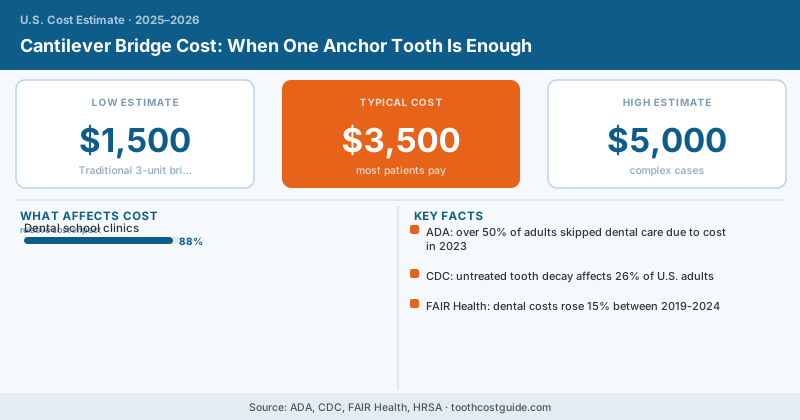
What if there’s only a healthy tooth on one side of the gap? That’s the problem a cantilever bridge solves. Instead of anchoring to teeth on both sides like a standard bridge, it hangs the replacement tooth off a single support — like a diving board cantilevered out over water. It’s less common, a bit cheaper, and right for specific situations. Here’s the cost and the catch.
Cantilever Bridge Costs at a Glance
| Type | Cost (No Insurance) | With 50% Insurance |
|---|---|---|
| Cantilever bridge (2-unit, one anchor) | $1,500–$3,500 | $750–$1,750 |
| Cantilever bridge (3-unit, two anchors one side) | $2,500–$4,000 | $1,250–$2,000 |
| Traditional 3-unit bridge (for comparison) | $2,000–$5,000 | $1,000–$2,500 |
| Maryland (resin-bonded) bridge (for comparison) | $1,500–$2,500 | $750–$1,250 |
A basic two-unit cantilever often runs less than a traditional three-unit bridge simply because it uses fewer units. Most patients pay $1,800–$3,000 without insurance.
How a Cantilever Bridge Works
A standard bridge is supported on both sides of the gap. A cantilever bridge is anchored on only one side — usually one or two crowned teeth — with the pontic (replacement tooth) extending off the end, unsupported on the far side.
Think of it like a balcony: the floor sticks out from the wall with nothing holding up the far edge. That works fine for light loads but puts extra leverage on the single anchor.
This makes cantilevers ideal when there’s only a sound tooth on one side of the gap — say, a missing tooth at the back of the arch with nothing behind it to anchor to.
Because all the chewing force loads onto one anchor tooth, a cantilever bridge puts more stress on that tooth than a standard bridge spreads across two. That’s why dentists reserve cantilevers for low-force areas — typically front teeth or premolars — and avoid them on heavy-chewing back molars. If a cantilever fails, the anchor tooth itself can be damaged. Ask your dentist directly whether your bite and tooth position can safely support one.
When a Cantilever Makes Sense
- Only one healthy neighbor. When the gap has a sound tooth on just one side and nothing usable on the other.
- Low-force front teeth. Lateral incisors and similar spots that don’t take crushing chewing loads.
- You want to preserve a tooth. A cantilever crowns one tooth instead of two, so it spares the second neighbor from being ground down.
When to Choose Something Else
If the gap is in a high-force molar zone, skip the cantilever — a traditional dental bridge or a dental implant handles the load far better. If the anchor tooth is already weak or has had a root canal, the extra leverage of a cantilever may be too much for it.
A Maryland bridge is another conservative option for front teeth that barely touches the neighbors, and an implant avoids loading any natural tooth at all. Compare your options in our dental bridge vs implant guide.
How to Pay Less
Most dental PPO plans cover cantilever bridges at 50% of the allowable fee, the same major-service tier as crowns and standard bridges. Watch the annual maximum — typically $1,000–$2,000 — since even a smaller bridge can use most of it. A free predetermination tells you the exact figure; see how dental insurance works.
Dental school clinics offer supervised bridge work at 40–60% below private fees. Uninsured? A dental savings plan or CareCredit financing spreads the cost.
A cantilever bridge is the wrong choice for a heavily loaded back molar — overloading a single anchor can crack or loosen that tooth and cost you two teeth instead of one. Make sure your dentist explains why a cantilever fits your specific case, and get a written, itemized treatment plan plus a predetermination before agreeing.
Bottom Line
A cantilever bridge costs $1,500–$4,000, often a bit less than a traditional bridge because it anchors to just one side. It’s the right call when there’s only a healthy tooth on one side of a low-force gap — typically up front. But on heavy-chewing molars, the leverage on that single anchor is risky, so a standard bridge or implant is safer. Ask your dentist whether your bite can handle a cantilever, get a predetermination, and weigh the cost against a longer-lasting alternative.
Frequently Asked Questions
A cantilever bridge typically costs between $1,500 and $4,000 without insurance. If your dental plan covers 50% of the cost, you can expect to pay $750–$2,000 out of pocket, though many plans classify bridges as major restorative work with annual maximums that may limit coverage.
Most dental insurance plans cover 50% of cantilever bridge costs after you meet your deductible, though some plans only cover 30–40%. Many insurers have annual maximums of $1,000–$2,000, which may not fully cover the procedure, leaving you responsible for the remaining balance.
A cantilever bridge works when you have a healthy tooth on only one side of the gap—for example, a missing molar with a tooth behind it but no tooth in front. It's not suitable for front teeth or situations where you have healthy teeth on both sides of the gap, since traditional bridges are more durable and stable in those cases.