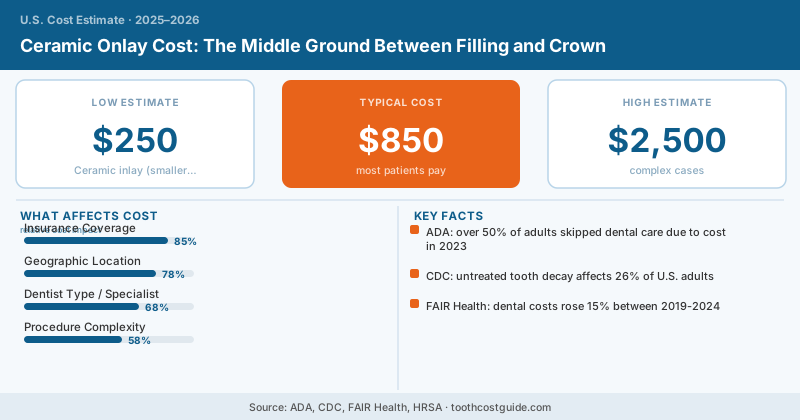
Sometimes a filling is too little and a crown is too much. The cavity’s big — too big for a filling to hold safely — but the tooth still has solid, healthy structure that a crown would needlessly grind away. That’s the exact gap a ceramic onlay fills. It’s a lab-made tooth-colored piece that covers the damaged part and leaves the rest of the tooth intact. Here’s what it costs and when it’s the right call.
Ceramic Onlay Costs at a Glance
| Restoration | Cost (No Insurance) | Tooth Removed |
|---|---|---|
| Large composite filling | $250–$600 | Minimal |
| Ceramic onlay | $650–$1,500 | Moderate |
| Ceramic inlay (smaller version) | $500–$1,200 | Minimal |
| Full crown | $800–$2,500 | Most |
Most ceramic onlays run $800–$1,200 without insurance. They sit right between a big filling and a full crown on both price and how much tooth they preserve. The ADA recognizes onlays and inlays as distinct restorative procedures with their own codes, separate from fillings and crowns.
What a Ceramic Onlay Actually Is
An onlay is a custom-made restoration — usually milled or lab-fabricated from ceramic — that covers one or more of the tooth’s cusps (the pointed chewing corners) without wrapping the entire tooth like a crown does.
Think of it as a precision-fit cap for just the damaged portion:
- An inlay sits within the grooves between cusps (smaller)
- An onlay covers one or more cusps (larger, more protective)
- A crown covers the whole tooth down to the gumline (most aggressive)
Because the onlay is bonded and milled to fit exactly, it restores strength while saving the healthy tooth structure a crown would have to remove. For a big cavity in an otherwise solid tooth, that preservation is the whole point.
A full crown requires shaving down the entire tooth, removing healthy structure to make room. An onlay preserves much more of the natural tooth. Less drilling generally means a healthier tooth long-term and less risk of needing a root canal down the line. The trade-off: onlays demand precise prep and bonding, so they’re technique-sensitive. If your tooth has enough solid structure left, ask whether an onlay can do the job a crown was proposed for.
When a Ceramic Onlay Is the Right Choice
An onlay shines when:
- The cavity or old filling is too large for a new filling to hold safely
- The tooth still has enough healthy structure that a full crown is overkill
- You want a tooth-colored, durable repair on a back tooth
- One or two cusps are damaged but the rest of the tooth is sound
It’s less ideal when the tooth is badly broken down or has had a root canal that left thin walls — those situations usually call for a full crown to bind everything together.
Ceramic Onlay vs the Alternatives
- Large filling ($250–$600) — Cheapest, but a big one can crack thin tooth walls. Fine if enough solid tooth remains.
- Ceramic onlay ($650–$1,500) — Stronger than a filling, more conservative than a crown. The sweet spot for big cavities in solid teeth.
- Crown ($800–$2,500) — Most protective, but removes the most tooth. Best when little structure is left.
Our crown vs filling guide and dental filling breakdown cover the cheaper end of this spectrum.
How to Pay Less
Most dental PPO plans cover onlays at 50% of the allowable fee, the same tier as crowns. Some plans apply an “alternate benefit,” paying only the filling rate and billing you the difference, so a predetermination is essential — see how dental insurance works. Dental school clinics make onlays under supervision at 40–60% below private fees. Same-day CEREC milling can produce a ceramic onlay in one visit, skipping the temporary. Uninsured patients can use a dental savings plan or CareCredit financing.
Because some insurers downgrade onlays to the filling benefit, always submit a predetermination so you know your exact out-of-pocket before scheduling. Get a written, itemized treatment plan with the onlay procedure code listed, and confirm whether the material is ceramic, composite, or gold — they price differently.
Bottom Line
A ceramic onlay costs $650–$1,500, with most patients paying $800–$1,200 — more than a filling, less than a crown. It’s the conservative middle ground: strong enough to handle a big cavity, but it preserves the healthy tooth structure a full crown would grind away. For a large cavity in an otherwise solid back tooth, it’s often the smartest restoration you can choose. Ask whether your tooth qualifies, get a predetermination to dodge any insurance downgrade, and weigh it against a filling or crown before deciding.
Frequently Asked Questions
A ceramic onlay typically costs between $650 and $1,500 per tooth, depending on the size of the restoration, the tooth location, and your dentist's experience level. This price falls between a standard filling ($150-$400) and a full crown ($1,200-$2,500), making it a cost-effective option when a filling is too small but a crown is overkill.
Most dental insurance plans cover 50-80% of onlay costs under their restorative coverage, though some plans classify them as cosmetic and cover less. Your out-of-pocket cost typically ranges from $130-$750 after insurance, depending on your deductible, plan limits, and whether you've met your annual maximum.
A ceramic onlay requires two appointments: the first visit for tooth preparation and impression (30-45 minutes) and a second visit 1-2 weeks later to bond the lab-made restoration (20-30 minutes). Recovery is faster than a crown because less tooth structure is removed—most patients experience minimal sensitivity and can eat normally within 24 hours, compared to several days of adjustment for crowns.