Here’s something most people never realize: the same crown that costs $1,500 at a private dental office down the street might run $500 at a nearby dental school — performed by someone who’s been doing dentistry for two years under the watchful eye of an experienced faculty dentist checking every step. That’s not a compromise. That’s just knowing your options.
Americans without insurance pay sticker price on care that regularly runs $300–$6,000+ out of pocket. But eight legitimate pathways exist to cut those costs by 40–70%, and most patients have no idea they exist. Here’s an honest breakdown of each.
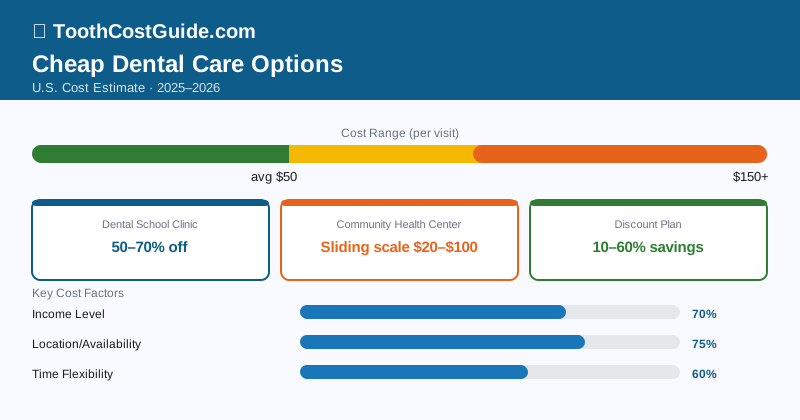
| Option | Discount vs. Private Practice | Wait Time | Quality |
|---|---|---|---|
| Dental school clinics | 40–70% less | Days to weeks | Supervised, high-quality |
| Community health centers (FQHCs) | Sliding scale, income-based | Days | Qualified licensed dentists |
| Dental discount plans | 10–60% less | Immediate | Same dentists, lower fee |
| In-office membership plans | 15–40% less | Immediate | Same dentist, bundled care |
| Government/VA dental programs | Free to reduced cost | Varies | High quality |
| Medicaid (eligible patients) | Free (mostly) | Days | Licensed providers |
| Negotiated cash price | 5–20% less | Immediate | Same dentist |
| Dental tourism (Mexico/abroad) | 50–80% less | Trip required | Highly variable |
Dental School Clinics — The Deep-Discount Option That Doesn’t Get Enough Credit
Accredited dental school clinics deliver 40–70% savings across the full range of services. A dental student in their final two years handles your care, but here’s the part people get wrong: a licensed faculty dentist examines and approves every single step. For complex work, faculty often take over entirely.
What you’ll actually pay:
- Routine cleaning: $35–$75 (vs. $100–$200 at private practice)
- Crown: $400–$700 (vs. $800–$1,800)
- Root canal (molar): $500–$900 (vs. $1,000–$1,800)
- Dental implant: $1,500–$3,000 (vs. $3,000–$6,000)
- Full dentures: $1,200–$2,500 (vs. $3,000–$8,000)
The tradeoff is time. A procedure that takes 45 minutes at a private office might take two or three hours here, and you may need extra appointments. If your schedule is flexible, that’s a reasonable trade for $1,000+ in savings on a single procedure.
To find a school: visit adea.org for the full list of accredited U.S. programs, or just search “[city] dental school clinic.” Most have a dedicated phone line for scheduling public patients.
Dental schools are not a last resort — they’re a legitimately excellent choice. Many dental school patients continue using their assigned student for years because they receive thorough, supervised care at dramatically reduced cost. Faculty are practicing clinicians who review and approve every treatment step.
Federally Qualified Health Centers — Income-Based, No Insurance Needed
FQHCs are federally funded community health centers with a legal obligation to see patients regardless of ability to pay, using a sliding fee scale tied to income.
How the fee tiers work: Your cost depends on your income as a percentage of the Federal Poverty Level (FPL). At or below 100% FPL (roughly $15,000/year for a single adult in 2025), a dental visit can cost $20–$40. At 200% FPL, you’re paying 50–60% of the standard rate. Above that, fees are still typically lower than private practice.
Most FQHCs handle cleanings, exams, fillings, extractions, and basic restorative work. Emergency dental care is often available on short notice. Specialty procedures like implants are less common but not unheard of at larger centers.
The locator at findahealthcenter.hrsa.gov shows over 14,000 service delivery sites across the country. Filter for dental care and your zip code.
Dental Discount Plans — The Fast Alternative to Insurance
These aren’t insurance. They’re membership programs — typically $80–$200/year — that give you access to pre-negotiated fees at a network of participating dentists. Discounts range from 10–60% depending on the plan and procedure.
A few things that genuinely set them apart from traditional insurance:
- No waiting periods. You can use the discount the same week you enroll.
- No annual maximums. The discount applies to every procedure, including major ones.
- Cosmetic work included. Insurance won’t touch teeth whitening or veneers; discount plans often do.
- No claims process. You pay the discounted rate directly at the office.
Best fit: uninsured adults who need a practical, immediate solution for routine care and the occasional filling.
Asking for a Cash Discount — The Overlooked 5-Minute Strategy
This one surprises people. Many private dental offices will cut their fee by 5–20% if you pay in full at the time of service, in cash or by check. You just have to ask.
Why does this work? Insurance billing creates real costs for a dental practice — administrative time, payment delays of 30–90 days, claim denials, and appeals. A patient who hands over $200 today is genuinely more valuable to many office managers than $200 from an insurer that might arrive two months from now.
The right script: before your appointment, call and say, “I’m a self-pay patient — do you offer a discount for paying on the day of service?” At the appointment, you can try: “I’ll be paying out of pocket. Is there a self-pay rate?”
Most offices don’t advertise this. Most also won’t turn down the question.
Ask for an itemized fee estimate before any dental appointment. Knowing exactly what each procedure code costs allows you to compare prices between offices and identify any add-on services you may not need or want. Dental offices are required to provide written estimates on request.
Government Programs — Medicaid, CHIP, VA, and IHS
Medicaid: About 30 states cover adult dental under Medicaid as of 2025. The range is wide — some states pay only for emergency extractions, others cover crowns, dentures, and comprehensive care. Check your state’s Medicaid dental scope at your state Medicaid office or NASHP.org.
CHIP: Covers comprehensive dental for children in families that earn too much for Medicaid but can’t swing private insurance. This includes cleanings, fillings, and sometimes orthodontics — one of the more valuable and underused benefits in the program.
VA Dental: Veterans with qualifying disability ratings get free comprehensive dental through VA clinics. Those who don’t qualify for free care can enroll in VADIP, the VA’s dental insurance program, which has competitive rates. Your nearest VA medical center can tell you where you stand.
Indian Health Service: American Indians and Alaska Natives who qualify for IHS receive dental care at no cost through IHS dental clinics. Access varies by location, but services are comprehensive where available.
In-Office Membership Plans — Simplicity for Existing Patients
More dental practices are rolling out their own annual membership plans as a direct-pay alternative to insurance. A typical plan structure looks like this:
- Annual fee: $99–$400
- Includes: Two cleanings, annual X-rays, periodic exam
- Discount: 10–25% off all additional treatment at that practice
If you already trust a specific dentist and don’t want to switch, this is a clean way to cover your preventive care and reduce costs on anything beyond that. The bundled cleanings alone often justify the annual fee.
Matching the Option to Your Situation
Low income, no insurance: Start with an FQHC for ongoing care; use a dental school for anything complex.
Working adult without employer dental benefits: A discount plan plus dental school for major procedures is a strong combination.
Has insurance with high out-of-pocket costs: Negotiate cash rates, use your FSA or HSA, and always ask for a predetermination before major work.
Child without dental coverage: Check CHIP eligibility first; FQHCs as a backup.
Senior without dental coverage: Medicare doesn’t cover routine dental as of 2025. Consider a discount plan, dental school, FQHC, or a Medicare Advantage plan with dental benefits built in.
When You Still Need Financing
Even with discounts in play, unexpected dental bills happen. Three resources worth knowing:
CareCredit: 0% promotional financing for 6–24 months, accepted at most dental offices. Useful for covering remaining balances after you’ve applied other discounts.
FSA/HSA: Pre-tax accounts that effectively reduce all dental spending by 22–37%, depending on your tax bracket. If you’re anticipating significant work in a given year, maximize your contributions before the plan year closes.
Payment plans: Most dentists will arrange installment payments for established patients on larger bills. It’s not always posted on the wall — you have to ask.
Always get a written treatment plan before agreeing to any dental work. Regardless of the cost-saving option you use, you are entitled to a complete written estimate of proposed treatment, including each procedure code, before treatment begins. Request this at dental schools, FQHCs, and private practices alike.
The worst dental decision is avoiding care entirely because of cost. Small problems don’t stay small — they turn into emergency procedures that cost five times as much. The options in this guide exist precisely so that doesn’t have to happen.
Frequently Asked Questions
A dental crown at a private practice typically costs $1,200–$1,500, but the same crown at a dental school clinic runs $400–$600. You'll save 60–70% on the procedure, though appointments take longer since the student dentist works under faculty supervision.
Most dental insurance plans cover treatment at dental schools and federally qualified community health centers just like private offices, though you should verify with your plan first. Uninsured patients at community health centers often pay on a sliding scale based on income, typically $20–$150 per visit instead of full sticker price.
A crown at a private office takes 2–3 hours total across two visits, but at a dental school expect 4–6 hours spread over multiple appointments because the student dentist works more carefully with faculty oversight. The end result is the same quality crown, just with more time invested in the learning process.