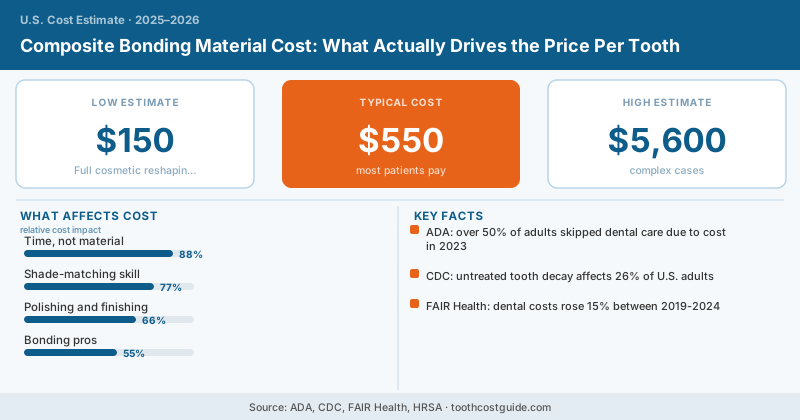
Most patients assume the composite resin itself is the expensive part of bonding. It isn’t. A single tooth’s worth of dental composite material costs the practice a few dollars — sometimes less than a cup of coffee. The $300–$700 you pay per tooth is almost entirely the dentist’s chair time, skill, and artistry.
Composite bonding is one of the most accessible cosmetic dental procedures precisely because it requires no lab, no impression sent out, and often no local anesthesia. A tooth-colored resin is applied directly, shaped by hand, then hardened with a curing light — all in a single visit.
| Bonding Scope | Typical Cost |
|---|---|
| Small chip repair (1 tooth) | $150–$400 |
| Gap closure (diastema, per gap) | $300–$600 |
| Full cosmetic reshaping (per tooth) | $400–$700 |
| Complex multi-layer shading (per tooth) | $600–$1,000 |
| Full smile bonding (6–8 front teeth) | $2,400–$5,600 |
Where the Money Actually Goes
Time, not material. A simple chip repair might take 20 minutes. A full front-tooth reshaping with multiple resin layers to mimic natural translucency can take 60–90 minutes per tooth. Dentists price bonding largely on time spent, similar to how an artist prices a commissioned piece — the paint is cheap, the hours of hand-sculpting are not.
Shade-matching skill. Natural teeth aren’t one flat color — they have variation between the base, body, and translucent edge. A dentist skilled in layering different composite shades to replicate that variation will charge more, and the result will look dramatically more natural than a single-shade application.
Polishing and finishing. The difference between bonding that looks glossy and fake versus bonding that blends seamlessly comes down to the final polishing steps — often an extra 10–15 minutes using a series of increasingly fine polishing discs. Rushed bonding skips this, and it shows within months as the surface dulls unevenly.
Bonding vs. Veneers: The Real Trade-Off
Composite bonding runs roughly 40–60% less than porcelain veneers ($900–$2,500 per tooth), but the comparison isn’t purely about price.
Bonding pros: same-day, minimal-to-no enamel removal, reversible, easily repaired if chipped. Bonding cons: stains more than porcelain over time (coffee, wine, tobacco), typically lasts only 5–7 years before needing touch-ups or replacement, less durable under heavy biting force.
Veneers pros: stain-resistant, lasts 10–20+ years, stronger under bite force. Veneers cons: requires enamel removal (usually irreversible), lab fabrication takes 2–3 weeks, significantly higher cost.
Many cosmetic dentistry portfolios blend bonding and veneer photos together without labeling which is which. Since bonding depends so heavily on individual artistic skill, ask specifically to see the dentist’s bonding-only cases — ideally photos taken a year or more after treatment, since that’s when shade-matching quality and polish durability really show.
When Insurance Actually Pays
If bonding repairs a chip from an accident or fills a small cavity, it’s typically billed under standard restorative filling codes and covered the same as any composite filling. If bonding is purely cosmetic — closing a gap you’ve always had, or reshaping a tooth for appearance alone — insurers almost universally deny the claim as elective.
Ask your dentist to be specific and accurate about which category your case falls into when submitting to insurance; miscoding a cosmetic case as restorative to get coverage can trigger a claim audit or clawback later.
Bonding stains more readily than natural enamel or porcelain, especially in the first 48 hours after placement while the resin is still fully curing. Avoid coffee, red wine, tea, and tobacco for at least 2 days post-treatment, and expect to need a professional polish or minor touch-up every 2–3 years to keep the color consistent with surrounding teeth.
The Bottom Line
Composite bonding at $300–$700 per tooth is one of the best value cosmetic procedures in dentistry — fast, reversible, and immediately visible. But the price reflects a dentist’s hand-sculpting skill far more than any material cost, so it’s worth choosing a provider based on bonding-specific portfolio work rather than assuming all bonding is created equal.
Frequently Asked Questions
Cosmetic composite bonding typically costs $300–$700 per tooth, though complex cases involving significant reshaping or multiple layered shades can run up to $1,000 per tooth. The resin material itself costs only a few dollars per tooth — the price mostly reflects the dentist's time and artistic skill.
Yes, composite bonding is typically 40-60% less expensive than porcelain veneers, which cost $900–$2,500 per tooth. Bonding is also reversible and requires less or no enamel removal, but it doesn't last as long — typically 5–7 years versus 10–20+ years for veneers.
Insurance generally does not cover bonding done for purely cosmetic reasons, such as closing a gap or changing tooth shape for appearance. However, if bonding is used to repair a chipped tooth from an injury or to fill a small cavity, it's often covered the same as a standard composite filling, since it's classified as restorative rather than cosmetic.