Same-day smile makeover, for a fraction of the porcelain price — that’s the pitch for composite veneers, and for many patients on a budget, it delivers. You walk in with chipped, discolored, or gapped front teeth and walk out a few hours later with a noticeably improved smile, without waiting weeks for a dental lab.
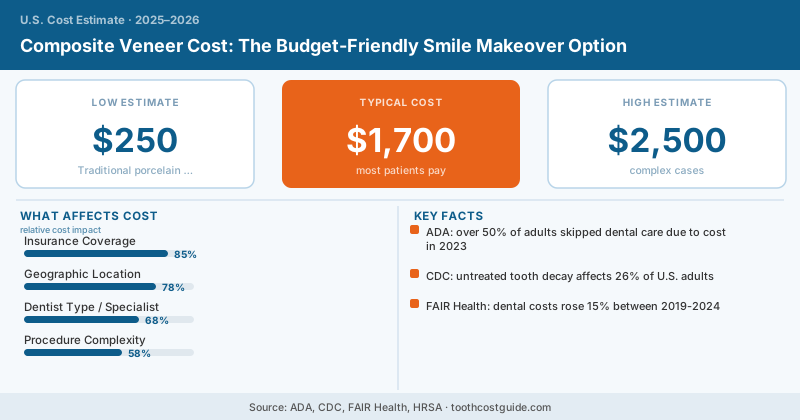
Composite veneers run $250-$1,500 per tooth, dramatically less than porcelain’s $900-$2,500 range — though the trade-offs matter before you decide.
| Veneer Type | Cost Per Tooth | Typical Lifespan |
|---|---|---|
| Composite veneer (direct/chairside) | $250–$1,500 | 5–7 years |
| Traditional porcelain veneer | $900–$2,500 | 10–15+ years |
| Zirconia veneer | $1,000–$2,500 | 15–20+ years |
Why Composite Costs So Much Less
Porcelain veneers require a dental lab to fabricate the final piece from an impression or digital scan, a process that takes 1-2 weeks and involves lab fees on top of the dentist’s own fee. Composite veneers skip that entirely — your dentist sculpts the tooth-colored resin material directly onto your prepared tooth, shapes it by hand or with instruments, and cures it with a special light, all in a single appointment. No lab, no wait, no lab fee — and that cost savings passes directly to you.
This also means composite veneers can often be adjusted or corrected in the same visit if you and your dentist want to tweak the shape or shade before you leave, something porcelain veneers can’t offer since the final piece isn’t fabricated until after you leave the initial appointment.
The Real Trade-Offs
Composite resin is simply a less durable and less stain-resistant material than porcelain or zirconia. Over 5-7 years, most composite veneer wearers notice some degree of staining, particularly with regular coffee, tea, red wine, or tobacco use, and the surface can develop a slightly duller look compared to when it was freshly polished. Composite is also more prone to chipping than porcelain under the same biting forces.
The upside of this same fragility: composite is much easier and cheaper to repair. A chip in a composite veneer can often be touched up chairside for $50-$150, while a chipped porcelain veneer typically requires full replacement of that veneer.
Composite veneers are a strong choice for younger patients whose smile goals might evolve over the next decade, patients wanting to try a smile change before committing to porcelain’s higher cost and permanence, and anyone with immediate budget constraints who still wants a meaningful cosmetic improvement now rather than saving for years toward porcelain.
Minimal to No Tooth Reduction
One underrated advantage of composite veneers: many cases require little to no removal of natural tooth enamel, unlike traditional porcelain veneers which typically need some enamel reduction to create room and a proper bonding surface. This makes composite veneers a more reversible, conservative option — meaningful if you’re not fully certain you want a permanent cosmetic commitment yet.
Maintenance Matters More With Composite
Because composite is more porous and stain-prone than porcelain, maintaining your results requires more attention: avoiding or minimizing staining beverages, not using your teeth to open packages or bite nails, and getting a professional polish at your regular dental cleanings, which can help refresh the surface shine and reduce visible staining buildup.
Cost Over a Full Smile Makeover
For a full set of 8-10 composite veneers across your smile, total cost typically runs $2,000-$12,000, compared to $8,000-$25,000 for the same number of porcelain veneers. That gap is significant enough that many patients start with composite as a way to evaluate whether they like the look and feel of veneers before committing to porcelain’s larger investment down the road.
Don’t choose composite veneers assuming you’ll simply “upgrade to porcelain later” without cost consequences. Some composite veneer preparation removes enough tooth structure that transitioning to porcelain afterward is straightforward, but this isn’t universal — ask your dentist specifically whether your composite prep would complicate a future porcelain upgrade.
The Bottom Line
Composite veneers cost a fraction of porcelain — $250-$1,500 per tooth versus $900-$2,500 — and can be completed in a single appointment rather than over multiple weeks. The trade-off is a shorter lifespan (5-7 years vs. 10-15+) and more susceptibility to staining and chipping. For budget-conscious patients or anyone testing the waters before a bigger cosmetic investment, composite is a legitimate, lower-risk starting point.
Frequently Asked Questions
Composite veneers cost $250-$1,500 per tooth, compared to $900-$2,500 per tooth for porcelain — a difference that adds up to thousands of dollars across a full smile makeover of 6-10 teeth.
Composite veneers typically last 5-7 years before needing repair or replacement, compared to 10-15+ years for porcelain veneers. They're also more prone to staining over time and can chip more easily, though repairs are simpler and cheaper than with porcelain.
Yes, in most cases. Unlike porcelain veneers, which require a lab to fabricate the final piece over 1-2 weeks, composite veneers are sculpted directly onto your teeth by the dentist chairside, often completing a full set in a single 2-3 hour appointment.