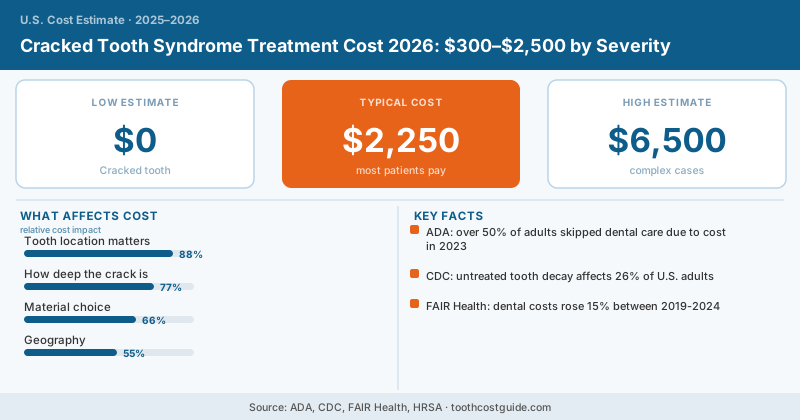
Sarah bit into a bagel and felt a sharp, electric pain — then nothing. No visible break, no blood, no obvious damage. Her dentist diagnosed cracked tooth syndrome within minutes. The treatment plan: $1,400 for a crown. If she’d waited another few months, the crack would have reached the pulp, and she’d have been looking at a root canal on top of that.
That’s the frustrating reality of cracked teeth: they’re invisible on X-rays, unpredictable in progression, and the cost gap between catching one early and catching it late can be $1,500 or more.
The 5 Crack Types — and What Each One Costs
The American Association of Endodontists classifies cracked teeth into five categories. Each has a different prognosis and a very different price tag.
| Crack Type | Severity | Typical Treatment | Cost Range |
|---|---|---|---|
| Craze line | Surface enamel only | None or cosmetic polish | $0–$75 |
| Fractured cusp | Cusp breaks off | Crown (or onlay) | $900–$1,800 |
| Cracked tooth | Crown to near root | Crown ± root canal | $900–$3,600 |
| Split tooth | Through entire tooth | Extraction + replacement | $2,700–$6,500 |
| Vertical root fracture | Root only | Extraction (always) | $200–$600 + replacement |
Craze lines are hairline cracks in the surface enamel. Almost every adult has them — they’re caused by years of temperature cycling, grinding, and normal wear. They don’t hurt, they don’t spread quickly, and they don’t need treatment. If you don’t like the look, a simple polish costs $50–$75.
Fractured cusps are more serious. A chunk of the chewing surface breaks free, usually around an old filling or weakened enamel. They’re rarely painful because the fracture often doesn’t reach the pulp, but the exposed dentin is sensitive. A crown caps and seals the remaining tooth at $900–$1,800. Occasionally, an onlay (a partial crown) can work for $700–$1,400.
Cracked tooth is the classic presentation of cracked tooth syndrome — a crack running vertically from the chewing surface downward, potentially toward the root. This is the crack that causes sharp pain when you bite and then release. If it hasn’t reached the pulp, a crown alone may save it ($900–$1,800). If the crack has infected or irritated the pulp, you’ll need a root canal first ($800–$1,500), then a crown — total: $1,800–$3,600.
Split tooth means the crack has gone all the way through, dividing the tooth into two segments. There’s no saving it intact. Extraction runs $200–$600. Then you’re looking at a dental implant ($2,500–$5,500) or bridge ($2,500–$4,500) to fill the gap.
Vertical root fractures start in the root and work upward. They’re notoriously hard to detect — sometimes the only sign is a recurring gum abscess along the root. The tooth is always extracted. Same replacement math as a split tooth applies.
Classic cracked tooth syndrome pain is sharp, brief, and happens when you release biting pressure — not when you bite down. If that sounds familiar, see your dentist within a week. The crack is likely still above the pulp, which means a crown alone can save it. Wait until the pain becomes continuous or throbbing, and you’re adding a root canal to your bill.
What Affects the Cost
Tooth location matters. Back molars take more force and are harder to access, so crowns on molars ($1,000–$1,800) cost more than crowns on front teeth ($900–$1,400). Molars are also more likely to need root canals because they do most of the heavy chewing work.
How deep the crack is. Your dentist will probe the crack, check for sensitivity, and may use transillumination (a bright light through the tooth) or a bite stick to assess depth. A crack that lights up and stops at mid-tooth is a better prognosis than one that disappears into the root.
Material choice. A porcelain-fused-to-metal crown costs $800–$1,400. An all-zirconia crown runs $1,000–$1,800. For back teeth under heavy bite load, zirconia is often the better long-term choice.
Geography. Dentists in New York, San Francisco, and Boston charge 30–50% more than the national average. Rural practices and smaller cities run closer to the low end.
With vs. Without Insurance
Most PPO dental plans treat crown placement as a major restorative procedure, covered at 50% after your deductible. A $1,200 crown on a plan with a $100 deductible and 50% coverage would net you $550 out of pocket — provided you haven’t burned through your annual maximum.
The ADA reports that the average annual dental plan maximum is $1,000–$2,000. A crown-plus-root-canal treatment easily exceeds most maximums in a single visit, leaving significant costs uninsured.
Don’t wait for a cracked tooth to stop hurting. When the continuous aching begins, the pulp is inflamed or infected — you’re now looking at a root canal in addition to a crown. That can add $800–$1,500 to your bill and extend your treatment timeline by several weeks.
Ways to Pay Less
Get a second opinion before extraction. A split tooth or vertical root fracture seems obvious, but a second dentist may see a salvageable crack if the split is partial. It costs $75–$150 for a consult but can save you thousands in replacement costs.
Dental schools do crowns at 40–60% of private practice rates, supervised by licensed faculty dentists. Treatment takes longer (multiple visits), but quality is generally high.
Dental savings plans (Careington, Aetna Dental Access) cost $80–$200/year and offer 15–40% discounts at participating dentists — useful if you’re uninsured.
Don’t finance a doomed tooth. If a crack extends below the bone level on X-ray or CBCT scan, the prognosis is poor even with treatment. Sometimes extraction and implant planning is the smarter long-term investment. Ask your dentist directly: “What’s the five-year outlook if we do the crown today?”
Frequently Asked Questions
Treatment cost depends entirely on crack type. A craze line (surface crack) needs no treatment or a simple polish for $0–$75. A fractured cusp usually requires a crown at $900–$1,800. A cracked tooth extending toward the root often needs a crown plus root canal, totaling $1,800–$3,600. A split tooth or vertical root fracture typically requires extraction ($200–$600) plus implant or bridge replacement ($2,500–$6,000).
Yes, most PPO plans cover the required treatment — not the crack diagnosis itself. A crown for a cracked tooth is covered at 50% under major restorative benefits after your deductible. A root canal is typically covered at 50–80%. Extraction is usually covered at 75–80%. Cosmetic craze line treatment (bonding) is generally not covered.
No. Tooth enamel doesn't regenerate. A craze line won't worsen quickly, but a crack that reaches dentin or deeper will spread over time with normal biting forces. The longer you wait on a symptomatic crack, the more likely you'll need a root canal in addition to a crown. Early treatment is almost always cheaper.