Your dentist says you need crown lengthening before they can put a crown on your broken tooth. You nod along — then go home and wonder what exactly they’re going to do and why it costs over a thousand dollars. Fair question.
Crown lengthening is a periodontal surgical procedure that repositions the gum line (and sometimes the underlying bone) to expose more tooth structure. It’s not just cosmetic fluff — without it, a crown placed on a tooth that’s broken near or below the gum line simply won’t hold properly. The American Academy of Periodontology considers it a foundational procedure before crown placement in many clinical scenarios.
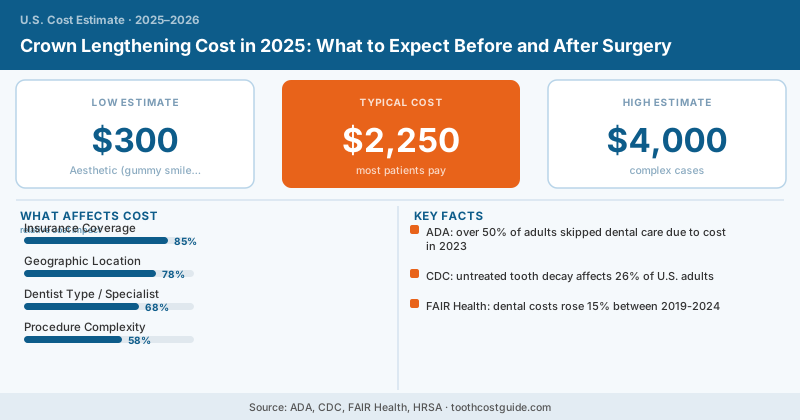
Crown Lengthening Cost Breakdown
| Procedure Type | Typical Cost Range |
|---|---|
| Single tooth (functional) | $1,000–$2,500 |
| Multiple teeth (functional) | $2,000–$4,000+ |
| Aesthetic (gummy smile) — per arch | $1,500–$3,000 |
| Gingivectomy (gum-only, no bone) | $500–$1,200 |
| With sedation added | +$300–$600 |
These are out-of-pocket figures. With dental insurance, the cost picture changes significantly — more on that below.
Why Does It Cost So Much?
Crown lengthening isn’t a simple cleaning. A periodontist or oral surgeon makes incisions around the gum tissue, reflects the gum flap, and often reshapes the underlying alveolar bone with specialized instruments. You’re paying for:
- Specialist training — periodontists complete three additional years of post-dental-school residency
- Surgical time — a single-tooth procedure typically takes 45–90 minutes
- Anesthesia and sterilized surgical instruments
- Post-op follow-up — typically included in the quote
The ADA reports that specialist procedures account for roughly 25% of all dental expenditures in the US, and periodontal surgery sits firmly in that category.
Functional vs. Aesthetic Crown Lengthening
There are two completely different reasons a dentist might recommend this surgery, and the cost — and your insurance coverage — hinges on which one applies to you.
Functional crown lengthening is done to expose enough tooth structure to support a crown or other restoration. A tooth broken at the gum line doesn’t have enough structure above the tissue for a crown to grab onto. Insurance typically covers 50–80% of this type after your deductible, because it’s medically necessary.
Aesthetic crown lengthening (often called a “gummy smile correction”) is done purely for appearance — to create a more balanced tooth-to-gum ratio. Most dental insurance plans exclude cosmetic procedures entirely. You’ll pay 100% out of pocket.
If your dentist refers you to a periodontist for crown lengthening before placing a crown, your insurance may split the cost between your general dentistry benefit and your periodontal benefit. Ask your insurer specifically how they categorize it — the pre-authorization process will tell you exactly what they’ll pay before you schedule surgery.
What Drives the Price Up (or Down)?
Geographic location is the single biggest variable. In New York City or San Francisco, a single-tooth crown lengthening routinely runs $2,000–$2,500. In smaller Midwestern cities, the same procedure can be $900–$1,400 at the same quality level.
Bone involvement matters too. If only gum tissue needs to be moved, the procedure is faster and cheaper. If the underlying bone needs contouring (osseous surgery), it adds complexity and time — and cost.
Number of teeth affects total price but not always proportionally. A periodontist treating multiple adjacent teeth in one session often charges less per tooth than individual single-tooth quotes.
Periodontist vs. oral surgeon — both can perform crown lengthening. Periodontists are the specialists trained specifically for gum surgery and often have more competitive pricing for gum-focused procedures.
Does Insurance Cover It?
For functional crown lengthening (done before crown placement), most PPO dental insurance plans cover 50–80% of the procedure after your annual deductible. That turns a $1,500 bill into $300–$750 out of pocket — a very significant difference.
The catch: most plans have an annual maximum of $1,000–$2,000. If you’ve already used benefits that year for other work, you could hit your cap before the surgeon is paid.
A 2023 analysis by the National Association of Dental Plans found that roughly 43% of Americans with dental benefits had used less than 25% of their annual maximum — meaning most people have more coverage left than they realize.
Never schedule crown lengthening without getting a pre-authorization (also called pre-determination) from your insurance company first. This isn’t a guarantee of payment, but it tells you exactly what they’ll cover based on your specific plan before you agree to the surgery. Most periodontist offices will handle this for you.
The Full Cost of Crown Lengthening + Crown
Crown lengthening rarely stands alone. Here’s what the combined treatment typically costs without insurance:
- Crown lengthening: $1,000–$2,500
- Waiting period for healing: 4–8 weeks (no extra cost, just time)
- Dental crown: $1,000–$1,800
- Total: $2,000–$4,300
That feels like a lot. But the alternative — skipping crown lengthening and placing a crown anyway — typically results in a failing crown within a few years, crown fracture, or ongoing gum inflammation. You’d spend the same money, just more of it, later.
Ways to Reduce Your Out-of-Pocket Cost
Get 2–3 estimates. Periodontists’ fees vary widely, sometimes by $500–$800 for the identical procedure. A 15-minute consultation at a second practice is worth the trip.
Use a dental school. University periodontal clinics offer crown lengthening at 40–60% of private practice rates. Residents are supervised by experienced faculty. Search for accredited programs through the Commission on Dental Accreditation.
Time it strategically. If your plan resets January 1st and you’ve used most of your annual maximum, waiting until January can effectively give you a second pool of benefits to pull from.
Ask about in-house membership plans. Many periodontal practices now offer direct-pay membership plans that provide a flat 15–25% discount on all procedures, with no annual maximum. If you’re uninsured, this can be a better deal than buying insurance just for one procedure.
Use your HSA or FSA. Crown lengthening is a qualified medical expense under IRS guidelines. Paying with pre-tax dollars saves you 22–32% depending on your federal tax bracket.
Recovery Costs
Post-surgical expenses add up if you’re not prepared. Most periodontists include one or two follow-up visits in their fee. But expect to budget for:
- Prescription antibiotics: $15–$40 with GoodRx
- Prescription-strength mouth rinse (chlorhexidine): $10–$25
- Soft foods for 2–3 weeks (modest grocery adjustment)
- Pain medication: typically OTC ibuprofen is sufficient; prescription NSAIDs run $20–$50
Most patients are back to normal activities the next day, though full gum healing takes 8–12 weeks before the crown can be placed.
Bottom Line
Crown lengthening costs $1,000–$2,500 for a single tooth in most US markets. If it’s functional (medically necessary before a crown), your insurance should cover a meaningful portion — get a pre-authorization before scheduling. If it’s purely cosmetic, plan to pay out of pocket. Either way, get multiple quotes, check dental school options, and use pre-tax HSA/FSA dollars to stretch your budget.
Frequently Asked Questions
Crown lengthening typically costs $1,000–$4,000 per tooth in 2025, with the final price depending on complexity, whether bone contouring is needed, and your geographic location. Simple cases affecting one tooth may fall toward the lower end ($1,000–$1,500), while multiple teeth or cases requiring bone removal can exceed $3,000 per tooth.
Many dental insurance plans cover 50–80% of crown lengthening if it's deemed medically necessary (such as exposing tooth structure for a crown), though some plans classify it as cosmetic and cover nothing. Most patients pay $200–$1,500 out-of-pocket after insurance, but you should verify coverage with your plan before scheduling, as policies vary widely.
Recovery typically takes 7–10 days for the initial healing, though complete bone and gum remodeling can take 4–8 weeks before your dentist places the permanent crown. You may experience mild swelling, sensitivity, and minor bleeding for the first few days; your periodontist will provide post-op instructions to minimize discomfort and protect the surgical site.