Your dentist told you the tooth can be saved — but you need crown lengthening first. Or maybe a periodontist mentioned it as part of a “gummy smile” correction. Either way, you’re now researching a procedure you didn’t know existed two days ago, trying to figure out what it costs and whether it’s actually necessary.
Crown lengthening is a periodontal surgical procedure that exposes more of a tooth’s structure by removing gum tissue, bone, or both. It’s one of the most commonly performed periodontal surgeries in the U.S. — and it serves two very different purposes, which affects both coverage and cost.
Functional vs. Cosmetic Crown Lengthening
Functional crown lengthening is done when a tooth is broken, decayed, or fractured below the gumline, and there’s not enough tooth structure exposed for a crown to be properly placed. The periodontist removes gum and sometimes bone to expose 2–3mm of additional tooth, giving the restorative dentist enough structure to place a crown with proper margins.
Cosmetic crown lengthening (esthetic crown lengthening) is done to address a “gummy smile” — where teeth appear short because excessive gum tissue covers too much of the crown. It’s elective, purely aesthetic, and treated completely differently by insurers.
| Procedure | Average Cost |
|---|---|
| Single-tooth functional crown lengthening | $1,000–$2,000 |
| Multiple teeth / quadrant crown lengthening | $1,500–$3,000 |
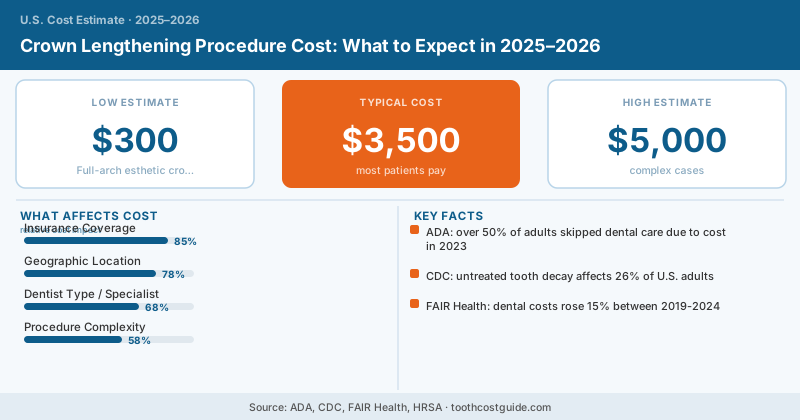
| Full-arch esthetic crown lengthening | $2,000–$5,000 |
| Osseous surgery component (if bone removal needed) | Included or +$300–$800 |
| Crown placement after healing (additional) | $1,000–$1,800 per crown |
What Drives the Cost
Crown lengthening costs vary by:
- Number of teeth involved — single tooth vs. a full anterior segment
- Bone involvement — soft tissue only vs. osseous (bone) surgery, which is more complex
- Provider — periodontists charge more than general dentists, but they have more surgical expertise
- Geography — procedures in NYC or San Francisco run 30–50% higher than national averages
Most periodontists charge per tooth or per area (quadrant). A single front tooth requiring functional crown lengthening typically runs $1,000–$1,500. Six upper front teeth for a gummy smile correction: $2,500–$5,000.
Healing Timeline
After crown lengthening, you’ll need 6–12 weeks of healing before a crown can be properly placed. The tissue and bone need to stabilize first — placing a crown too early risks the margins ending up in the wrong position once healing is complete.
This means the crown lengthening appointment and the crown appointment are separate visits, weeks apart. Factor that into your timeline (and your budget — the crown is a separate cost).
Functional crown lengthening for restorative purposes (enabling a crown on a damaged tooth) is typically covered at 50–80% by dental insurance as a periodontal surgical procedure. Cosmetic crown lengthening for a gummy smile is almost universally excluded as elective/aesthetic. Make sure your periodontist’s billing code and clinical notes clearly document the restorative necessity if you’re seeking insurance coverage. The difference in out-of-pocket cost between covered and not covered can be $1,000–$2,000.
Is Crown Lengthening Always Necessary?
Not always. Your dentist might recommend it when alternatives exist:
- Deep margins that could be accessed differently — sometimes a different crown preparation technique avoids the need for crown lengthening
- Extraction and implant — if a tooth is severely damaged, an implant might be a more cost-effective long-term solution than crown lengthening + crown
- Orthodontic extrusion — slowly pulling a tooth upward orthodontically can expose more structure without surgery, though it takes longer
The ADA recommends crown lengthening when the “biologic width” of a tooth would be violated by crown margins placed without the procedure. That’s the clinical threshold — not aesthetics, but proper restorative margins.
Crown lengthening for a gummy smile should be approached with a full smile design consultation. How much gum removal creates the right aesthetic depends on your lip line, tooth proportions, and the midline. Removing too little leaves the smile unchanged; removing too much can make teeth look unnatural. Seek a periodontist or cosmetic dentist with smile design experience, not just a referral-based surgical provider.
What You’ll Actually Pay
Functional crown lengthening with insurance (1 tooth):
- Procedure: $1,200 → insurance pays 60% = $720 → you pay $480
- Crown (separate): $1,200 → insurance pays 50% = $600 → you pay $600
- Total out-of-pocket: ~$1,080
Cosmetic crown lengthening without insurance (6 upper teeth):
- Procedure: $3,000–$4,000 → fully out-of-pocket
- Total out-of-pocket: $3,000–$4,000
The clinical justification for your specific case determines not just whether you need the procedure, but how much you’ll end up paying for it.
Frequently Asked Questions
Crown lengthening typically costs $1,000–$3,000 per tooth or area, depending on complexity and your geographic location. Additional costs may apply if you need a subsequent crown or restoration after healing, which usually ranges from $800–$2,500 per tooth.
Many dental insurance plans classify crown lengthening as a periodontal procedure and cover 50–80% of the cost after your deductible, though some plans limit coverage to $1,200–$1,500 annually. You should verify your specific plan's coverage before treatment, as cosmetic crown lengthening (such as for gummy smile correction) is typically not covered.
Initial healing takes 1–2 weeks, during which you may experience swelling and mild discomfort managed with over-the-counter pain relief and prescribed antibiotics. Full bone remodeling occurs over 4–6 months, and your dentist will wait at least 3–4 months before placing a permanent crown on the treated tooth.