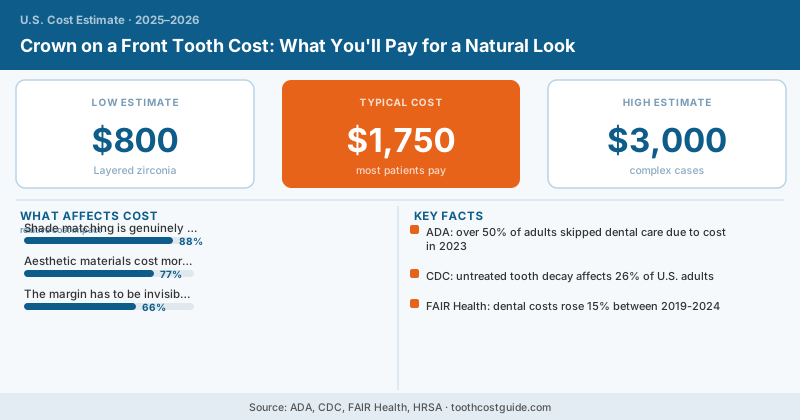
Most patients assume a crown is a crown — same tooth, same price. Wrong. The front teeth carry a hidden premium that nobody warns you about until you’re staring at the estimate. A crown on a molar can be plain metal nobody ever sees. A crown on your central incisor has to fool everyone who looks at your smile, and that artistry costs money.
Here’s what front-tooth crowns actually run, and where the extra dollars go.
Front-Tooth Crown Costs at a Glance
| Crown Material | Cost (No Insurance) | Best For Front Teeth? |
|---|---|---|
| All-ceramic / all-porcelain | $1,000–$2,500 | Yes — top choice |
| E.max (lithium disilicate) | $1,000–$3,000 | Yes — premium look |
| Layered zirconia | $1,000–$2,500 | Yes — strong + natural |
| Porcelain-fused-to-metal (PFM) | $800–$1,800 | Acceptable, can show dark line |
| Full gold | $900–$2,500 | No — wrong color |
Notice gold is technically cheaper-ish but ruled out — you can’t put a gold-colored cap on a tooth people see when you talk. So your real choices are the tooth-colored materials, and those cluster around $1,000–$1,800 for most patients without insurance.
Why Front Teeth Cost More
The material is only part of it. Three things drive the front-tooth premium:
Shade matching is genuinely hard. Your dentist and the lab have to match the new crown to neighboring teeth — not just one flat color, but the subtle translucency, the slightly darker base near the gum, the brighter edge. That often means extra appointments, custom shade photos, and sometimes a ceramist working by hand.
Aesthetic materials cost more. Layered porcelain and e.max command higher lab fees than a basic back-tooth crown precisely because they look real.
The margin has to be invisible. On a back tooth, a slightly visible crown edge is no big deal. On a front tooth, it’s a dealbreaker, so the prep and impression have to be near-perfect.
If your front tooth is mostly healthy but chipped, stained, or slightly crooked, a veneer ($900–$2,500) may be the smarter call — it preserves far more tooth structure than a crown. But if the tooth has had a root canal, a large old filling, or significant decay, a crown is usually the right answer because it wraps and protects the whole tooth. Ask your dentist which one your tooth actually needs before assuming.
Does Insurance Help?
Usually, yes. Most dental PPO plans cover crowns at 50% of the allowable fee after your deductible, which can knock a $1,500 crown down to $750–$900 out of pocket. The ADA’s fee surveys consistently show single crowns among the most common major procedures billed, so insurers are used to these claims.
Watch for the annual maximum, though — many plans cap total benefits around $1,000–$2,000 per year, and a single crown can eat most of it. If you need other work the same year, the timing matters. Our guides on how dental insurance works and dental insurance cost per month explain how to plan around those caps.
Ways to Pay Less
Get a predetermination. Free, takes a week or two, and tells you your exact out-of-pocket before you commit.
Ask about material tiers. A monolithic zirconia crown can look great on a front tooth for less than hand-layered porcelain. For a less-visible front tooth, the cheaper option may be invisible to everyone but your dentist.
Consider a dental school clinic. Supervised student work can run 40–60% below private-practice fees, though appointments take longer.
Spread the cost. CareCredit and similar financing offer interest-free windows if you pay within the promo period. And if you’re uninsured, a dental savings plan can trim 10–30% off the bill.
Don’t choose a front-tooth crown on price alone. The cheapest material that still looks natural for your specific tooth is the right answer — and that depends on how visible the tooth is and the color of your neighboring teeth. Ask to see the lab’s shade-matching process, and request a written, itemized estimate including the material grade before saying yes.
Bottom Line
A crown on a front tooth costs $800–$3,000, with most people paying $1,000–$1,800 for a tooth-colored material that matches their smile. The premium over a back-tooth crown comes from shade matching, aesthetic materials, and the precision a visible tooth demands. Insurance typically covers half, financing spreads the rest, and a predetermination removes the guesswork. If decay or a filling hasn’t gone too deep, ask whether a veneer or a simpler crown would do the job for less.
Frequently Asked Questions
A front-tooth crown typically costs $800–$3,000, with most patients paying $1,000–$1,800. The higher cost compared to back-tooth crowns reflects the aesthetic demands of front teeth, which require materials and craftsmanship to match your natural smile.
Most dental insurance plans cover 50% of crown costs after you meet your deductible, bringing your out-of-pocket cost to $400–$1,500 for a front-tooth crown. However, some plans classify cosmetic crowns as exclusions, so check your policy before treatment since front-tooth crowns may have different coverage than molars.
A front-tooth crown typically requires two appointments: the first visit (1–2 hours) involves tooth preparation and a temporary crown, and the second visit (30 minutes) about 2 weeks later is when your permanent crown is cemented in place. Some dental offices offer same-day crowns using CAD/CAM technology, completing the process in a single appointment.