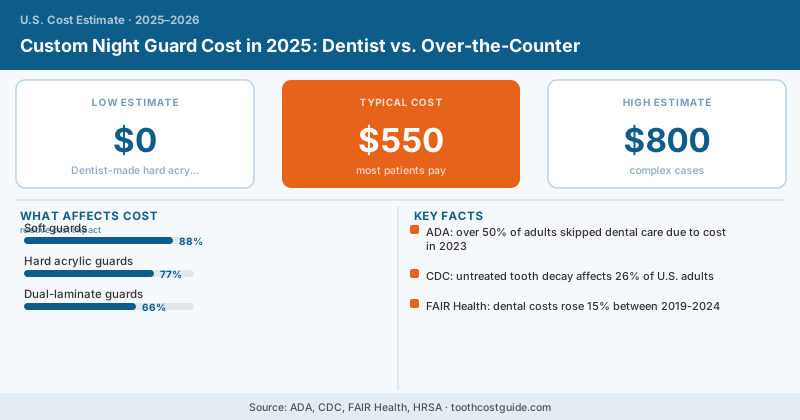
Most patients getting their first night guard quote have the same reaction: “Wait — $500 for a piece of plastic?” It’s a fair question. The honest answer is that a custom lab-fabricated guard is significantly more than a piece of plastic — but you can also protect your teeth for $30 from a drugstore. The real question is whether the custom version’s advantages are worth five to ten times the price for your specific situation.
Here’s what you get at each price point.
Cost Comparison
| Option | Cost |
|---|---|
| OTC boil-and-bite guard | $15–$80 |
| Mail-order custom guard | $100–$250 |
| Dentist-made soft guard (thin) | $200–$500 |
| Dentist-made hard acrylic guard | $300–$800 |
| Dual-laminate (hard outside, soft inside) | $400–$800 |
| Insurance-covered portion (if applicable) | $0–$400 |
What the Dentist-Made Version Actually Includes
A custom guard from your dentist involves:
- Impressions or digital scan of your teeth — this is what makes it genuinely custom. The guard fits your exact arch shape.
- Lab fabrication — a dental lab presses or mills the guard from medical-grade materials to your model. Takes 1–2 weeks.
- Fitting appointment — your dentist checks the bite, adjusts pressure points, and verifies the fit. A guard that throws off your bite can cause jaw pain.
That process is what justifies the price. A poorly fitting guard — even an expensive one — can shift teeth over months of nightly wear. The fitting appointment matters.
Hard vs. Soft: Which Guard Type Do You Actually Need?
Your dentist should specify which material is appropriate for your grinding pattern:
Soft guards are more comfortable on the first night, easier to adapt to, and appropriate for mild grinding or clenching. They’re cheaper ($200–$500). The downside: heavy grinders often chew through soft guards within 6–12 months, and the soft material can actually encourage some patients to clench more.
Hard acrylic guards ($300–$800) are more durable — often lasting 5–10 years — and are generally recommended for moderate to heavy bruxism. They don’t compress under clenching force, which protects teeth more effectively. They take longer to adapt to.
Dual-laminate guards combine both materials: a soft inner layer for comfort against teeth, a hard outer layer for durability. A reasonable middle ground for patients who couldn’t tolerate hard guards.
Ask your dentist specifically: “Am I a light, moderate, or heavy grinder?” and “Which material do you recommend for my case?” If your dentist recommends a soft guard without asking about your grinding severity, it’s worth asking why. Heavy grinders chewing through soft guards every 8 months at $300–$500 each spend more over three years than one good hard guard costs.
Mail-Order Guards: Worth Considering?
Companies like Chomper Labs, Sporting Smiles, and Pro Teeth Guard sell custom guards in the $100–$250 range. You make impressions at home with a kit they mail you, send the impressions back, and receive a lab-fabricated guard.
The guard itself is genuinely custom — not a boil-and-bite. What’s missing is the fitting appointment. If the impressions are accurate and your bite is straightforward, the result can be comparable to what you’d get at a dentist for 50–70% less. If your bite is complex, your impressions are imprecise, or the guard needs adjustment, there’s no dentist to fix it.
For patients with a straightforward bite who want a backup guard, or who can’t afford the dentist-made version, mail-order is a reasonable option. For anyone with significant bruxism or a complex bite history, the in-person fitting appointment is worth the cost.
Does Dental Insurance Cover Night Guards?
Coverage is inconsistent and plan-dependent. Some plans cover them under TMJ/bruxism treatment; others explicitly exclude them.
According to the ADA, bruxism affects an estimated 10–15% of American adults, making night guards one of the most commonly prescribed dental appliances. Yet many insurance plans classify them as “elective” rather than “necessary,” particularly if you haven’t documented a history of enamel wear or TMJ symptoms.
To improve your odds of coverage:
- Document the symptoms — enamel wear visible on x-rays or photographs, jaw pain, headaches on waking, broken or cracked fillings from grinding
- Get a diagnosis code — your dentist should use the appropriate bruxism diagnosis code (K08.8 or similar) when submitting to insurance
- Submit a predetermination — before spending $500, ask your dentist to submit a predetermination request. You’ll know in advance what insurance will cover.
When covered, insurance typically pays 50–80% of the allowed amount, potentially reducing your cost to $100–$300.
Flexible Spending Accounts (FSA) and Health Savings Accounts (HSA) cover night guards as a qualified dental expense. If you’re paying out of pocket, using pre-tax dollars provides an effective 22–37% discount. An $800 guard effectively costs $500–$620 after tax savings. This is one of the most straightforward FSA/HSA applications in dentistry.
The Real Cost of Skipping the Night Guard
The CDC reports that more than 90% of adults will experience tooth decay in their lifetime, but grinding-related damage is a separate category of wear that accelerates dental costs significantly. Bruxism wears down enamel that doesn’t grow back. Flattened, worn teeth eventually need veneers ($900–$2,000 per tooth), crowns ($1,000–$1,800 per tooth), or both.
A patient who grinds heavily for 10 years without a guard may need $10,000–$30,000 in restorations by their 50s. A night guard, even a new one every 5 years, costs a fraction of that.
This is one dental expense where the prevention math is unambiguous.
Bottom Line
A dentist-made custom night guard costs $300–$800 — more than most people expect. For heavy grinders with documented enamel wear, it’s one of the best prevention investments in dentistry. For mild grinding, a mail-order custom guard ($100–$250) or even a quality boil-and-bite can provide meaningful protection.
The key is getting the right guard type for your grinding severity, not just the cheapest option that ships. One conversation with your dentist about material selection and proper fit is worth the time.
Frequently Asked Questions
A dentist-made custom night guard typically costs $300–$800, depending on your location, dentist, and the specific lab used for fabrication. This price reflects the cost of the dental exam, impression taking, lab fabrication, and fitting appointment. Over-the-counter night guards cost significantly less at $15–$80 but lack the custom fit and durability of professional options.
Many dental insurance plans cover 50% of night guard costs after you meet your deductible, though some plans cover up to 80% for medically necessary guards used to treat bruxism or sleep apnea. However, many plans classify night guards as preventive or cosmetic and exclude them entirely, leaving you responsible for the full $300–$800 out-of-pocket. Contact your specific insurance provider to confirm your coverage before getting fitted.
The process typically takes 2–3 weeks from your initial appointment to receiving your finished guard: your dentist takes impressions at the first visit, sends them to a lab for fabrication (7–10 business days), and you return for a fitting and adjustment appointment. If adjustments are needed after the fitting, you may need an additional visit, which could extend the timeline by another week or two.