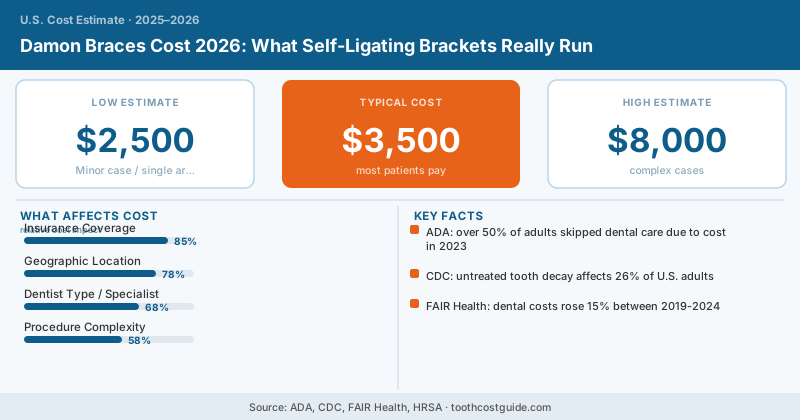
“No more tightening.” That’s the line orthodontists use to sell Damon braces, and it’s the main reason these self-ligating brackets cost $4,000 to $8,000 — a notch above standard metal braces. The pitch is fewer adjustments, less pressure, and sometimes a shorter overall treatment. Whether all that holds up is a fair question, and the answer affects whether the premium is worth it for you.
Damon braces ditch the colored elastic bands that hold the wire onto traditional brackets. Instead, each bracket has a tiny built-in sliding door that clips the wire in place. That single design change is the whole story behind both the higher price and the marketing claims.
| Damon Treatment | Typical Cost | Treatment Length |
|---|---|---|
| Damon metal brackets | $4,000–$6,500 | 12–24 months |
| Damon Clear (tooth-colored) | $5,500–$8,000 | 14–26 months |
| Minor case / single arch | $2,500–$4,500 | 6–12 months |
| Complex case | $6,500–$8,000+ | 24–30 months |
How Self-Ligating Brackets Work
In traditional braces, a colored rubber ligature ties the wire to each bracket — and that band creates friction. Damon’s sliding-door mechanism holds the wire with much less friction, so the theory goes that teeth can move more freely with lighter forces. The brackets also self-adjust as the wire works, which is the basis for the “no tightening” claim.
In practice, you still visit your orthodontist regularly — they’re checking progress and changing wires — but those visits can be quicker and less frequent for some patients. That’s a genuine convenience, especially for adults juggling work schedules.
Damon brackets do the same job as traditional braces — they just use a different ligation system. The choice between Damon and conventional brackets is usually about provider preference and a modest convenience premium, not a dramatic difference in results.
Do the Speed Claims Hold Up?
Here’s the honest take. Marketing often claims Damon braces are significantly faster, but the research is more nuanced. The American Association of Orthodontists has noted that while self-ligating systems offer real workflow benefits, the evidence that they dramatically shorten treatment time compared to well-managed conventional braces is mixed. Some studies show modest time savings; others show little difference once you account for case complexity and orthodontist skill.
What’s less debatable is the reduced friction and the convenience of fewer band changes. For many adults, the appeal is fewer, faster appointments rather than a wildly shorter timeline. The CDC’s broader oral-health data underscores the real driver of success: consistent care and compliance matter more than the bracket brand.
Damon Clear vs. Damon Metal
Damon comes in metal and a tooth-colored “Clear” version. The Clear brackets cost more — pushing toward the $8,000 end — because they’re more esthetic, popular with image-conscious adults who want discretion without the price of lingual braces or clear aligners. If you’re an adult weighing your options, our adult braces cost guide breaks down the discreet routes side by side.
The metal version offers the self-ligating mechanics at a lower price and is common for teens. Either way, retention is required at the end — budget $150–$500 for a retainer.
Insurance and Payment
Insurance treats Damon like any other braces. If you have an orthodontic benefit, it applies the same lifetime cap — usually $1,000–$2,500 — whether you choose Damon, conventional brackets, or aligners. The brand name doesn’t change your coverage.
For the balance, an FSA for dental expenses lets you pay with pre-tax dollars, and a CareCredit dental plan can spread treatment across interest-free months if you qualify.
Don’t pay a big Damon premium expecting your treatment to finish in half the time — the speed claims are inconsistent in the research. Choose your orthodontist on skill and trust first; the bracket system is secondary. A great orthodontist with conventional braces beats an average one with the fanciest brackets.
Bottom Line
Damon braces deliver real convenience — fewer band changes, often quicker visits, and a low-friction system many orthodontists swear by. Just go in clear-eyed about the speed marketing. At $4,000–$8,000, you’re paying a modest premium for workflow and provider preference, not a guaranteed shortcut. Talk it through at your orthodontist consultation.
Frequently Asked Questions
Damon self-ligating braces typically cost $4,000 to $8,000, which is $1,000 to $2,500 more than traditional metal braces ($2,500–$5,500). The exact price depends on your orthodontist's location, your specific treatment plan, and whether you need tooth extractions or other preparatory work.
Most dental insurance plans cover 50% of orthodontic treatment costs up to a lifetime maximum of $1,500–$2,000, regardless of whether you choose Damon or traditional braces. Since Damon braces cost more upfront, you'll likely pay a higher out-of-pocket amount; for example, on a $6,000 treatment, you might pay $4,500 after insurance covers $1,500.
Damon braces may reduce treatment time by 6 months to 1 year compared to traditional braces, though results vary by patient. Treatment typically takes 18–24 months with Damon braces versus 24–36 months with conventional braces, but your orthodontist can give you a personalized timeline after examining your teeth.