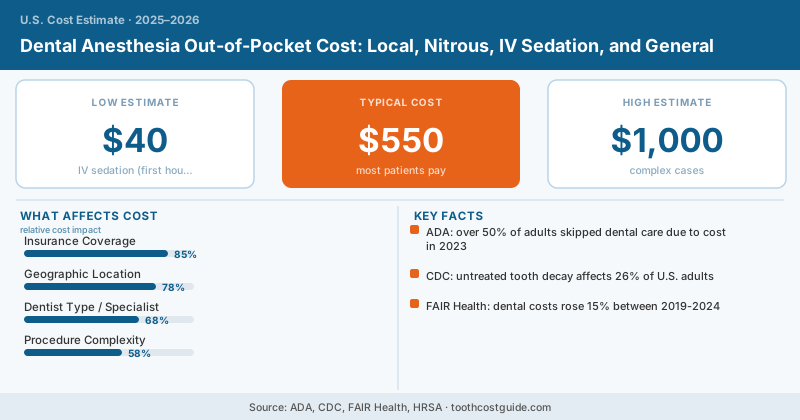
In 2010, a wisdom tooth extraction under IV sedation might have run you $250–$400 for the sedation portion alone. Today, that same sedation commonly costs $300–$800 for the first hour — and general anesthesia at a surgical center can add well over $1,000. Anesthesia costs have climbed faster than many other parts of the dental bill, driven partly by rising anesthesiologist fees and stricter monitoring requirements.
Here’s the breakdown most patients never see clearly until the bill arrives.
| Anesthesia Type | Typical Cost | What It’s Used For |
|---|---|---|
| Local anesthesia (novocaine/lidocaine injection) | Included in procedure fee | Fillings, cleanings, most routine work |
| Nitrous oxide (laughing gas) | $40–$100 | Mild anxiety, routine procedures |
| Oral conscious sedation (pill) | $150–$500 | Moderate anxiety, longer procedures |
| IV sedation (first hour) | $300–$800 | Wisdom teeth, implants, anxious patients |
| IV sedation (each additional 30 min) | $100–$250 | Extended oral surgery |
| General anesthesia (hospital/surgical center) | $500–$1,000+/hour | Complex surgery, special needs patients |
Why Local Anesthesia Is “Free” But Everything Else Isn’t
Local anesthesia — the numbing shot before a filling or extraction — is bundled into virtually every dental procedure fee. It requires no separate monitoring equipment, no additional licensed provider, and takes minutes to administer and wear off. Practices don’t itemize it because it’s a basic cost of doing the procedure at all.
Everything past that point involves added complexity: additional monitoring equipment (pulse oximeter, blood pressure cuff, sometimes an EKG), a longer recovery window in the office, and in many states, a separate sedation permit or licensed anesthesiologist. Those requirements are what drive the cost up.
Where the Big Jump Happens: IV Sedation and General Anesthesia
IV sedation requires either the dentist to hold a specific conscious sedation permit (varying by state dental board) or bringing in a separate licensed anesthesiologist or CRNA (certified registered nurse anesthetist) who bills independently. When a separate anesthesia provider is involved, expect a distinct line item on your bill — sometimes from a completely different company than the dental practice, which can complicate insurance claims.
General anesthesia, typically reserved for extensive oral surgery, special needs patients, or young children requiring full-mouth rehabilitation, usually happens at a hospital or licensed surgical center rather than in-office. That setting alone adds facility fees on top of the anesthesia provider’s charge.
Before agreeing to IV sedation or general anesthesia, ask specifically: who administers it, are they in-network with my insurance, and will I receive a separate bill from them? A dental office being in-network doesn’t guarantee the anesthesiologist they contract with is in-network too — this is one of the most common sources of surprise medical bills in dentistry.
When Insurance Actually Pays for Sedation
Insurers generally treat sedation as elective for routine procedures and won’t cover it just because a patient prefers to be more relaxed. Coverage becomes more likely when sedation is medically necessary:
- Patients with documented special needs or developmental conditions that make cooperation with local anesthesia alone unsafe
- Severe, clinically documented dental phobia preventing any treatment without sedation
- Complex oral surgery (impacted wisdom teeth, multiple extractions) where IV sedation is the surgical standard of care
Get a letter of medical necessity from your dentist or oral surgeon before the procedure if you believe your case qualifies — retroactive claims for sedation are far harder to win.
Making Sedation More Affordable
- Ask if nitrous oxide is enough. For routine anxiety around needles or drilling sounds, nitrous at $40–$100 often accomplishes what people assume they need IV sedation for.
- Compare oral surgeon vs. hospital-based facility fees if general anesthesia is recommended — an oral surgery center is typically thousands less than a hospital operating room for the same procedure.
- Ask about bundled surgical packages. Many oral surgeons quote wisdom tooth extraction with IV sedation as one combined fee, which is often lower than the sedation and surgery priced separately.
Never eat or drink per your sedation instructions before an appointment involving IV sedation or general anesthesia — violating fasting instructions can force the office to reschedule the entire procedure, and you may still be charged a cancellation or missed-appointment fee.
The Bottom Line
Local anesthesia costs nothing extra, but sedation options climb quickly — from $40 for nitrous to $1,000+ for hospital-based general anesthesia. Confirm who’s administering sedation and whether they bill separately before your procedure, and ask directly whether nitrous oxide might solve your anxiety at a fraction of IV sedation’s cost.
Frequently Asked Questions
Local anesthesia is almost always included in the procedure fee at no extra charge. Nitrous oxide (laughing gas) typically adds $40–$100. Oral conscious sedation runs $150–$500 per visit. IV sedation costs $300–$800 for the first hour, and general anesthesia in a hospital or surgical center setting can run $500–$1,000+ per hour.
Dental insurance rarely covers sedation for routine procedures like fillings or cleanings, treating it as an elective comfort option. However, insurance often does cover IV sedation or general anesthesia when it's medically necessary — for example, for patients with special needs, severe dental phobia documented by a provider, or complex oral surgery like wisdom tooth extraction.
For patients with mild-to-moderate dental anxiety, nitrous oxide is often considered good value at $40–$100 because it wears off within minutes, requires no recovery time or driver, and meaningfully reduces anxiety for routine procedures. For severe phobia or lengthy procedures, oral sedation or IV sedation may be more appropriate despite the higher cost.